
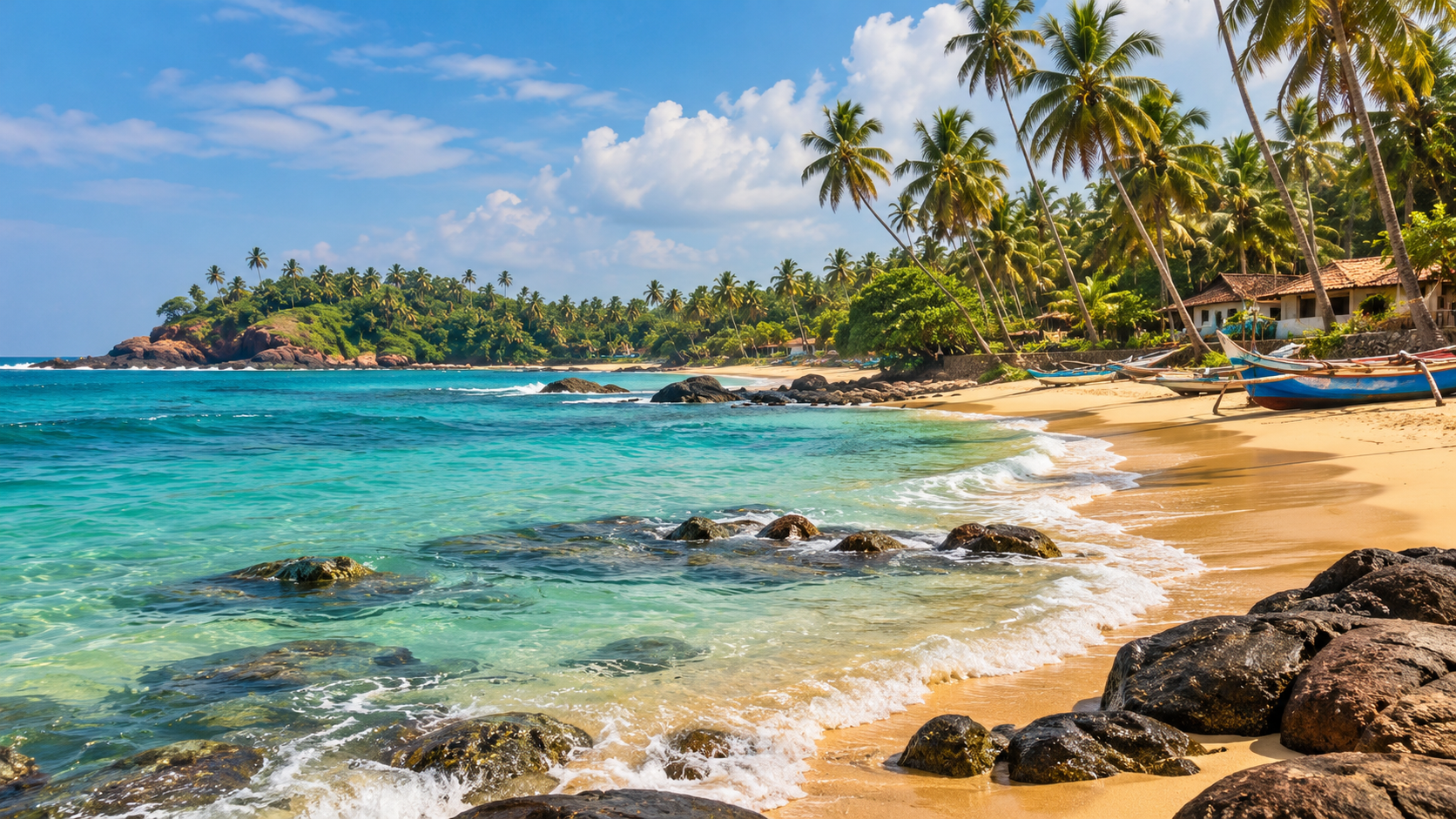
Sri Lanka looks small on a map.
That can fool you.
The island has a long coastline, and its beaches do not all behave the same way. One coast can have blue skies and calm water while another is dealing with rain, wind, and rough surf.
That is actually one of Sri Lanka’s biggest advantages.
Instead of having one short “beach season,” the island gives travelers different coastal options through much of the year.
The south and southwest are the classic winter escape for travelers coming from the United States. Places such as Mirissa, Unawatuna, Bentota, Hikkaduwa, and Tangalle are popular when much of North America is cold.
Then, as weather patterns shift, the east coast comes into its own.
Arugam Bay fills with surfers. Nilaveli and Uppuveli become strong choices around Trincomalee. Pasikuda offers long stretches of shallow water.
So the question is not simply, “What are the best Sri Lanka beaches?”
The better question is, “Which beach works for the month I am going?”
Which Coast Should You Visit?
| Coast | Popular Beach Areas | Often Best For |
|---|---|---|
| South | Mirissa, Weligama, Hiriketiya, Tangalle | Surfing, cafés, beach towns, winter trips |
| Southwest | Unawatuna, Hikkaduwa, Bentota | Resorts, swimming, easy access from Colombo |
| East | Arugam Bay, Pasikuda, Kalkudah | Surfing, calmer summer seas, quieter coast |
| Northeast | Nilaveli, Uppuveli | Swimming, snorkeling, island trips |
| West | Negombo, Kalpitiya | Short stays, lagoon trips, kite sports |
Mirissa Is the Beach Many First-Time Visitors Picture
Mirissa on the south coast has become one of Sri Lanka’s best-known beach towns.
The main beach curves around a bay lined with palms, restaurants, small hotels, and guesthouses.
It manages to feel developed without looking like a giant resort complex.
At least most of the time.
The beach is lively enough that you can find dinner, drinks, surf lessons, cafés, and transportation without much effort.
But you can still wake early and find stretches of sand that feel surprisingly calm.
Morning is the best version of Mirissa.
Fishing boats come back toward shore. The heat has not arrived yet. Cafés are only starting to open. The ocean looks cleaner and quieter before the day gets moving.
Mirissa Is Also Known for Whale-Watching Trips
Boat trips from the south coast have long been marketed for whale and dolphin watching.
But wildlife tourism comes with a responsibility that glossy brochures sometimes skip.
Whales are wild animals.
They should not be chased by a fleet of boats for better photographs.
If you book a trip, look for operators that maintain sensible distance, avoid surrounding animals, and follow responsible wildlife-viewing practices.
A slightly farther view is still a good view.
Weligama Is Better for Beginner Surfers
Just west of Mirissa, Weligama has a completely different beach personality.
The broad bay is famous for surfing, especially among beginners.
Numerous surf schools line the area, and boards are easy to rent.
The waves are often friendlier for learners than the faster point breaks found elsewhere.
This does not mean the ocean becomes a swimming pool.
Conditions still change.
But if your mental image of surfing involves standing up for three seconds, yelling in triumph, and immediately falling into the water, Weligama is a reasonable place to start.
Hiriketiya Went From Quiet Cove to Major Travel Favorite
Hiriketiya is a horseshoe-shaped bay near Dickwella on the south coast.
A few years ago, it was often described as a hidden beach.
That phrase no longer makes much sense.
Travelers found it.
Now the area has stylish cafés, yoga spaces, guesthouses, villas, and surf rentals clustered around a compact bay.
The appeal is easy to understand.
The beach is small enough to feel intimate. Palms and tropical greenery wrap around the bay. Surfers share the water with swimmers depending on conditions.
The downside?
Peak-season crowds can feel large compared with the size of the beach.
Go early.
Tangalle Is for Travelers Who Want More Space
Tangalle sits farther east along the southern coast and feels looser than Mirissa or Hiriketiya.
Long sandy beaches extend beyond town, often with far fewer people.
Some areas look almost untouched.
This is where you come if your main vacation goal is walking on a beach without passing a café every seventy feet.
But there is a catch.
Parts of the Tangalle coastline can have strong waves and currents.
A beach that looks gorgeous from shore is not automatically good for swimming.
Always pay attention to local advice and conditions.
Unawatuna Combines Beach Time With Galle
Unawatuna is one of the most established beach areas in southern Sri Lanka.
Its sheltered bay, restaurants, accommodation, and proximity to Galle make it easy for first-time travelers.
You can spend the morning swimming and the late afternoon walking through Galle Fort.
That combination works especially well if you do not want an entire trip based around lying on sand.
Unawatuna itself is busy.
There are beach restaurants, hotels, souvenir shops, and plenty of tourists during the high season.
For some people, that is convenient.
Others will prefer quieter stretches farther east.
Galle Fort Is Worth Leaving the Beach For
Galle Fort sits only a short ride away from Unawatuna.
The historic fortified city reflects several layers of colonial history, particularly Dutch influence.
Inside the walls, narrow streets pass old houses, hotels, cafés, churches, shops, and courtyards.
The ramparts are especially pleasant near sunset.
Walk slowly.
Get something cold to drink.
Watch the sky change over the Indian Ocean.
Beach trips do not always need to be entirely about beaches.
Dalawella Is Known for Its Calm-Looking Lagoon Areas
Near Unawatuna, Dalawella became famous online for tropical beach scenes, palm trees, and shallow-looking water.
Protected sections can feel calmer than exposed stretches of coast.
Sea turtles are sometimes seen near shore.
If you encounter one, give it space.
Do not block its path, grab it, feed it, or turn the animal into a prop for a video.
Wildlife does better when humans are slightly boring.
Hikkaduwa Has Been a Beach Destination for Decades
Hikkaduwa developed into one of Sri Lanka’s early international beach destinations.
Today it combines surf, snorkeling, hotels, bars, restaurants, and easy transport access.
Compared with some newer south-coast spots, it can feel more established and less boutique.
That can be good.
Prices and lodging styles cover a broad range.
Transport connections are straightforward.
You do not need to spend half your vacation figuring out where dinner happens.
Coral Reefs Need More Respect Than They Usually Get
Snorkeling areas around Sri Lanka face the same pressures found in tropical marine destinations around the world.
Coral is living habitat.
Standing on it, touching it, or kicking it with fins can cause damage.
The basic rules are simple:
- Do not stand on coral, even if the water is shallow.
- Keep fins away from reef surfaces.
- Never collect shells, coral fragments, or marine animals.
- Do not feed fish to attract them for photos.
- Keep a respectful distance from turtles and other wildlife.
- Follow local marine-protection rules and instructions.
Bentota Works Well If You Want a Resort-Style Beach
Bentota is on the southwest coast and has long been associated with beach resorts and water sports.
The beach is wide, sandy, and convenient for travelers who prefer hotel facilities over a backpacker-style beach town.
The Bentota River also adds another layer.
Boat trips through mangrove areas, lagoon excursions, and water activities are available nearby.
Bentota works especially well for couples and families who want a comfortable base with easy access from Colombo.
It feels more polished than some of the surf towns farther south.
Negombo Is Useful More Than It Is Spectacular
Negombo sits north of Colombo and relatively close to Sri Lanka’s main international airport.
That makes it a popular first-night or last-night stop.
The beach is long and lined with hotels, restaurants, and tourism services.
Would I cross half the planet only for Negombo beach?
Probably not.
But if your flight lands late and you want palm trees, seafood, and a soft introduction to Sri Lanka rather than city traffic, it makes sense.
The area’s lagoon and fishing traditions are also part of its character.
Kalpitiya Is Known for Wind and Wildlife
Farther north on the west coast, Kalpitiya occupies a peninsula between the Indian Ocean and a lagoon.
It has become particularly associated with kiteboarding because of seasonal wind conditions and broad lagoon areas.
Dolphin-watching trips are another attraction.
Compared with Sri Lanka’s southern beach towns, Kalpitiya generally feels more spread out and less polished.
That can be exactly what some travelers want.
Arugam Bay Is Sri Lanka’s Surf Capital
Move to the southeast and the beach culture changes again.
Arugam Bay is one of Sri Lanka’s best-known surfing destinations and draws surfers from around the world during its main season.
The town itself follows the rhythm of the waves.
Surf shops, cafés, board rentals, guesthouses, yoga classes, and tuk-tuks heading toward nearby breaks dominate daily life.
Early morning starts make sense here.
The heat is softer, the light is good, and surfers are already moving toward the water.
You Do Not Have to Surf to Like Arugam Bay
That surprises people.
The area also offers long beaches, lagoons, wildlife, small villages, and access to a relatively dry landscape that feels different from the lush southwest.
Elephants can sometimes be encountered in the wider region.
That does not mean you should approach them.
Wild elephants are powerful animals, not oversized park mascots.
Keep a safe distance and follow local guidance.
When Is Arugam Bay Surf Season?
The main surfing period typically runs from around April into October, with conditions varying through the season.
That makes Arugam Bay particularly useful for travelers visiting when the south coast is experiencing rougher monsoon conditions.
In other words, you can follow the weather around the island.
That is the trick.
Pasikuda Is Known for Shallow Water
Pasikuda on the east coast feels very different from the surf beaches.
The bay is known for shallow coastal water and a gentler visual profile than exposed ocean beaches.
Large resort properties operate in the area, but the coast remains the main reason people come.
For families, calm-water beach days can be easier here when seasonal conditions cooperate.
Nearby Kalkudah gives travelers another stretch of east-coast sand with a generally quieter feel.
Nilaveli Has Some of the East Coast’s Most Beautiful Water
Nilaveli lies north of Trincomalee and is one of Sri Lanka’s classic east-coast beach destinations.
The beach is long, pale, and generally much less urban than major southern resort areas.
The sea can turn beautifully clear during the favorable season.
Days here have an easy rhythm.
Breakfast.
Beach.
Swim.
Lunch.
Wonder whether doing nothing counts as an itinerary.
It does.
Pigeon Island Adds Snorkeling to a Nilaveli Stay
Pigeon Island National Park lies offshore from the Nilaveli area.
Boat trips take visitors toward coral and marine habitats around the island.
Snorkeling is one of the main attractions.
This is also a place where tourism pressure matters.
Follow park rules. Avoid touching coral or wildlife. Use responsible operators.
A reef can look solid and permanent.
It is neither.
Uppuveli Is Convenient for Trincomalee
Uppuveli sits closer to Trincomalee than Nilaveli and combines beach access with restaurants, guesthouses, and a more developed traveler scene.
It works well if you want beach time without feeling isolated.
Trincomalee itself adds temples, harbor views, and history to the trip.
Koneswaram Temple, dramatically positioned above the sea, is one of the area’s major cultural landmarks.
That makes this part of Sri Lanka especially good for travelers who need more than sun and sand every day.
What Is the Best Time for Sri Lanka Beaches?
There is no single perfect month for every coast.
Sri Lanka’s climate is shaped by monsoon systems, and conditions vary by region.
The broad pattern is easy enough to remember.
During much of the Northern Hemisphere winter, the south and southwest tend to be the stronger beach choices.
During part of the Northern Hemisphere summer, the east becomes much more attractive.
| Period | Good Beach Areas to Consider | General Pattern |
|---|---|---|
| December-March | Mirissa, Unawatuna, Bentota, Tangalle | Popular period for south and southwest coast |
| April | South coast or beginning of east-coast season | Transition period |
| May-September | Arugam Bay, Nilaveli, Pasikuda, Uppuveli | East coast becomes a strong option |
| October-November | Depends heavily on local weather | Intermonsoon conditions can be less predictable |
These are patterns, not contracts.
Tropical weather does not read travel blogs.
Always check current local conditions close to your trip.
Do Not Confuse Sunny Weather With Safe Swimming
This deserves its own section.
A beach can be sunny, beautiful, and unsafe for swimming at the same time.
Ocean currents are not visible in Instagram photos.
Some beaches have strong shore breaks. Others develop rip currents. Conditions can change by season and even by time of day.
If locals tell you not to swim somewhere, believe them.
They are not trying to ruin your vacation.
Sri Lanka Works Well for Surf Trips
One reason surfers return is the ability to move between different regions and skill levels.
Weligama is commonly associated with beginners.
Hiriketiya mixes surf with a compact beach-town atmosphere.
Arugam Bay offers famous point breaks during its main season.
Other breaks exist all around the coast.
If you are new to surfing, take a lesson rather than simply renting a board and hoping instinct handles the rest.
The ocean usually wins that argument.
Beach Towns Are Not All Cheap Anymore
Sri Lanka can still offer strong value compared with many tropical destinations, especially for food, local transportation, and guesthouses.
But popular beach areas now include plenty of high-end hotels, villas, boutique restaurants, and stylish cafés.
Hiriketiya, Mirissa, and parts of the south coast can cost much more than travelers expecting old backpacker prices imagine.
You can still travel cheaply.
You just need to move a few streets away from the beachfront aesthetic everyone saw online.
What Should You Eat by the Coast?
Fresh seafood is the obvious answer, but stop there and you miss half the fun.
Sri Lankan meals typically bring several flavors to the table at once.
Rice and curry may include multiple vegetable preparations, dhal, sambols, fish, or meat.
Hoppers are bowl-shaped pancakes made from fermented rice flour and coconut milk.
Egg hoppers add an egg in the middle.
Kottu roti is chopped flatbread cooked on a hot griddle with vegetables, egg, or meat.
You will hear it before you see it.
The metal blades hitting the griddle produce one of Sri Lanka’s unofficial nighttime soundtracks.
Beach Food Worth Looking For
- Fresh grilled fish with lime, spices, or sambol.
- Rice and curry with several vegetable side dishes.
- Egg hoppers for breakfast or dinner.
- Kottu roti from a busy local restaurant.
- Coconut sambol, especially with bread or hoppers.
- King coconut for an easy beach drink.
- Curd with treacle when you want something sweet.
How Do You Get Between Beach Towns?
Distances on a map can look short.
Travel times can be longer than expected.
Trains run along much of the southwest and south coast and can be a scenic, inexpensive way to move between Colombo, Galle, and coastal towns.
Buses go almost everywhere.
Tuk-tuks handle shorter distances.
Private drivers offer the most flexibility for families or travelers combining beach areas with inland destinations.
Apps and transport options vary by location, so do not assume every small town works exactly like Colombo.
Sri Lanka Is Too Interesting for a Beach-Only Vacation
This sounds strange in an article about beaches.
But it is important.
Sri Lanka is one of those countries where a beach trip gets much better when you leave the coast for a while.
You can combine southern beaches with Galle.
Drive inland toward tea country and cooler highlands.
Add wildlife around Yala or Udawalawe.
Pair east-coast beaches with Trincomalee.
Travel north or into the Cultural Triangle if you have more time.
The distances are manageable enough that a two-week trip can feel like several vacations stitched together.
A Good 10-Day Beach-Focused Route
For a winter trip, a south-coast route can stay simple.
- Spend the first night near Colombo or Negombo after your flight.
- Continue to Galle or Unawatuna for two nights.
- Spend two or three nights around Mirissa or Weligama.
- Move east toward Hiriketiya or Tangalle for a quieter stretch.
- Add two inland nights for wildlife or the hill country.
- Return toward Colombo with enough time before your international flight.
For a summer trip, you can build the route around Trincomalee, Nilaveli, Pasikuda, and Arugam Bay instead.
Which Sri Lanka Beach Is Best for You?
If you want social cafés and a famous south-coast scene, try Mirissa.
If you want beginner surfing, Weligama makes sense.
If you want a small stylish bay, Hiriketiya is hard to ignore.
If you want space, look toward Tangalle.
If resorts and water activities are more your speed, consider Bentota.
If you are visiting in the east-coast season, Nilaveli and Pasikuda deserve attention.
And if surfing is the main reason for the trip, Arugam Bay is the obvious name to investigate.
FAQ About Sri Lanka Beaches
What is the best beach in Sri Lanka?
There is no single best beach. Mirissa is strong for a lively south-coast stay, Weligama for beginner surfing, Tangalle for space, Nilaveli for east-coast swimming, and Arugam Bay for surfing.
Which side of Sri Lanka has the best beaches?
Both the south and east coasts have excellent beaches. The better coast depends heavily on the season because Sri Lanka’s monsoons affect different parts of the island at different times.
When is the best time to visit Sri Lanka for beaches?
December through March is a popular period for south and southwest beaches. Roughly late spring through summer is often better for east-coast destinations such as Arugam Bay, Nilaveli, and Pasikuda.
Is Mirissa or Unawatuna better?
Mirissa has a stronger beach-town and surf feel, while Unawatuna offers easy access to Galle and a very developed tourism scene. Both can be busy during peak season.
Which beach in Sri Lanka is best for surfing?
Arugam Bay is the country’s most internationally recognized surf destination. Weligama is a common choice for beginners, while the south coast has numerous other breaks.
Are Sri Lanka beaches safe for swimming?
Many are suitable for swimming in favorable conditions, but not every beach is safe every day. Currents, waves, and monsoon conditions vary, so always follow local warnings and advice.
How many days should I spend on Sri Lanka’s beaches?
Five to seven beach days work well within a broader Sri Lanka trip. If surfing or slow coastal travel is the main goal, ten days or longer gives you room to experience several beach regions.
The Best Sri Lanka Beaches Depend on Timing, Not Rankings
It is tempting to search for a neat list.
Number one beach.
Number two beach.
Number three beach.
Book hotel. Done.
Sri Lanka does not really work that way.
A beach can be perfect in January and rougher months later.
A surf town can feel energetic in season and sleepy when the waves shift.
A tiny cove that looks untouched online can be packed by lunchtime.
And a beach you barely saw mentioned may become the one you remember most because you happened to arrive when the sea was calm and almost nobody else was there.
That is the real trick with sri lanka beaches.
Match the coast to the season first.
Then match the town to your personality.
Mirissa works if you want restaurants, social energy, and a classic tropical bay.
Weligama makes surfing accessible.
Hiriketiya gives you a compact café-and-surf bubble.
Tangalle stretches things out.
Unawatuna puts history close by.
Bentota gives you more of a resort experience.
Arugam Bay lives around surfing.
Nilaveli slows everything down.
Pasikuda feels gentler and wider.
No single beach needs to win.
In fact, the best Sri Lanka trips usually include more than one.
Start somewhere lively.
Move somewhere quiet.
Try surfing even if you are terrible at it.
Eat fish with your feet still sandy.
Wake up for one sunrise.
Maybe two.
Watch the fishing boats come back before the beach chairs appear.
And give yourself enough time to notice that Sri Lanka’s coastline is not just a strip of pretty sand around an island.
Each coast has a different climate, rhythm, landscape, and personality.
That is what makes the beaches here worth traveling for in the first place.
Leave a Reply