
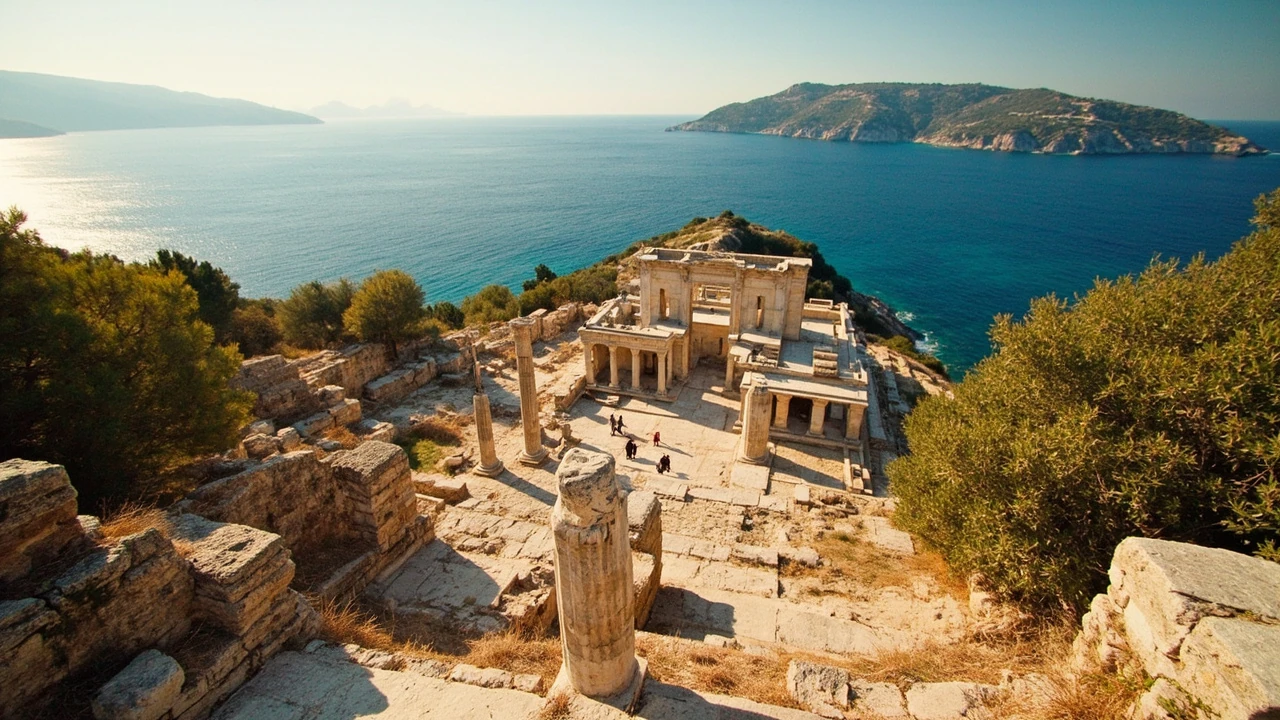
Greece attractions: a practical guide by region and travel style
Choosing the right greece attractions can make or break a trip because the country offers an unusually large range of experiences within a short travel distance. Ancient temples, hilltop villages, museums, thermal springs, vineyards, mountains, and clear blue coves may all appear on the same map, yet they demand different amounts of time, transport, and planning. A traveler who wants archaeological history may feel disappointed by a beach-centered itinerary, while someone hoping for quiet swimming can find a celebrated city unexpectedly crowded in summer.
The most useful approach is to choose two or three priorities before selecting individual places. Think about where you are staying, how much time you have, whether you prefer culture or nature, and how comfortable you are with ferries, mountain roads, or long walks. This guide organizes the main attractions by region and travel style so you can build a realistic route rather than collect unrelated names from a destination list.
How to narrow down the best attractions for your trip
Greece is not one destination in the practical sense. Athens, the Peloponnese, northern Greece, Crete, and the smaller islands have distinct landscapes, histories, cuisines, and transportation networks. The distance on a map may look manageable, but a ferry, mountain road, or seasonal transfer can occupy half a day. The attraction itself is only one part of the visit; getting there and understanding its limitations matter just as much.
Start with time rather than popularity. Athens and its archaeological sites can absorb a full day, especially when combined with a major museum or a neighborhood food walk. A day trip to a rural attraction may require more transport time than expected. Island hopping is similarly demanding if each move includes a check-in, transfer, and ferry schedule. A shorter list of well-chosen stops usually produces a more satisfying experience than a route packed with places you barely have time to see.
| Travel priority | Best-fit areas | Main attractions to consider | Planning consideration |
|---|---|---|---|
| Ancient history and first-time sightseeing | Athens, Attica, central Greece | Acropolis, Ancient Agora, archaeological museums, temples at Delphi and Olympia | Allow a full day for Athens and verify current site access before visiting |
| Islands and swimming | Crete, Santorini, Corfu, Rhodes, smaller Cyclades | Coastal walks, beaches, boat routes, old port towns, archaeological sites | Ferries and flights take time; avoid booking too many destinations for a short trip |
| Nature and quieter travel | Epirus, mainland mountain regions, northern Crete | Mount Olympus, Vikos Gorge, mountain villages, waterfalls, forests | Check seasonal road conditions and trail difficulty |
| Food, festivals, and local culture | Thessaly, Macedonia, Peloponnese, Crete | Regional dishes, markets, monasteries, wine areas, traditional music venues | Seasonal events and local venues require separate verification |
| Family travel | Athens, Crete, Rhodes, northern Greece | Acropolis Museum, beaches, aquarium and science activities, gentle coastal walks | Balance walking days with an easy beach or pool day |
Next, anchor the itinerary geographically. One base in Athens is useful for the city, a day at the Acropolis, and excursions to nearby sites. Two bases on the mainland can combine ancient sites with a different regional food culture. For a short island-focused trip, one island often works better than three. The same rule applies to cruises: the schedule may cover many ports, but it offers little control over weather, crowds, or time at each stop.
Consider seasonality without treating a destination as permanently busy or empty. Coastal areas and island towns can become crowded during the summer, while mountain routes may remain affected by snow or difficult weather outside the warm season. Athens museums and major archaeological sites are useful year-round, although they can feel demanding in midday heat. If flexibility matters, build one spare day into the itinerary rather than filling every available hour.
- First visit: prioritize one major archaeological area, Athens, and a landscape or beach experience outside the city.
- Short trip of four to six days: use one mainland base and, if desired, one short ferry or flight to an island.
- Two-week trip: divide the route between the capital, the Peloponnese or central Greece, and one or two islands.
- Active travel: pair historical stops with a hike, swim, or kayaking excursion rather than scheduling a different museum every day.
Athens and Attica: the essential city attractions
Athens rewards travelers who understand its major sites as parts of one long history rather than isolated monuments. The Acropolis is the essential starting point, but the surrounding district also contains the Ancient Agora, the Roman Agora, the Kerameikos, and several excellent museums. The Acropolis Museum helps explain the objects recovered from the rock and the archaeological layers that make the site difficult to interpret without context.
Begin early in the day when you want cooler conditions and a more manageable atmosphere. Wear footwear with good grip because the approach includes uneven stone surfaces and exposed steps. The archaeological site is open to the weather, so bring sun protection and water even if nearby cafés appear convenient. Tickets and access arrangements can change, and some entrances are separated from museum admission, so check the official archaeological and museum information shortly before visiting.
The Ancient Agora occupies a different scale and atmosphere. It sits below the Acropolis in the heart of the modern city, and its open, partly ruined setting makes it easier to imagine daily civic life. Nearby, the Roman Agora and Library of Hadrian reveal the city’s later layers. If you have limited time, focus on a small group of sites rather than racing between every ruin in the historical center.
For a compact overview of the country’s history, mythology, food, and customs, read these introductory facts about Greece before planning history-focused stops. The overview can also help with cultural context, including the Hellenic Republic’s official name, Crete’s Minoan civilization, Mount Olympus, the Olympic tradition, and the place of foods such as moussaka, souvlaki, olives, and feta in Greek culture.
Athens is more than an archaeological stop. Neighborhoods such as Plaka, Monastiraki, Anafiotika, and the surrounding areas around the Acropolis each have a different scale. The National Garden offers a simple shaded break, while the Lycabettus Hill area provides broad city views. For a more contemporary side of the capital, visit a street market, attend an evening film screening at an open-air cinema, or explore contemporary galleries. These activities are often more rewarding when spread across several days instead of added to an already packed archaeological day.
Nearby Attica also works well for a day trip. The coast around Palaia Faliro and Vouliagmeni offers a change of pace from the city center. Cape Sounion adds a coastal temple and sweeping sea views, though it should be treated as a destination in its own right rather than a quick photo stop. In warmer months, the southern beaches and coastal resorts become more attractive than the compact city for a rest day.
| Athens area | What to do | Best for | Time to allow |
|---|---|---|---|
| Acropolis and museum district | Visit the Acropolis, walk the upper archaeological zone, and use the museum for context | Ancient Greek history and a first visit | One substantial day |
| Ancient Agora | Walk among the ruins and examine the excavated civic center | History in an open urban setting | Two to three hours |
| Plaka and Anafiotika | Explore lanes, viewpoints, cafés, and restored neoclassical buildings | Architecture and a gentler walking itinerary | Two to four hours |
| National Garden and city center | Walk through the garden, visit central museums, and combine with shopping or meals | A break between major visits | A half day |
| Attica coast | Visit Cape Sounion or spend the day near a southern beach | Sea views and a less urban day | A full day |
Central Greece and the Peloponnese: history beyond Athens
Central Greece is an excellent choice for travelers who want major historical sites without leaving the mainland. Delphi, set on the slopes of Mount Parnassus, combines archaeological remains with a dramatic mountain setting. The sanctuary developed around the oracle of Apollo and occupies a large, vertically arranged site. Allow enough time to follow the route between the theater, temples, treasury buildings, and upper terraces. Wear shoes suitable for uneven ground, and consider how you will return from the upper part of the site.
At Olympia, the sanctuary centered on Zeus and the Olympic games offers a different historical experience. The stadium, temples, bath, and surrounding grounds require walking, but the broader landscape makes the site feel less enclosed than a dense urban ruin. It is often paired with nearby beaches and small towns in the Peloponnese, although road conditions and distances should be checked before committing to a same-day itinerary from Athens.
The Peloponnese is large enough to require deliberate routing. Its northern section provides access to Mycenae, Epidaurus, Nafplio, and the archaeological landscape around Argos. Mycenae is essential for visitors interested in Bronze Age history and Homeric tradition. Epidaurus is associated with the sanctuary of Asclepius and is particularly known for its theater, though the broader site includes temples, springs, lodging, and a sanctuary setting that deserves more time than a quick stop.
Nafplio is easier to explore on foot and provides a useful base for a short northern Peloponnese itinerary. Its compact center, waterfront, old town, and nearby beaches make it practical for travelers who want atmosphere without constant transfers. The region also has historical links with other parts of the Mediterranean and Latin America, a story covered in Italy’s history before the Roman Empire, another useful example of how the Mediterranean shapes shared historical narratives.
In the southern Peloponnese, the choices become more landscape-focused. The Mani Peninsula has steep coastlines, stone villages, beaches, and cave systems. Monemvasia, reached by a causeway, is a fortified medieval settlement on a small rock island. Mistra combines Byzantine ruins with a mountain setting. Each deserves a full day or more, so trying to cover all three in one circuit can produce a tiring sequence of roads.
- Ancient history focus: pair Delphi with Olympia, but keep them as separate days if transportation is involved.
- Nature and history: combine Mycenae with the coastal and cultural stops around Nafplio.
- Architecture: allow time for Mistra rather than treating it as a brief detour from a beach.
- Scenery: give the Mani Peninsula enough road time to stop at viewpoints, beaches, and villages without rushing.
Crete and the Greek islands: choosing a place that fits your trip
The islands offer some of Greece’s most recognizable attractions, but the choice of island can change the entire pace of a journey. Crete is the country’s largest island and combines mountain scenery, long coastlines, archaeological sites, and villages with distinct regional identities. Santorini is defined by its volcanic caldera and settlements built along cliffs. Rhodes combines medieval fortifications with extensive beaches and a busy resort coastline. Corfu offers wooded landscapes, coastal villages, and a blend of Venetian, Greek, and other historical influences.
Do not choose an island only because photographs of its signature view look appealing. On Santorini, much of the attraction is the landscape and settlement pattern around the caldera, although queues, cruise traffic, and narrow streets can affect the experience. On Crete, the distance between the main road and inland sites can slow travel. In the smaller Cyclades, ferries may arrive late, and villages can be quiet outside the busy summer period.
Think in terms of time zones within the trip. A seven-day island itinerary sounds generous, but travel days and ferry connections reduce sightseeing time. One island with a rental car or organized excursions usually allows more exploration than three short stops. If the mainland is already part of the holiday, choose an island that adds a distinct experience rather than repeating what you have already seen.
| Island or island group | Distinctive attractions | Best fit | Important trade-off |
|---|---|---|---|
| Crete | Archaeological sites, mountain villages, gorge landscapes, beaches, regional food | Road trips and travelers wanting variety within one island | Distances can make a short visit feel rushed |
| Santorini | Caldera views, volcanic landscape, cliff settlements, archaeological remains | Short stays focused on scenery and atmosphere | Popular areas can be crowded and expensive |
| Rhodes | Medieval walls, old town, beaches, archaeological sites, mountain villages | Families and travelers combining history with a beach holiday | Old town and resort zones feel very different |
| Corfu | Old town, coastal villages, olive groves, beaches, historic architecture | Walking, nature, and gentler island travel | Some major sights are spread across the island |
| Smaller Cyclades | Traditional settlements, beaches, museums, walking paths, maritime character | Travelers seeking a quieter, slower visit | Fewer transport options and limited late-night services |
For beach-focused travelers, distinguish a swim stop from a beach day. Some coves reached by boat or footpath require effort and may have limited shade. Others have road access, organized facilities, and nearby tavernas. The choice of coast can also affect your experience beyond Greece; how beaches change depending on the coast is a useful comparison for anyone accustomed to choosing a shoreline by region.
Boat trips can reveal inaccessible beaches, sea caves, and small islands, but conditions vary. Ask what happens if weather disrupts the route, how long the trip lasts, and whether the stop includes actual time for swimming. A shorter trip to a well-chosen cove is often more satisfying than a long excursion that spends most of the day moving around.
Island museums and cultural collections deserve more attention than they often receive. They can explain local history, shipbuilding, migration, religious customs, and the relationship between the mainland and the islands. Pairing one museum with an evening in a port town also creates a more balanced day than moving immediately from one beach to another.
Mountains, waterfalls, and other outdoor attractions
Greece’s mountains provide a counterpoint to its beaches and coastal ruins. Mount Olympus, Greece’s highest mountain, combines a distinct summit area with a strong mythological identity. Hikes vary from demanding routes to longer treks that require proper preparation. The BBC overview on fun facts about Greek geography and culture identifies Mount Olympus as the country’s tallest mountain and notes its 52 peaks and several gorges, giving travelers a useful reason to look beyond the well-known summit.
In Epirus, Vikos Gorge is associated with dramatic limestone scenery and mountain villages. The area around Parga, the springs of the Acheron, and mountain roads can form a varied route for travelers who enjoy walking and rural landscapes. These are not interchangeable with a beach excursion: the distances may be short on a map, yet roads, elevations, and trail conditions add time and physical demands.
Waterfalls, caves, and forests are popular in northern and western Greece during suitable seasons. Some sites require walking through wet or uneven terrain, while others are reached by roads ending near the trailhead. Check whether the local attraction is open, whether access roads are operating, and whether footwear and water are needed. Weather can change faster in mountainous terrain than in coastal areas.
Outdoor attractions work best when they complement rather than replace the cultural highlights. A day in the mountains after two busy city days can feel restorative, but attempting to combine a long hike, a distant archaeological site, and an evening cruise in one schedule is usually unrealistic. National and regional parks, organized walking routes, and clearly marked paths are preferable to improvising access across private land.
- Beginner walkers: select routes with short distances, regular transport access, and nearby villages.
- Experienced hikers: research trail conditions, elevation, weather, and local guidance before setting out.
- Families: choose interpretive sites, gentle coastal paths, or short rides with qualified local operators.
- Water activities: confirm equipment, safety provisions, weather limits, and the actual swimming time included in a boat trip.
Food, festivals, and cultural experiences worth planning around
Greek food is not merely a collection of familiar dishes served during a holiday. Regional ingredients, agricultural traditions, and local specialties change as you travel. Northern Greece has strong traditions around grilled meats, pies, cheeses, and mountain produce. The Peloponnese is known for olives, grapes, cured foods, and local dishes that often benefit from regional ingredients. Crete has its own culinary identity, including cheeses, herbs, olive oil, and seafood preparations.
Market visits are a practical way to understand local specialties. Look for seasonal fruit, vegetables, olives, cheeses, and herbs, then eat them in a neighborhood taverna rather than treating every meal as a checklist of national classics. The BBC background on Greek customs and cuisine notes familiar foods such as moussaka, gyros, souvlaki, dolmadakia, tzatziki, taramasalata, baklava, honey, figs, olives, and yogurt. It also explains the protected legal definition of feta within the European Union, a detail worth recognizing when comparing local cheese.
Festivals can add energy to a trip, but dates and venues should always be confirmed rather than assumed. Greek religious celebrations, local patron-saint days, harvest events, music festivals, and civic performances vary by place and year. If an event is the reason for visiting, build the rest of the itinerary around it and allow a recovery day afterward.
Small-group activities can provide access to places that are hard to interpret alone. Examples include an archaeological walk led by a specialist guide, a food visit centered on a regional producer, or a workshop with a local craftsperson. The best are transparent about inclusions, duration, group size, language, and what participants actually do. Avoid choosing an activity solely because it promises every major sight in one day.
Other rewarding cultural experiences include monastery visits, village museums, traditional music, independent cinema, and local theater. The official name of the country, the Hellenic Republic, may be a useful cultural detail for a trivia-loving traveler, but it should not distract from the practical reality that the places people call Greece are diverse regions rather than a single uniform destination.
How to build a realistic day-by-day itinerary
A strong itinerary alternates concentration and recovery. Spending the entire day at one major archaeological site can be fascinating, but a shorter visit followed by a meal, museum, or waterfront walk often feels better. Similarly, scheduling three separate boat excursions leaves no room for weather, delays, or spontaneous stops.
Use mornings for places exposed to the sun or popular during the busiest hours. Afternoons work well for museums, shaded meals, indoor cultural programs, and longer transfers. Leave a margin around ferries because delays and schedules can shift a plan. If a day depends on catching the last ferry, consider a backup activity in case the earlier connection runs late.
A ten-day structure might include four days for Athens and Attica, two days for a historical extension, three days on one island, and a final travel day. This is only a model, not a fixed itinerary. Families may reduce transfers, independent travelers may prefer longer stays, and archaeology-focused visitors may substitute a second mainland region for the island portion.
Before booking anything, create a simple checklist for each planned stop:
- Location: confirm the administrative area, nearby base, and realistic transfer time.
- Access: check official information for closures, restrictions, reservations, and seasonal conditions.
- Duration: estimate the full visit rather than only the time spent in the main gallery or monument.
- Physical demands: account for heat, stairs, slopes, uneven surfaces, and available shade or rest points.
- Backup: identify an alternative activity for bad weather, missed ferries, or an overpacked day.
- Booking terms: review cancellation policies for flights, ferries, hotels, tours, and rental vehicles.
Transportation deserves separate attention. Trains and buses can make some mainland routes practical, while islands often depend on ferries or domestic flights. A flight may save hours but also add airport transfers and schedule constraints. Rental cars provide flexibility but can be less useful on pedestrian-only islands. Never include a driver in the plan without checking licensing, insurance, road rules, and restrictions.
Food-focused stops should also fit the geography. Do not schedule a famous restaurant across town when a better local option sits near the evening’s final attraction. Tourist areas often provide convenience, but residential neighborhoods frequently offer a clearer sense of local eating habits. Reserve meals only when a venue is known to require it, and leave room for a spontaneous stop if the day runs ahead.
Visitors comparing national landmarks can find additional context in Dominican Republic landmarks beyond the resort coast. The useful lesson is common to many destinations: the best-known beaches or resort zones rarely represent everything a country offers, and the most memorable attractions often sit beyond the first itinerary.
Frequently asked questions
What are the best greece attractions for a first visit?
For a first visit, prioritize the Acropolis and its museum in Athens, the Ancient Agora, and one experience outside the capital. A day in central Greece or the northern Peloponnese can add major archaeological sites, while a few days on Crete or another island adds landscapes and maritime culture. The right balance depends on whether you prefer a city-centered holiday or a faster-paced touring trip.
How many days should I spend in Athens?
Three full days is a comfortable minimum for major sights, the Acropolis Museum, the Ancient Agora, neighborhood walks, and a nearby coastal or Attica excursion. Two days can work for a short visit if you choose sites carefully. Four or more days allow slower museum visits, food experiences, shopping, and day trips without making every day feel hurried.
Is one week enough to visit Greece?
One week is enough for a focused itinerary, but not for seeing the country comprehensively. A practical approach is two to four days in Athens, one mainland excursion, and two or three days on one island. More ambitious routes can include Crete, but each additional flight or ferry consumes substantial time. A week is better used for depth than a checklist of distant places.
What is the best Greek island for beaches?
The answer depends on the type of beach experience. Crete offers long coastlines, organized beaches, quieter coves, and a mountainous interior. Corfu has wooded coves and a more lush landscape, while Rhodes has extensive resort beaches and family facilities. Smaller islands often provide attractive swimming coves but fewer transport options. Choose based on access, shade, activities, and the rest of your itinerary rather than the number of beaches alone.
Are Greece’s archaeological sites suitable for children?
Many are suitable when the visit is adapted to children’s interests and energy. Open-air ruins, beaches nearby, and museums with clear visual displays can work well, but hot weather and long explanations can lose young attention. Limit the day to one major site, add shade and a flexible meal break, and avoid combining several large archaeological complexes in one outing.
Should I rent a car in Greece?
A car is useful for exploring Crete, the Peloponnese, northern Greece, and less accessible mainland regions. It is less useful in central Athens or on small islands where walking, buses, and taxis cover most needs. Before renting, verify your valid license, insurance coverage, road conditions, and any ferry restrictions. Mountain and rural routes may require more caution than the main tourist roads.
What should I pack for visiting Greek attractions?
Pack footwear with good grip for archaeological sites, sun protection, water, and light layers for evening walks or ferry journeys. Swimwear and a reusable water bottle are useful for beach and boat days. In mountain areas, bring suitable layers and prepare for conditions rather than relying on a city-weather forecast. Modest clothing may be needed when visiting monasteries or religious sites.
How can I avoid crowds at popular Greek attractions?
Start early, especially at major archaeological sites and island villages, and focus on less obvious sections of a large destination rather than crossing off every landmark. Shoulder-season travel can reduce pressure, though seasonal weather and transport patterns matter. Build activities with flexible timing into the day, and avoid scheduling the most popular place at the same hour as every other visitor.
Do I need to book major attractions in advance?
Some major sites and popular guided activities may use timed admission, capacity limits, or advance booking, while other locations operate without the same system. Rules can change, so check the official site for each attraction shortly before travel. The same principle applies to ferries, domestic flights, hotels, and rental cars: verify the current schedule and terms directly rather than relying on old travel advice.
What is the most common mistake when planning a Greece itinerary?
The most common mistake is underestimating travel time. Ferry rides, airport transfers, island roads, and the scale of archaeological sites can turn a short route into a full day. The second is trying to combine distant regions with little time at each one. Build the itinerary around realistic transfers, keep one or two days flexible when possible, and choose attractions that support the route instead of forcing every famous place into it.

Leave a Reply