
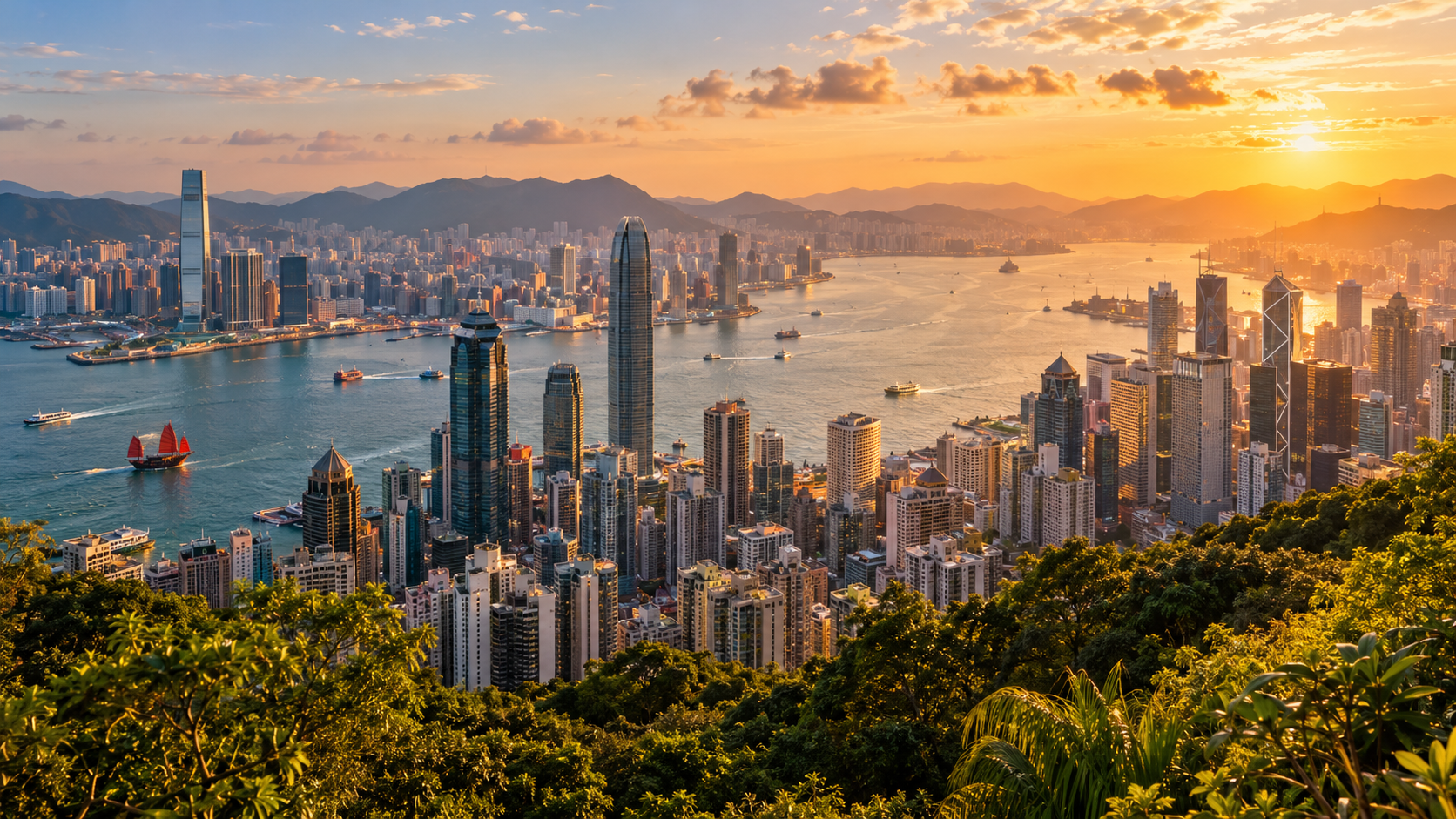
If you want the short answer, October through early December is usually the sweet spot.
The weather tends to feel less humid, skies are often clearer, and walking around the city is far more comfortable than during peak summer. Hiking becomes realistic instead of feeling like a personal challenge issued by the sun.
But Hong Kong is a year-round destination, and the best month really depends on what you want.
Want hiking and skyline views? Fall wins.
Want cool weather and fewer sweaty subway rides? Winter works well.
Want beaches, swimming, and long summer days? Summer can make sense, as long as you accept heat, humidity, rain, and typhoon risk.
Want festivals? Lunar New Year changes the equation completely.
And if you hate crowds, there are a few dates you should circle in red and avoid.
Hong Kong’s seasons are more distinct than many first-time American visitors expect.
This is not Singapore, where temperatures barely move all year.
Winter can actually feel cool. Summer can feel brutally humid. Fall often feels almost suspiciously pleasant.
Hong Kong Weather at a Glance
Hong Kong has a subtropical climate influenced by the South China Sea and seasonal monsoon patterns.
Winters are generally mild and drier.
Spring becomes warmer, cloudier, and increasingly humid.
Summer is hot, wet, and storm-prone.
Fall gradually becomes drier and more comfortable.
| Season | Typical Feel | Best For |
|---|---|---|
| December-February | Mild to cool, relatively dry | City sightseeing, food, hiking |
| March-May | Warmer, humid, often cloudy | Urban travel, spring events |
| June-September | Hot, very humid, rainy | Beaches, indoor attractions, summer trips |
| October-November | Warm, drier, clearer | Best overall weather, hiking, views |
October Is One of the Best Months Overall
October is the month many experienced Hong Kong travelers quietly prefer.
The oppressive summer humidity begins to ease. Rainfall usually drops compared with the wettest summer months. Temperatures remain warm enough for outdoor plans, but walking around Central or Kowloon does not feel like moving through a steam room.
Visibility can also improve.
That matters in Hong Kong because so many classic experiences depend on views.
The Peak.
Victoria Harbour.
Dragon’s Back.
Lantau hiking trails.
Skyline photography.
A clear day changes all of them.
But there is one major October catch: the Mainland National Day Golden Week, normally around October 1 through 7.
This period can bring a major surge in visitors.
Attractions become busier. Border crossings get heavier. Popular districts fill up. Hotel demand rises.
If you want October weather without October crowds, aim for later in the month.
November Might Be Even Better
Honestly, November is hard to beat.
Humidity usually feels much more manageable, temperatures remain comfortable, and outdoor conditions are often excellent.
You can spend a full day walking through Central, Sheung Wan, Tsim Sha Tsui, and the waterfront without needing to plan your life around air conditioning.
Hiking conditions also improve dramatically.
This is when trails such as Dragon’s Back, sections of the MacLehose Trail, and routes around Sai Kung become especially appealing.
The sea is still present, obviously, but the trip shifts from beach-first to outdoors-first.
For most first-time visitors from the U.S., November is probably the safest all-around recommendation.
December Gives You Cool Weather Without Real Winter
December is another strong choice.
Temperatures are usually mild by American standards, especially if you are arriving from New York, Chicago, Boston, or anywhere else already dealing with winter coats.
Hong Kong residents may be wearing jackets.
You may be wondering why.
Evenings can feel cool, particularly near the water or at higher elevations, so bring a light layer.
The city also becomes festive toward Christmas and New Year.
Shopping districts, hotels, and waterfront areas often add seasonal decorations and events.
Hotel prices can rise around the holidays, though.
January Is Great if You Hate Heat
January is usually one of Hong Kong’s coolest months.
Daytime sightseeing is comfortable, especially for travelers who struggle with tropical humidity.
You can walk for hours without arriving everywhere soaked.
That alone is a luxury in Hong Kong.
The downside is that weather can sometimes feel gray or damp rather than crisp and sunny.
Cold fronts may push temperatures lower than visitors expect.
Hong Kong buildings are also designed more for heat than cold, so chilly days can feel oddly chilly indoors too.
Bring a sweater.
February Can Be Quiet – Until Lunar New Year Arrives
February weather remains relatively mild.
But travel conditions depend heavily on the Lunar New Year calendar.
Lunar New Year is one of the most important festive periods in Hong Kong and across the wider Chinese world.
The city fills with decorations, flower markets, family celebrations, special meals, and holiday events.
For visitors, that can be fantastic.
It can also be crowded.
Some businesses may adjust hours, transport demand rises, and popular attractions can be packed.
If Lunar New Year culture is part of the reason you are traveling, lean into it.
If your dream trip is empty streets and easy dinner reservations, pick another week.
March Is the Start of the Humid Transition
March looks good on paper.
Temperatures are comfortable.
Summer heat has not arrived.
But humidity starts creeping upward, and low clouds or mist can reduce visibility.
This matters especially if you are planning scenic viewpoints.
You can take the Peak Tram, reach the top, and discover that Victoria Harbour has temporarily decided not to exist.
Not ideal.
Still, March works well for museums, food trips, neighborhood exploration, and shopping.
April Gets Warmer and Wetter
April feels more subtropical.
Temperatures rise.
Humidity becomes more obvious.
Rain chances increase.
That does not mean constant rain.
Hong Kong rain can arrive in bursts, clear for a while, then return later.
An umbrella becomes part of your daily setup.
The good news is that vegetation turns lush and green, and temperatures are still much easier than July or August.
May Is Where Summer Starts Knocking
May can be a mixed bag.
Some days feel pleasantly warm.
Others feel like summer arrived early and forgot to send a warning.
Humidity becomes serious.
Thunderstorms and heavier rainfall become more common.
The city still works perfectly well for travel, but you need a different rhythm.
Walk in the morning.
Use museums, malls, cafés, and indoor attractions during hotter or wetter periods.
Go out again in the evening.
Hong Kong is very good at indoor escape plans.
June Through August Is Hot. Very Hot.
Summer in Hong Kong is not gentle.
High temperatures combine with high humidity, and that combination makes everything feel more intense.
A short walk uphill can suddenly become an athletic event.
Rainfall is also high.
Thunderstorms can be dramatic.
Typhoons become part of weather planning.
Does that mean you should never visit in summer?
No.
But expectations matter.
Why Summer Can Still Be Fun
Hong Kong has beaches.
Quite a lot of them, actually.
Repulse Bay and Shek O are easy names for first-time visitors. More remote coastal areas around Sai Kung offer a completely different side of Hong Kong.
Summer also works if your trip is food-heavy, shopping-heavy, or focused on major indoor attractions.
The public transportation system is air-conditioned.
Malls are everywhere.
Museums give you a break from the humidity.
Night markets and evening waterfront walks become more appealing after sunset.
Typhoon Season Sounds Scarier Than It Usually Is
Tropical cyclones can affect Hong Kong, particularly during the warmer months.
The broader risk period overlaps much of summer and early fall.
The Hong Kong Observatory uses a tropical cyclone warning signal system to communicate conditions.
Most travelers will never experience a major direct hit.
But storms can disrupt flights, ferries, attractions, and transportation.
If you visit during typhoon season, build a little flexibility into the trip.
Do not schedule your international flight, a ferry, and a nonrefundable tour inside the same four-hour window.
That is asking weather to teach you a lesson.
September Is Hot but Starts Improving
September is still basically summer for much of the month.
Heat and humidity remain high.
Tropical cyclone risk has not disappeared.
But by late September, occasional clearer and slightly drier days begin hinting at the much better fall season ahead.
If hotel prices or school schedules force you into September, late month is often preferable to early month.
Best Time for Hiking in Hong Kong
This surprises first-time visitors: Hong Kong is a fantastic hiking destination.
Skyscrapers get the marketing photos, but large areas of the territory are mountainous and green.
There are coastal trails, reservoir routes, steep ridges, beaches reachable on foot, and country parks that feel remarkably far from Central.
Late October through February is usually the most comfortable hiking window.
- November is excellent for longer hikes.
- December brings cooler temperatures and relatively low humidity.
- January works well if you prefer cool conditions.
- February can still be comfortable before spring humidity rises.
- Summer hiking requires much more attention to heat, storms, water, and sun exposure.
Dragon’s Back Is the Easy Introduction
Dragon’s Back is one of the city’s most famous hiking routes.
It offers ridge views, coastal scenery, and relatively easy access from urban Hong Kong.
It is popular for a reason.
Go on a clear weekday morning if possible.
Weekend hiking culture is serious here.
You will not be alone.
Sai Kung Shows You Hong Kong Without Skyscrapers
Sai Kung and the surrounding country parks deliver a completely different visual experience.
Blue reservoirs, green hills, islands, beaches, and rocky coastline replace high-rise buildings.
Some locations require buses, minibuses, taxis, boats, or hiking combinations to reach.
That little extra effort filters out some crowds.
Not all of them, but some.
Best Time for Beaches
If swimming is a priority, late spring through early fall gives you warmer conditions.
June through September offers the most obvious beach weather, though rainfall and storms become bigger variables.
October can be an underrated beach month.
Air temperatures remain warm, water can still feel pleasant, and humidity often becomes easier.
You may get beach weather without peak summer discomfort.
Best Time for Victoria Peak Views
Clear visibility matters more than temperature.
Fall often gives you the strongest odds.
October and November can produce sharp skyline views stretching across Victoria Harbour and Kowloon.
Winter can also be excellent.
Spring is less predictable because humidity and low clouds can reduce visibility.
Do not blindly buy Peak tickets days ahead because an itinerary told you “Tuesday at 2 p.m.”
Look outside.
If the skyline has vanished into haze, switch days if possible.
Best Time for Food Trips
Any time.
Seriously.
Weather barely matters when the main mission is dim sum.
Hong Kong is one of the world’s great food cities, and culinary travel works year-round.
Hot weather even has its own advantages because many meals happen inside aggressively air-conditioned restaurants.
Winter suits clay pot rice, hot pot, roasted meats, and comforting bowls of noodles particularly well.
Summer makes cold drinks, desserts, and late-night eating feel even better.
Major Crowd Periods You Should Know
Weather is only half the story.
Hong Kong sits beside one of the world’s largest outbound travel markets, and Mainland Chinese holiday periods can dramatically affect visitor numbers.
The two biggest periods to watch are Lunar New Year and National Day Golden Week around October 1.
Labour Day holidays around early May can also increase travel.
| Period | Crowd Level | What to Expect |
|---|---|---|
| Lunar New Year | Very high in popular areas | Festivities, holiday travel, adjusted opening hours |
| Early May holidays | High | More regional visitors and attraction queues |
| October 1-7 | Very high | Golden Week visitor surge |
| Christmas/New Year | High | Events, shopping crowds, higher hotel demand |
Golden Week Can Be Seriously Busy
This is not theoretical.
During the 2026 National Day Golden Week, roughly 1.6 million visitors arrived in Hong Kong over seven days.
Major attractions experienced heavy visitor flows, and hotel occupancy reached high levels.
So if you want pleasant October weather but dislike crowds, do not automatically book October 1.
October 15?
Much smarter.
When Are Hotels Usually Cheaper?
Hotel pricing in Hong Kong changes with conventions, holidays, weekends, and major events, so there is no universal cheap month.
Generally, hot and rainy summer periods can offer better deals than the most comfortable fall months.
Late spring can also produce competitive pricing outside major holidays.
But bargain hunting has a trade-off.
That $40 hotel saving starts feeling less exciting when you are walking through 90% humidity.
Pick weather first if the budget allows.
What About Chinese New Year?
Lunar New Year is a fascinating time to visit if culture matters more than convenience.
Decorations fill shopping districts.
Families gather.
Temples become active.
Seasonal foods and gift traditions appear everywhere.
Flower markets and festive events add energy to the city.
But crowds can be enormous.
Restaurant reservations become more important.
Some small businesses close temporarily while others run holiday schedules.
This is a trip you plan intentionally rather than accidentally.
Best Time for Hong Kong Disneyland
Theme parks are much easier when weather and crowds cooperate.
Late fall and winter offer the most comfortable conditions for spending long hours outside.
Avoid major holiday weeks if queue length matters to you.
October after Golden Week, November weekdays, and some January periods can work well.
Summer visits require more breaks, water, sunscreen, and patience.
Best Time for Shopping
Shopping is year-round.
Malls do not care whether it is raining.
If you are visiting mainly for luxury shopping, electronics, design stores, or local brands, climate should not control the trip.
But major holiday periods create extra foot traffic.
Christmas and Lunar New Year can feel energetic and festive, though definitely not quiet.
How Long Should You Stay?
Three days is enough to see the headline sights.
Four or five days is much better.
A week lets you understand why people who actually know Hong Kong keep talking about hiking and islands instead of only skyscrapers.
A good five-day trip could look like this:
- Spend one day around Central, Sheung Wan, and Victoria Peak.
- Explore Tsim Sha Tsui, Kowloon markets, and Victoria Harbour.
- Use one day for Lantau Island or another major outlying area.
- Spend one day hiking or visiting Sai Kung.
- Keep one flexible day for weather, museums, neighborhoods, or food.
That flexible day is particularly useful during spring and summer.
What Should You Pack by Season?
- Fall: light clothing, comfortable shoes, one light layer.
- Winter: sweater or jacket, especially for evenings and higher elevations.
- Spring: breathable clothes, umbrella, light rain protection.
- Summer: very light clothing, sunscreen, umbrella, water bottle, quick-drying fabrics.
- Year-round: excellent walking shoes because Hong Kong involves more hills and stairs than maps suggest.
Hong Kong Is Not as Tropical as Americans Sometimes Assume
People see palm trees and imagine year-round beach heat.
Then they arrive in January and discover locals wearing down jackets.
Hong Kong sits far enough north for winter cold fronts to matter.
You will not experience a New England winter.
But nighttime temperatures can feel genuinely cool after humid months.
This seasonal variation is actually helpful.
It gives travelers choices.
Should You Visit During Summer Vacation?
If summer is the only time you can go, go.
Hong Kong remains worth visiting.
You just need a summer strategy.
Start early.
Take a long lunch indoors.
Do neighborhoods after sunset.
Keep outdoor hikes short unless you are properly prepared.
Watch the weather forecast.
Carry an umbrella.
And accept that you will sweat.
Resistance is pointless.
A Month-by-Month Quick Guide
January: Cool, relatively dry, good for walking and hiking.
February: Mild, but Lunar New Year can create major crowds.
March: Comfortable temperatures, rising humidity, possible haze.
April: Warmer, wetter, still reasonable for sightseeing.
May: Humid, increasingly stormy, quieter than fall.
June: Hot and rainy; good for indoor-heavy itineraries.
July: Very hot and humid with frequent showers and storm risk.
August: Similar to July; beach weather when conditions cooperate.
September: Still hot, with tropical cyclone risk, improving late in the month.
October: Excellent weather after the early-month Golden Week crowds.
November: One of the strongest months overall.
December: Cool, drier, festive, and comfortable.
FAQ About the Best Time to Visit Hong Kong
What is the best month to visit Hong Kong?
November is one of the best choices overall. Weather is usually warm but comfortable, humidity is lower than in summer, and conditions are excellent for sightseeing and hiking.
What is the cheapest time to visit Hong Kong?
Summer and wetter shoulder-season periods can sometimes offer better hotel rates, though prices vary widely with conventions, holidays, and events. Lower prices usually come with hotter and more humid weather.
What months are typhoon season in Hong Kong?
Tropical cyclones can affect Hong Kong mainly during the warmer part of the year, with risk generally highest from summer into early fall. Always follow Hong Kong Observatory warnings during your trip.
Is October a good time to visit Hong Kong?
Yes. October usually offers warm temperatures, less humidity, and improving conditions for outdoor sightseeing. However, the National Day Golden Week around October 1-7 can be extremely busy.
Is Hong Kong too hot in July?
July is hot and very humid, but travel is still possible. Plan outdoor activities early or late, take frequent indoor breaks, and be prepared for heavy rain and tropical weather.
Is December a good month for Hong Kong?
Yes. December is relatively dry and cool, making it excellent for walking, hiking, shopping, and sightseeing. Bring a light jacket or sweater for cooler evenings.
How many days do you need in Hong Kong?
Four to five days is ideal for most first-time visitors. That gives you enough time for major city neighborhoods, Victoria Peak, Kowloon, an outlying island or Lantau, and at least one outdoor excursion.
The Best Time to Visit Hong Kong Depends on What You Hate Most
That sounds negative.
It is actually useful.
Hate humidity?
Come between November and February.
Hate cool weather?
Come in October or late spring.
Hate crowds?
Avoid Lunar New Year and the early October Golden Week.
Hate rain?
Skip peak summer.
Love beaches and do not mind heat?
Summer suddenly looks better.
This is why there is no single answer to the best time to visit hong kong.
But if you want the easiest recommendation, choose November.
The humidity normally backs off.
The city becomes pleasant to walk.
Hiking is much more enjoyable.
Views often improve.
Evenings are comfortable.
You can eat outside without melting into the chair.
October after Golden Week comes close.
December is another excellent choice if you do not mind slightly cooler conditions.
Winter works beautifully for travelers who care more about neighborhoods, food, museums, and hiking than beaches.
Spring is more unpredictable.
The temperature can be lovely, but humidity and low clouds sometimes hide the views people traveled halfway around the planet to see.
Summer asks more from you.
You need water.
You need breaks.
You need flexible plans when thunderstorms arrive.
And during typhoon warnings, you need to listen to local authorities rather than deciding your vacation schedule outranks meteorology.
Still, summer Hong Kong has its own appeal.
The city stays energetic late into the night.
Beaches make sense.
Islands feel tropical.
Indoor attractions provide endless escape from the heat.
And air conditioning here is taken very seriously.
Maybe too seriously.
You can go from sweating outside to wishing you packed a sweater inside a mall in about thirty seconds.
The bigger lesson is not to treat Hong Kong as a simple city-break destination.
The weather should influence what version of Hong Kong you see.
In November, hike.
In January, walk through neighborhoods all day.
In July, use ferries, beaches, restaurants, museums, and evening streets.
During festival periods, accept the crowds and enjoy the atmosphere instead of fighting it.
And whenever you visit, keep one day flexible.
Hong Kong rewards people who look outside in the morning and adjust.
Clear sky?
Go to the Peak.
Beautiful cool day?
Head for a trail.
Heavy rain?
Eat dim sum for two hours and visit a museum.
That is not a ruined day.
That is Hong Kong working exactly as intended.




Leave a Reply