
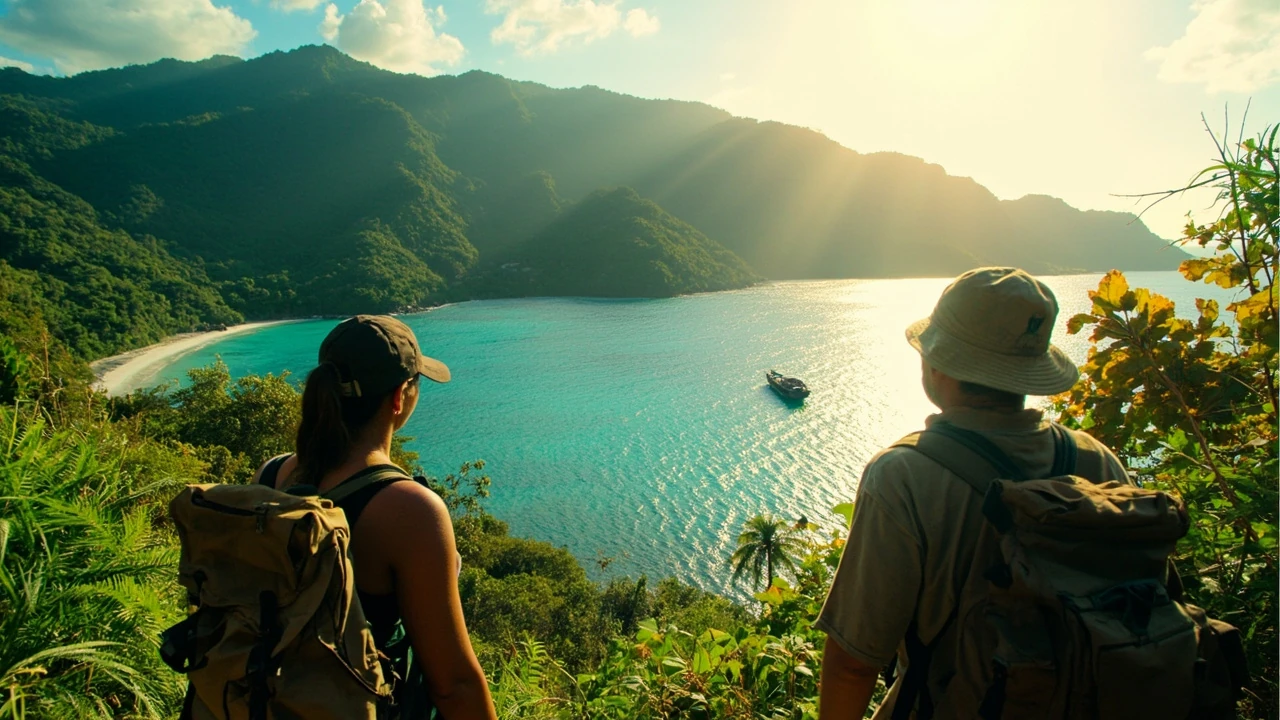
Choosing a route through Mindanao Philippines can feel complicated because the region contains large cities, long coastlines, mountain communities, coral areas, and transport links that work differently from the rest of the country. The most useful plan starts with the kind of experience you want, then connects each destination to realistic road or flight times rather than treating the region as one compact itinerary.
Mindanao Philippines: understanding the region before you book
Mindanao is the large southern island of the Philippine archipelago, and Mindanao Philippines is also used as a regional travel label for the island and its surrounding destinations. That distinction matters. A trip centered on Davao City has urban hotels, airport connections, restaurants, and business-style services. A journey into the interior involves mountain roads, smaller accommodation, weather-dependent transfers, and communities with distinct languages and traditions. An island itinerary adds boat crossings and a different kind of daily planning.
This guide focuses on a practical regional trip rather than a single city itinerary. It explains how to choose between Davao, Zamboanga, the southern coastal corridor, mountain areas, and offshore destinations. It also covers the decisions that tend to cause problems: underestimating road time, booking an island transfer without confirming the meeting point, or treating a short domestic flight as a shortcut for every leg.
Choosing the right Mindanao route for your trip
The best base depends less on a must-see list than on your tolerance for movement. First decide whether you want a short, highly organized trip or a longer journey with slower transfers. Next consider whether beaches and marine activities are the main priority, whether you want to explore cities and food, or whether cultural and mountain experiences justify longer drives.
| Travel style | Best areas to investigate | Typical pace | Main planning issue |
|---|---|---|---|
| Short first trip | Davao City and a limited number of nearby day destinations | Four to six days | Choosing excursions that do not require an overnight transfer |
| Island and marine focus | Davao coast, southern coastal routes, or an offshore island stay | Six to ten days | Sea conditions, boat timing, and flexible weather days |
| Culture and food | Davao City, Zamboanga City, Cotabato City, and selected town stays | Seven to twelve days | Respectful scheduling around community-led activities |
| Nature and slower travel | Footprints, river areas, and mountain-access communities | Ten days or longer | Road conditions and longer distances between bases |
| Multi-island route | Flights or ferries connecting regional gateways | Two to three weeks | Protecting connection time when schedules change |
Most first-time travelers benefit from using one regional gateway as a base. Davao City is the most flexible starting point for many routes because it serves as a transport hub and has a wide range of services. Zamboanga makes more sense if the western side of the island is the center of interest. Cotabato is useful for travelers focused on the southern interior and the cities around the Rio Grande de Mindanao.
Do not underestimate the scale of a route. Moving between major urban centers can consume a full travel day once airport procedures, road conditions, and onward transfers are included. A plan with four bases may need six or seven days to feel unhurried. Reducing the number of stops is often more valuable than adding another activity.
A useful rule for choosing bases
- Stay three nights in the main gateway. This leaves room for a delayed arrival, a rest day, and one dependable excursion.
- Use a second base for the main landscape experience. An island, coastal town, or mountain community works better than trying to commute daily from a city.
- Add a final night near the departure point. It protects an international flight from a delayed road transfer.
- Avoid same-day connections across long distances. Weather and traffic can make an otherwise simple connection unpredictable.
The nearby-places question can also affect pacing. If you want landmarks rather than an extended circuit, compare city-based sightseeing with a broader island route. The pattern of choosing destinations beyond a single resort is discussed in Dominican Republic famous landmarks, and the same principle applies in Mindanao: a few well-chosen stops provide more context than a long list of quick stops.
Getting around: flights, road transfers, and boats
Flights are efficient for reaching Mindanao from Manila or connecting the island with other major Philippine destinations. They are less useful as a substitute for every regional transfer. Once you land, a car, van, or boat may still be required to reach the place where the experience actually happens.
Domestic flight schedules can change, and airline timetables are not the same as door-to-door travel times. When comparing a flight with a bus or charter, include the time needed to reach the airport, check-in, arrive at the destination airport, and collect baggage or meet a transfer. A short flight may not save much if the onward journey requires another two hours of driving.
Road travel gives more control over smaller towns and rural destinations, but it requires realistic estimates. Drivers often plan around daylight, road conditions, fuel stops, and local traffic. Weather can interrupt mountain routes, while heavy rain can affect secondary roads. Avoid scheduling a remote transfer immediately before an international departure.
| Transport option | Best for | Advantages | Planning cautions |
|---|---|---|---|
| Domestic flight | Reaching Mindanao from another Philippine region | Fast over long distances | Check baggage limits, connection time, and airport transfers |
| Intercity bus | Travel between connected urban centers | Often practical and less affected by small airports | Confirm the terminal, departure point, and current schedule |
| Chartered van or car | Groups, remote stops, or door-to-door service | Flexibility and luggage capacity | Confirm the vehicle, driver, included hours, and cancellation terms |
| Motorbike or scooter | Short local exploration where legal and appropriate | Flexible for nearby stops | Check licensing, helmet rules, insurance, road conditions, and local restrictions |
| Boat or outrigger transfer | Island and coastal journeys | Direct access to places roads cannot reach | Sea conditions may alter departure times; verify baggage limits |
For island transfers, ask what happens if the boat leaves early because of weather or tide conditions. A reputable operator should explain the meeting point, cancellation policy, estimated duration, and whether the schedule depends on sea conditions. Carry the minimum practical luggage for an overnight transfer, keep medication in hand luggage, and protect electronics and documents from rain and spray.
Questions to ask before confirming any transfer
- Is the pickup location the airport terminal, a hotel, or a separate booking office?
- What is the latest safe arrival time for the flight or boat?
- How long is the journey under normal conditions rather than only the advertised travel time?
- Are tolls, fuel, parking, meals, and waiting time included in the quoted price?
- What happens if the driver is delayed, the flight changes, or weather disrupts the trip?
Where to stay for different regional experiences
Accommodation in Mindanao ranges from international-style hotels in Davao City to family-run guesthouses, beach resorts, homestays, and simple business lodging in provincial centers. Availability is generally easier in the larger cities than in remote destinations, but popular beach areas and island accommodations can still fill during holidays and school breaks.
Davao City works well for travelers who want restaurants, malls, medical services, and simple day trips. Zamboanga City offers a distinct western-region base and access to coastal scenery, although some outlying attractions require longer drives. Cotabato and nearby towns serve travelers interested in the southern interior. Mountain and island stays should be booked as part of a planned route rather than added at the last minute.
Choose accommodation by need, not by images alone
- For a short city stop: prioritize airport or terminal access, dependable air-conditioning, and a recent review of noise and cleanliness.
- For a coastal stay: ask whether the beach is directly in front of the property or reached by a road, boat, or steep path.
- For a rural stay: confirm the power supply, water conditions, mobile signal, and the availability of meals.
- For a family trip: verify room capacity, extra-bed policies, child meals, and whether the property has a pool or other facilities children can use safely.
- For a longer stay: consider laundry service, a small kitchen or refrigerator, and the practical cost of meals in nearby restaurants.
Ask the property for direct arrival instructions rather than relying only on a map pin. Some roads are unnamed on digital maps, and a map can show the destination without showing a ferry crossing, a rough road section, or the correct side of a river. A hotel should know what its local driver expects to see when arriving.
Islands, beaches, and responsible marine experiences
Mindanao has several marine destinations, but they are not interchangeable. Some appeal to divers and snorkelers, some to calm swimming beaches, and others to island-hopping or coastal nature. Before choosing, identify the activity you actually want. Visibility, currents, boat length, and daily sea conditions can matter more than the photographs used in a listing.
Day trips from Davao can reach offshore destinations for snorkeling, diving, or wildlife viewing. Some tours combine a boat ride, several stops, and a meal on an island. Longer island stays are better if you want diving days, a relaxed pace, or minimal road transfers. Confirm whether the boat has shelter, toilets, life jackets in usable condition, drinking water, and space for your equipment.
For coastal trips, consider what “beach destination” means to you. A wide sandy beach near a town with restaurants and conveniences is different from a remote island camp or a reef area reached by a long boat ride. This is similar to the coast-by-coast distinctions described in Sri Lanka beaches by coast: access and surroundings can change the experience more than the distance between two beaches on a map.
| Marine choice | Who it suits | What to verify |
|---|---|---|
| Snorkeling day trip | First-time visitors wanting a bounded activity | Current conditions, equipment quality, group size, and reef handling rules |
| Scuba-focused stay | Certified divers who want multiple dives | Operator credentials, boat access, dive guide ratio, and equipment maintenance |
| Island-hopping tour | Groups wanting several beaches in one day | Route length, sea conditions, meal arrangements, and realistic time at each stop |
| Remote coastal stay | Travelers prioritizing quiet and nature over convenience | Boat reliability, communication, medical access, waste handling, and weather plans |
| Snorkeling or diving from a larger liveaboard | Experienced travelers seeking multiple sites | Cabin conditions, itinerary flexibility, life-support equipment, and emergency procedures |
Choose operators who explain environmental rules before the activity begins. Do not step on coral, feed animals, or collect shells. Use reef-safe sun protection where required and avoid disposable plastics. If a trip involves feeding fish or interacting with wildlife, understand how animals are handled and whether the activity harms natural behavior.
Marine plans should include a weather alternative. A day spent in a coastal town, a market, or an inland cultural site is more useful than waiting all day for a canceled boat trip with no replacement plan.
Culture, food, and respectful ways to visit
Mindanao contains many distinct communities, including Lumad and Moro peoples, with languages, traditions, histories, and religious practices that should not be treated as one uniform culture. Muslim communities are especially prominent in parts of Zamboanga, Lanao del Sur, Basilan, and Cotabato. Christian, Indigenous, and Muslim traditions may exist within the same broader region, sometimes across the same travel corridor.
Learn the name of the community hosting an activity and ask about local etiquette before arrival. Dress modestly where requested, remove shoes when entering private or religious spaces, ask before photographing people or ceremonies, and follow guidance about food, greetings, and participation. A respectful visitor does not need to become an expert on every group, but should avoid implying that all Mindanaoan communities are the same.
Food is a practical entry point into regional travel. Davao offers the broadest restaurant selection, including Filipino, Filipino-Chinese, seafood, and international cuisine. Other cities are known for their own markets and specialties. Since recipes and restaurant availability change, use markets and recent local information to find current offerings rather than relying on a dated list of “must-eat” businesses.
- At markets: ask before photographing vendors, and buy small quantities of unfamiliar foods so you can try several without overordering.
- At restaurants: mention allergies, religious restrictions, and your preferred cooking level when ordering.
- During home-cooked meals: compliment the food, accept what is offered graciously, and ask before taking photographs of the meal or the household.
- During festivals: ask permission before entering a celebration and follow photography guidance from local hosts.
- With local guides: distinguish professional guiding from informal access; paying for clear local expertise supports the host community and improves interpretation.
Universities and research institutions can also add a different view of the region. The For additional context, UP Mindanao campus in Davao City includes academic and cultural facilities within a 204-hectare property in Mintal. Visits, campus access, and event arrangements should be checked directly rather than assumed from the institution’s public role.
Mountains, rivers, and responsible nature travel
The interior of Mindanao includes mountains, forests, river systems, waterfalls, and protected landscapes. These places attract travelers looking for cooler conditions, hiking, wildlife observation, and scenery, but access varies substantially. Some routes have established trails and visitor facilities. Others require coordination with local guides, community organizations, or park authorities.
Do not treat a difficult mountain route as a casual day hike. Weather can change quickly in elevated terrain, and river crossings may rise after rain. A local guide can provide more than convenience: they may know which paths are appropriate for current conditions, explain local ecology, and support communities that depend on careful visitor use.
| Nature experience | Preparation | Important limitation |
|---|---|---|
| Waterfall or river visit | Check access, water levels, footwear, and the return journey | Heavy rain can make streams hazardous or roads difficult |
| Mountain hike | Use a local guide, carry water, protect your devices, and allow a generous return window | Do not rely on a clear morning as a guarantee of safe conditions |
| Bird or wildlife observation | Follow guide instructions and keep voices and movement low | Visible animals should not be approached or fed |
| Protected-area visit | Confirm permits, fees, seasonal rules, and group limits | Rules differ by site and may affect access |
| Farm or community-based activity | Book through the host organization and ask what the visit includes | Respect private working areas and avoid treating hosts as performance guides |
Pack for conditions rather than the destination’s marketing image. Even in a tropical region, mountain temperatures can feel different in the evening, and wet trails make sandals unsuitable. Bring a dry bag, insect repellent, a small first-aid kit, and enough water for delays. Avoid soap, sunscreen, or waste that could contaminate a river or waterfall pool.
Wildlife tourism also requires restraint. Stay on marked paths, maintain distance, and never move food for animals to approach. A photograph taken after an animal approaches because it was fed is not a responsible wildlife encounter.
Sample itineraries for different trip lengths
The best itinerary depends on your starting city, the number of days available, and whether your flight arrives in the morning or evening. The following frameworks show how to allocate time without claiming that every route has identical travel conditions.
Seven-day Davao-focused route
- Day 1: arrive in Davao City, check in, and keep the schedule light.
- Day 2: explore city culture, food, and market areas.
- Day 3: take a scheduled regional excursion with enough time to return comfortably.
- Day 4: use a buffer day for weather, rest, or an optional city attraction.
- Day 5: visit a coastal or countryside destination appropriate to your activity.
- Day 6: return to Davao for shopping, a final meal, and transport checks.
- Day 7: allow time for the airport and depart.
This route works for travelers who want a low-friction introduction. It limits the number of bases and keeps difficult transfers out of the schedule.
Ten-day southern corridor route
- Days 1–2: arrive and explore Davao City.
- Days 3–4: travel south to a coastal base and use one full day for marine or coastal activities.
- Days 5–6: continue toward the Zamboanga area, with the route adjusted to current transport.
- Days 7–8: explore Zamboanga City and a nearby coastal or cultural destination.
- Days 9–10: return to the departure gateway with a generous connection buffer.
This version works best for travelers who can handle several long road days. It should not be compressed into seven days without checking the precise transfer times.
Twelve-day culture and nature route
- Begin with two nights in Davao City.
- Transfer to Cotabato or another southern interior base for three nights.
- Use a locally arranged excursion for a community, river, or landscape experience.
- Add one flexible weather day.
- Travel toward the western coastal corridor.
- Stay two nights in Zamboanga City.
- Finish with one night near the appropriate departure point.
The final itinerary should not promise access to every attraction. Choose activities that fit the season, community request, and current transport network. A spare day is part of the plan, not empty space.
Budgeting, packing, and booking a smoother trip
A regional trip can cost less than a resort-centered vacation because accommodation, meals, and local transportation vary widely. It can also become expensive when island transfers, charter vehicles, domestic flights, and last-minute rooms are combined without a plan. Build the budget around the actual route rather than comparing only daily hotel rates.
For most travelers, the largest avoidable costs are remote transfers, rushed itineraries, and unsuitable accommodation. A slightly longer trip with fewer bases may cost less than moving every two nights while paying premium rates for limited availability.
| Budget category | What changes the price | Ways to control cost |
|---|---|---|
| Domestic flights | Route, airline, timing, baggage, and advance booking | Compare the complete journey, not only the base fare |
| Accommodation | City hotels, beach resorts, homestays, and seasonal demand | Set a nightly ceiling before choosing the route |
| Ground transport | Group size, distance, road conditions, and waiting time | Share vehicles where practical and confirm inclusions |
| Island activities | Boat type, destination, equipment, meals, and group size | Compare what is included and the weather policy |
| Meals | City dining, hotel restaurants, and remote stops | Combine market meals and hotel breakfasts without skipping meals |
| Entry and permits | Destination, activity, and local conservation rules | Check official requirements before arrival |
Pack for tropical heat, rain, and long transfers. Useful items include a lightweight rain jacket, dry bag, comfortable closed shoes, insect repellent, sunscreen, refillable water bottle, basic medical supplies, and a universal adapter. Bring a second pair of shoes if you expect muddy trails or wet boat landings.
- Before booking: verify passport and entry requirements, travel advisories, health guidance, weather patterns, and the operating status of your chosen destinations.
- Two weeks before: confirm domestic flights, island accommodation, and transfers that require a reserved vehicle.
- One week before: check official weather updates, ferry or boat notices, festival calendars, and the day-by-day route.
- One day before: reconfirm pickup times, terminal changes, entry documents, and the first meal and transport of the next day.
- On arrival: save local emergency numbers, verify mobile data or a local SIM, and avoid overpacking the first day.
Leave room in the schedule for local conditions. The Philippines experiences regional wet and dry periods, but rainfall patterns vary, and a tropical forecast can change quickly. Check conditions for the exact destination rather than relying on a general forecast for the entire island.
Frequently asked questions
Is Mindanao safe for tourists?
Many parts of Mindanao are visited by international and domestic travelers, but conditions differ by province, city, and neighborhood. Check current official travel advisories and local guidance before departure and throughout the trip. Use normal urban awareness, follow local instructions, and avoid areas that authorities specifically advise against. It is also sensible to keep an emergency contact plan for remoter journeys.
Is Mindanao Philippines the same thing as Mindanao Island?
Mindanao Island is the physical landmass at the southern end of the Philippine archipelago. The phrase “Mindanao Philippines” is also used for the broader region and the travel routes connected to it. Administrative boundaries do not always match the geographic island, so a route can include destinations in different Philippine regions. Check provincial boundaries when permits, currency, transport, or local regulations matter.
How many days are needed to visit Mindanao?
Four or five days work for a Davao-focused introduction. A week allows a regional excursion, while ten to fourteen days provide room for a coastal, cultural, or nature route without rushing every transfer. Island travel may require additional days because sea conditions can affect departure schedules.
What is the best way to reach Mindanao?
For most international travelers, a domestic connection through a Philippine gateway is the usual approach. Within the country, flights are efficient over long distances, while buses and chartered vehicles can be more practical for regional cities. Compare door-to-door timing, luggage rules, and the risk of a tight onward connection before choosing.
Do I need a boat to visit the islands around Mindanao?
Most offshore destinations require at least one boat transfer. Some routes also use a combination of road and boat travel. Confirm the meeting point, departure time, estimated duration, baggage limit, and weather policy. If you are connecting to a flight on the same day, allow a substantial buffer or spend the previous night near the departure gateway.
Can I visit multiple Mindanao regions in one week?
You can, but each additional base adds transfer time. A Davao-centered week feels more relaxed than a route combining Davao, Zamboanga, and the southern interior. For a broader trip, use a flight or overnight road transfer between major centers and avoid scheduling several long drives in consecutive days.
What should I wear when visiting cultural or religious sites?
Wear clothing that covers shoulders and knees, and bring a lightweight layer for air-conditioned vehicles or indoor spaces. Remove shoes when asked. Religious sites and community events may have additional guidance, so contact the host organization beforehand when visiting for a ceremony or structured activity.
Is English widely spoken in Mindanao?
English is widely used in many urban, educational, and tourism settings, especially in Davao City. Outside major centers, local languages may be more common. Learn a few courtesy phrases and do not assume English will be sufficient for every community interaction or remote transfer.
What is the best season to visit Mindanao?
The best period depends on the route and the activities you want. Beach and diving plans depend heavily on sea conditions, while mountain travel can be affected by rain. Check regional forecasts and operator notices for the specific months you plan to travel, and maintain a flexible day for weather-related changes.
What should I do if a boat trip is canceled?
Ask the operator how the cancellation will be communicated, whether a refund or credit applies, and whether another departure is possible. Keep enough time in your itinerary to avoid a same-day international flight after the expected boat crossing. A backup activity in the port or nearby town is useful for weather days.

Leave a Reply