
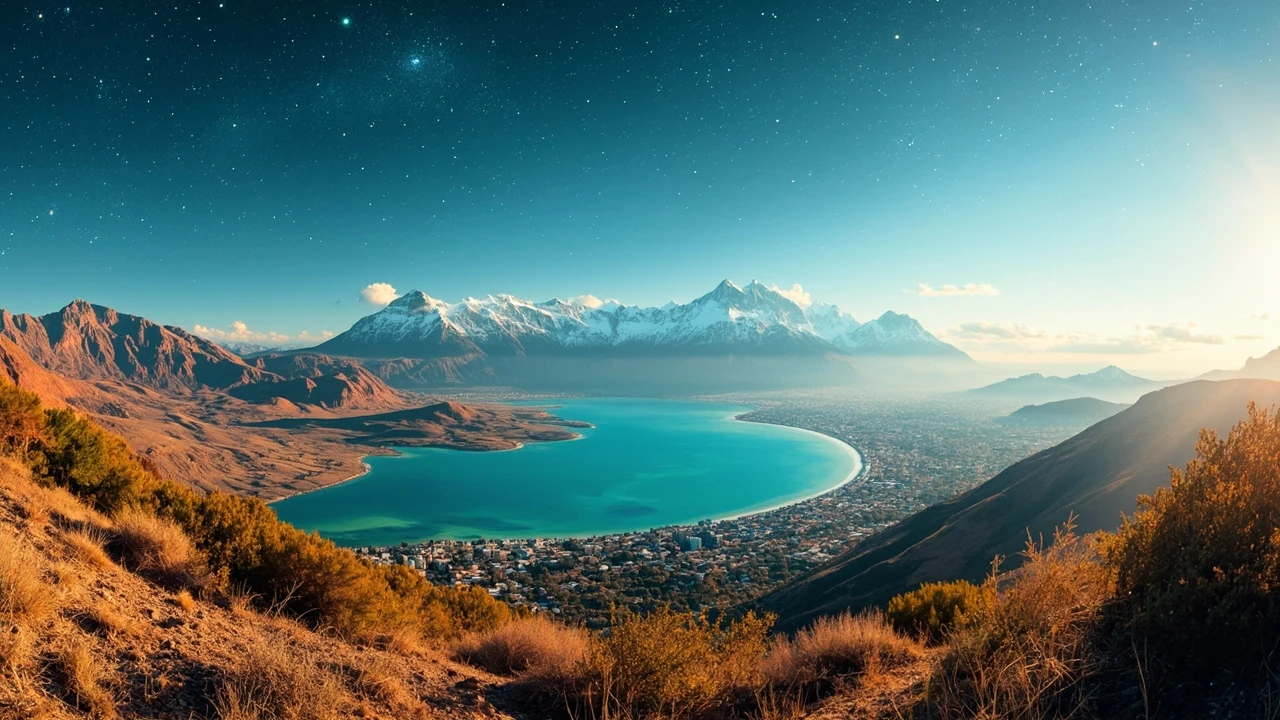
Chile attractions for every kind of traveler: a practical regional guide
A first-time visitor can spend weeks in Chile and still miss the landscapes that made the country famous. Santiago offers city culture, mountains, and a growing food scene; the Atacama Desert supplies some of the clearest skies on Earth; Patagonia delivers glaciers, granite towers, and long drives; and Easter Island introduces a completely different chapter of Polynesian history. Choosing the right chile attractions starts with geography, because the distances between them are substantial.
This guide compares the principal destinations by setting, atmosphere, typical time needed, and the kind of experience they offer. It also identifies practical tradeoffs. Some places reward travelers who value organized activities and easy access. Others suit people willing to accept long transfers, variable weather, and fewer spontaneous changes in plans.
Chile is long and narrow, stretching from the Atacama in the north to the fjords and ice fields in the south. That shape matters. A visit to one region does not automatically make the neighboring regions convenient. Even within Patagonia, a trip centered on Torres del Paine should not be treated as identical to a journey through the Carretera Austral. The most useful itinerary is one that clusters destinations instead of chasing every famous viewpoint.
How to choose the best Chile attractions for your trip
The strongest chile attractions fall into several broad travel styles. City travelers usually prefer Santiago as a base. Adventure travelers may focus on the Atacama, the Lake District, or Patagonia. History and culture visitors can combine Santiago, Valparaíso, Chiloé, and Easter Island. Landscape photographers often prioritize the Atacama, Torres del Paine, and remote southern routes, although weather and access can limit their options.
| Travel priority | Best places to consider | Main advantage | Important limitation |
|---|---|---|---|
| City culture and easy eating | Santiago and Valparaíso | Restaurants, museums, neighborhoods, and a mix of urban and coastal scenery | Valparaíso is hilly, and Santiago does not represent Chile’s southern wilderness |
| Desert scenery and astronomy | San Pedro de Atacama and the Salar de Atacama | Salt flats, volcanoes, high-altitude lagoons, and exceptional night skies | Elevation, intense sun, and long distances require careful planning |
| National parks and active travel | Torres del Paine, Aysén, and the Carretera Austral | Glaciers, mountains, forests, wildlife, and road-trip scenery | Distances are long, conditions change quickly, and some routes depend on ferries or seasonal access |
| Volcanic lakes and outdoor recreation | Puerto Varas, Valdivia, and the Lake District | Waterfront towns, temperate scenery, thermal areas, and access to lakes and volcanoes | Weather can make viewpoints unreliable even when nearby towns are comfortable |
| Indigenous and island culture | Easter Island and Chiloé | Distinct histories, crafts, landscapes, and traditions unlike mainland Chile | Both require additional travel planning and benefit from local guides |
Time is the next filter. Santiago and its nearby destinations can work for a short trip, but they do not create a complete picture of the country. The Atacama works well as a focused destination if you are willing to slow down and adjust to a dry environment. Patagonia needs more room because distances between settlements are long and weather may disrupt outdoor plans. Easter Island is a major commitment rather than a quick excursion from Santiago.
Your preferred pace also matters. A packed itinerary is rarely beneficial in a country where conditions change. Choose two or three anchors for each region instead of placing a dozen destinations on a map. Build extra time around the most weather-dependent activities, such as hiking, boat excursions, or scenic drives.
Consider these questions before booking:
- Do I want dense cultural activity, dramatic landscapes, physical adventure, or a mixture?
- How much time can I spend in transit rather than at the destination?
- Do I prefer organized excursions, independent road trips, or a local base where I can explore nearby places?
- Will my schedule tolerate altitude, strong sun, rain, wind, or ferry connections?
- Is the destination’s seasonal condition more important than simply fitting it into a fixed calendar?
For travelers building a broader South American itinerary, regional pacing can also be compared with choices farther north or across the continent. Timing matters when choosing Hong Kong, while the geography of Sri Lanka’s coast demonstrates how a country’s climate can create very different conditions within a relatively compact itinerary. The same principle applies in Chile, where the north and south can feel like separate countries.
Santiago attractions for history, food, and mountain views
Santiago is the country’s capital and the most practical entry point for a first visit. It combines dense urban streets, modern neighborhoods, historic civic spaces, and an immediate view toward the Andes. Rather than treating the city only as a transit point, travelers can spend two or three days exploring separate parts of the city and its surrounding valleys.
The historic center provides a manageable introduction to Chilean history. Around Plaza de Armas, the city’s main square, travelers can walk between major civic landmarks and continue toward the riverside neighborhood of Lastarria and the higher slopes of Cerro San Cristóbal. The uphill journey reveals a wider view over the basin, although a walking tour of the hillside requires more effort than a ride up. Cerro Santa Lucía offers another perspective, with landscaped paths and city views on a smaller scale.
Museums and historic homes help explain the country’s political and social history. For many visitors, these places are more rewarding when paired with neighborhood walks rather than treated as isolated stops. The Biblioteca Nacional, parks, markets, and traditional cafés reveal daily life alongside the official monuments. A few hours spent observing how Santiago moves between administrative spaces, residential districts, and the mountain edge gives the city a clearer identity.
Food is one of the strongest reasons to remain in the capital. The city is large enough for distinct culinary zones, and a traveler can move from a market breakfast to a long lunch and then explore a different neighborhood in the afternoon. Seafood, grilled meats, empanadas, and complete meals built around bread or potatoes are common choices. Restaurants may offer a daily set menu, or
For a sample day, begin with a market or historic center, continue to a museum or cultural site, and reserve the afternoon for a neighborhood meal. Leaving the central city for a wine-country visit adds another dimension, but it also turns the day into a longer excursion. The best results come from choosing a small number of districts and spending enough time to understand their pace.
Day trips from Santiago offer access to different scenery. The Maipo Valley and the foothills toward Cajón del Maipo provide mountain landscapes, while the Andes and the Chilean side of the Argentina border can be experienced on longer routes. Conditions vary greatly with elevation and weather. Travelers who want dependable urban sightseeing can remain in Santiago; those who prioritize mountains should reserve a separate day rather than squeezing the mountains into a short transfer day.
Valparaíso is the most useful companion destination. Its colorful hills, port history, street art, and steep stairways reward travelers who like walking and getting a little lost. The city can be visited from Santiago, but an overnight stay allows a morning walk before the return journey. Because the historic center involves steep inclines and uneven paving, comfortable shoes are more useful than a rigid sightseeing schedule.
Northern Chile attractions: coast, high-altitude towns, and the Atacama
Northern Chile contains several landscapes that cannot be experienced in the capital. The coastal route north of La Serena combines cliffs, desert, and ocean. Farther inland, the Atacama lies at extreme elevation and receives little rainfall. The region is often treated as one continuous attraction, but the coast and high desert require different preparation.
The Atacama is the northern centerpiece. San Pedro de Atacama serves as the main service town, while surrounding routes lead to salt flats, geysers, high-altitude lagoons, volcanoes, and settlements shaped by mining and tourism. Sunrise and sunset offer the clearest contrasts, and the desert’s minimal moisture makes the sky unusually dark at night. Popular sites are spread out, so distances that look short on a map can consume a full day.
| Atacama experience | What visitors can emphasize | Planning consideration |
|---|---|---|
| Salt flats and flamingos | Open landscapes, reflective water, and birdlife at appropriate viewing areas | Sun protection and realistic driving times matter more than photographing the first pool reached |
| High-altitude geysers | Geothermal activity in a sparse volcanic landscape | Stay on marked paths and follow local guidance around fragile ground |
| Desert lagoons | Colorful high-altitude scenery and Andean peaks | Altitude can affect travelers unaccustomed to thin air; acclimatization may take time |
| Night skies | Darkness, stars, and occasionally guided astronomical observation | Moon phase, cloud cover, and light pollution influence what is visible |
Atacama visits should not be organized as a race through every lookout. Long drives between features, slow roadside stops, and periods of stillness produce a better experience than a tightly timed circuit. Staying more than one night also allows travelers to wait for clearer conditions and distribute major stops across different days.
Other northern attractions extend the story. The coastal towns around La Serena offer seaside promenades, beaches, and access to marine scenery. Inland routes can lead to ancient or unusual landscapes, but roads become more remote and mobile service less predictable. travelers choosing this region should confirm current road conditions, transport arrangements, and attraction access with local operators rather than relying on a landmark’s reputation alone.
For travelers interested in the country’s Indigenous cultures, archaeological sites and community-led experiences require more sensitivity than a standard sightseeing stop. A qualified guide can explain the significance of a place, local rules, and why photographs or access may be restricted. Such visits should support rather than displace local guides and communities.
The north is best for travelers who value emptiness, geology, and astronomy. It is less suitable for someone expecting a dense sequence of museums or nightlife. Pairing the Atacama with Santiago gives a useful contrast: one destination foregrounds the country’s modern capital, while the other reveals an extreme environment on a vast scale.
Atacama highlights and the best places beyond the salt flats
Most travelers first think of the Salar de Atacama when they hear about the region’s signature sights. The salt flat is visually dramatic, but the surrounding plateau contains quieter attractions that often reward more attention. The useful decision is not simply whether to see the salt flat, but how much time to devote to the landscape around it.
A sunrise visit offers low-angle light and cooler temperatures, but it can also mean a very early start. Late afternoon can produce warm colors and longer shadows. Midday is harsh because the white surface reflects intense light. Bring sun protection, water, and layers even when the air feels dry, since temperature differences between sun and shade can be significant.
High-altitude lagoons are another defining part of the Atacama. Depending on elevation and seasonal water levels, some contain flamingos and other birds, while surrounding cliffs take on colors that change throughout the day. Wildlife viewing requires patience and a respectful distance. The correct behavior is to observe with binoculars or a camera lens rather than approach nesting or feeding areas.
Geyser fields and fumaroles show a different side of the desert. These are active geothermal features, and boardwalks or designated paths exist for good reasons. The ground can be unstable, hot, and fragile. Shoes that can handle uneven surfaces are more appropriate than footwear designed only for smooth city walks.
The night sky deserves time of its own. A clear moonless night in a dark location offers a different experience from an organized astronomy session. Travelers who want constellations, planets, and deeper observation should consider the phase of the moon. Those interested mainly in the landscape may prefer a quieter viewpoint near town. Light pollution around developed areas also affects visibility.
Staying in San Pedro de Atacama offers access to food, services, and tours without requiring every night in a remote lodging. Accommodation farther into the landscape can produce spectacular isolation, but it also raises the cost of a missed meal, a weather delay, or a vehicle problem. For a first visit, a town base is often the more resilient choice.
Visitors who see the Atacama only as a day trip from another city may feel rushed. A full itinerary should include at least one open day, one sunrise outing, one night-sky period, and a slower route to a secondary feature. The reward is not simply more photographs; it is time to understand how water, salt, geology, and extreme dryness shape the region.
Lake District attractions for lakes, volcanoes, and maritime towns
South of Santiago, the Lake District is one of the easiest parts of Chile to explore at a relaxed pace. The region around Puerto Varas, Llanquihue Lake, and Osorno combines broad water views with volcanic peaks. Rain is more common here than in the Atacama, and weather can obscure a mountain that was visible the previous day. Travelers who pack for change are more likely to enjoy the area.
Puerto Varas sits beside Llanquihue Lake and serves as a practical base for boat trips, waterside walks, and access to surrounding countryside. Osorno Volcano and the scenery around nearby lakes provide the region’s strongest visual focus. Volcanic activity can influence visitor access, so travelers should follow current park and transport notices instead of assuming every viewpoint is open.
Further south, Valdivia and the waterways around it offer a greener, quieter counterpoint. The city’s riverfront and the surrounding countryside are connected to a distinctive coastal and island landscape. Chiloé is an island region with its own weather, wooden architecture, markets, coastal scenery, and strong craft traditions. The main settlements are connected to the mainland by bridges and ferries, making it a logical northern extension of a southern Chile itinerary.
Chiloé’s attractions are often divided between towns, rural landscapes, coastal islands, and cultural sites. The island rewards travelers who move beyond a single photo stop. A local guide can add context to the geography, food traditions, and the architecture shaped by Chiloé’s isolation and maritime history. Ferries and road crossings should be treated as part of the journey rather than overlooked details.
South of Chiloé, the Chilean lake region continues through forest, islands, channels, and communities shaped by forestry and fishing. Weather shifts can be abrupt. Road trips need more time than the map suggests because detours, slow roads, and conditions around mountain passes are normal features of the route.
The Lake District works well for travelers who want scenery without the most demanding logistics of Patagonia. It also pairs naturally with Santiago and northern destinations. A route can move from the capital to the Lakes, cross to Chiloé, and then continue south if the itinerary allows. The primary decision is whether to choose organized day trips from a town base or commit to a self-drive route with more time on the road.
Those planning a longer South America itinerary may also value comparisons between coastal landscapes. The guide to Sri Lanka beaches by coast shows how distance, season, and shoreline type can shape a coastal trip. In southern Chile, the equivalent comparison is between the exposed Pacific coast, the calmer channels, and the inland lakes.
Patagonia attractions: Torres del Paine, Aysén, and the Carretera Austral
Patagonia is the destination most travelers imagine when they picture Chile. It contains glaciers, fjords, granite peaks, grasslands, forests, and some of the most remote roads in the country. It is also a place where schedules need flexibility. A clear day can make a viewpoint extraordinary; clouds and wind can turn the same stop into a short roadside pause.
Torres del Paine is the best-known national park and a common reason to enter the region. Its famous circuit and shorter visitor routes provide access to lakes, glaciers, forests, and the granite towers that give the park its name. The scenery is powerful, but transport, accommodation, and weather can dictate how much of it travelers actually see. Guided walks, boat excursions, and park excursions each provide different degrees of structure, so they should be compared by desired activity rather than assumed to be interchangeable.
Aysén offers a less concentrated and often quieter form of Patagonian travel. Glacier faces, lakes, coves, and forest settlements are spread across a difficult road network. Routes between places take longer than expected, and ferry crossings may be part of the journey. The region rewards flexibility, but it is not the simplest choice for a traveler with a rigid schedule or limited driving experience.
The Carretera Austral is famous for its remoteness. The For additional context, BBC Travel guide to Chile describes it as a remote and demanding road trip whose scenery rewards persistence. That description captures why it appears on many itineraries: the route is not simply a transfer between major cities. Each section has its own weather, road conditions, bridges, ferry crossings, and settlements. A route that looks manageable on a map can occupy an entire day and still produce unexpected delays.
| Patagonia option | Best for | Travel style | Key drawback |
|---|---|---|---|
| Torres del Paine | First-time visitors seeking iconic scenery and organized activities | Park base with guided or scheduled excursions | Demand for lodging and transport can be high during popular periods |
| Aysén | Travelers seeking fjords, glaciers, and quieter routes | Flexible road trip with ferry connections | Long transfers and less flexible weather-dependent plans |
| Carretera Austral | Experienced road travelers seeking remoteness | Self-drive or guided expedition with overnight stops | Demanding conditions, limited services, and substantial time requirements |
| Southern Pacific coast | Scenic driving, coastal towns, and quieter landscapes | Road journey linking the far south with the north | Weather can affect roads and ferry-dependent segments |
Caleta Eugenia offers another perspective on the far south. The BBC Travel guide identifies it as the southernmost point in Chile that can be reached by road. Its remoteness gives it significance for travelers interested in the geography of the region, though reaching it requires serious planning rather than treating it as a casual side trip.
Safety in Patagonia comes down to preparation. Drivers should understand that services may be widely spaced and that weather, road surfaces, and ferry schedules can change. Travelers should not depend on a single planned activity for the emotional payoff of the trip. Build redundancy into the itinerary, carry appropriate clothing, and keep enough time to wait for conditions to improve.
Patagonia is not merely a checklist of famous chile attractions. Torres del Paine offers a concentrated park experience, Aysén provides scattered wilderness, the Carretera Austral demands commitment, and the southern coast reveals its own austerity. Choose one according to the kind of travel you actually want.
Island and cultural attractions beyond the mainland highlights
Easter Island, or Rapa Nui, is unlike any other destination in Chile. Its volcanic landscape, coastal cliffs, stone structures, and carved figures are associated with Polynesian settlement and the later history of Rapa Nua. It is a long journey from mainland Chile, and that distance should shape the itinerary. Rushing from the airport through a quick circuit misses both the island’s physical scale and the depth of its heritage.
The principal archaeological sites deserve unhurried visits. Ana Kakenga, Rano Raraku, Ahu Tongariki, and other locations require time to understand because their significance is not contained in a single viewpoint. Local guides can explain the letters, oral histories, archaeological evidence, and restrictions that shape responsible visits. The remains of moai are not simply striking objects scattered for convenience; they are part of a complex cultural landscape.
The island’s coast and volcanic terrain support a second experience beyond archaeology. Coastal walks, crater landscapes, sea cliffs, and quieter inland areas can occupy another full day. Weather changes quickly, and a good guide or driver can help travelers read the conditions rather than simply moving between fixed points.
Chiloé offers a different kind of cultural contrast because it is more closely connected to the mainland and the southern maritime network. Its churches, palafitos, markets, wooden homes, and crafts are distinct from the monumental stone forms of Rapa Nui. Local food and seasonal festivals add another layer, though festivals should not be the sole reason for planning around a date. A traveler who can arrive outside a busy event period will often find more direct contact with everyday island life.
These destinations answer a common planning mistake: treating Chile attractions as a mainland checklist. Rapa Nui adds an island culture and archaeological landscape; Chiloé adds maritime architecture and a distinct southern environment. If time is limited, choosing one of them is better than rushing through both.
Valparaíso offers yet another cultural route. Its port history, steep hills, street art, funiculars, and port setting can be explored on foot over two or more days. The city is also part of a larger coastal network rather than an isolated attraction. Connecting it with Santiago and a small portion of the central coast lets travelers understand more than the colorful hillside imagery commonly associated with it.
How to build a practical Chile itinerary
A workable itinerary depends on travel time more than the number of stops. A visitor with one week should choose a regional focus rather than attempting Santiago, the Atacama, and Patagonia. With two weeks, adding a long internal flight can make a multi-region trip possible. With three weeks or more, road distances become easier to absorb, though they still require deliberate grouping.
A north-to-south sequence can work well for travelers with sufficient time. Start in Santiago, move north to the Atacama, return to the capital for a flight south, and finish in Patagonia. This approach avoids a punishing north-to-south overland journey but may include an additional flight back through the capital. A more relaxed southern route can add the Lake District before Patagonia.
For a shorter trip, use Santiago as the main base and add Valparaíso. A focused week could be divided among the historic center, a food-oriented neighborhood day, Cerro San Cristóbal, and Valparaíso. Attempting to add the Lake District and Patagonia would replace most of that focused time with transit.
A two-week route offers more variety:
- Begin in Santiago with a manageable urban itinerary and a day trip to Valparaíso.
- Fly north for the Atacama and allow multiple full days for slow travel, high-altitude scenery, and night skies.
- Return south by air and add two or three days in the Lake District or Chiloé.
- Continue to Patagonia only if the remaining schedule can absorb long transfers and weather delays.
For three weeks or more, build the itinerary around two major regions rather than three rushed ones. The northern desert and Patagonia offer the strongest contrast, while Santiago, the Lakes, and Chiloé can form a more connected central and southern journey. Rapa Nui requires enough time before and after the main itinerary because flights and island transfers should not be treated as ordinary bus rides.
| Trip length | Recommended structure | What to leave out |
|---|---|---|
| 3-5 days | Santiago plus Valparaíso or one nearby regional day trip | Patagonia, the Atacama, and Easter Island |
| 6-9 days | Santiago and the Atacama, or Santiago and the Lake District | Attempting to cover both extremes |
| 10-14 days | Two major regions connected by air, with time for one southern extension | Multiple long road circuits |
| 15+ days | North and south, a slower road route, or a deliberate island itinerary | Daily changes of accommodation |
Always keep a contingency day if the trip includes Patagonia, high-altitude weather, or ferries. A spare day can convert a missed viewpoint into a successful second attempt. It also reduces pressure when a long drive ends later than expected. The most expensive mistake is often not missing an attraction; it is building a schedule that leaves no room for the country’s distance and weather.
Frequently asked questions
What are the best Chile attractions for a first visit?
For a first visit with limited time, Santiago offers the easiest introduction to the country, while Valparaíso adds a distinctive coastal city experience. If the trip lasts two weeks or longer, the Atacama and Patagonia provide the strongest landscapes, but they require internal flights and extra travel time. The “best” choice depends more on available days and tolerance for transit than on a single ranked list.
Which Chile attractions are best for families?
Santiago is usually the simplest option because it offers restaurants, museums, parks, and shorter outings. The Lake District can also work well because lakes, boat trips, and slower-paced scenery give children more varied activities. The Atacama and Patagonia require more attention to elevation, road distances, weather, and the availability of suitable activities. A family should select one or two substantial destinations rather than schedule every famous stop.
Can travelers see Patagonia and the Atacama in the same trip?
Yes, but not casually. The two regions are separated by a large portion of southern Chile, so flying is usually more efficient than driving the entire distance. A practical two-region itinerary includes Santiago, the Atacama, a flight south, and Patagonia. Avoid adding the Lake District unless the trip is long enough to accommodate the transfer without cutting the principal regions down to brief stops.
How long should I stay in the Atacama?
Three full days are a useful minimum for many first-time visitors, although four or more allow a slower and more weather-resistant itinerary. One day can cover the major salt flats and nearby sites, while additional time supports high-altitude lagoons, geothermal areas, night skies, and a flexible schedule. Altitude and long distances make a rapid one-day visit less rewarding than it appears on a map.
Is Easter Island suitable for a short Chile trip?
Only if the trip is planned around the island rather than tacked onto it. Flights and transfers consume meaningful time, and the main sites need more than a rushed photo stop. Most visitors benefit from several full days on Rapa Nui. If the international itinerary is short, choose one mainland region instead of risking a compressed island visit.
Do I need a guide in Torres del Paine?
A guide is not required for every activity, but guided walks and boat excursions can make navigation, local interpretation, and weather-dependent adjustments easier. Independent travelers should research the route, transport options, reservations, and current park guidance before departure. The park rewards travelers who understand its geography rather than treating it as a sequence of roadside viewpoints.
What is the best way to reach Chile’s far south?
Most itineraries use a flight into the region followed by ground transport, sometimes combined with a ferry. The best connection depends on the specific destination within Patagonia. Travelers should allow a generous buffer around international flights because weather and road conditions can affect transfers. Booking a remote stay should not be treated as a same-day airport connection.
What should I pack for Chile’s national parks?
Pack layers, rain protection, sun protection, sturdy footwear, and a reusable water container. The Atacama needs more attention to sun and altitude, the Lake District needs reliable wet-weather layers, and Patagonia requires clothing suited for rapid weather changes. Do not rely on a single heavy jacket or pair of trail shoes; conditions and terrain vary within the same journey.
Are Chile’s remote attractions suitable for independent day trips?
Some are, but distance and service gaps determine whether a day trip is sensible. Roads in the Atacama are generally straightforward, yet major viewpoints lie far from town. In Patagonia, ferries, limited services, and changing conditions can make independent travel more complex. Use a local guide or organized excursion when it adds safety, interpretation, or flexibility that self-driving cannot provide.
What is the most common mistake when planning Chile attractions?
The most common mistake is trying to see too many regions in too little time. Chile’s scale turns each transfer into part of the experience rather than a minor gap between stops. Choose a small number of destinations, allow realistic driving and flight times, and leave some flexibility around weather. That approach usually produces a richer trip than a checklist that changes locations every morning.
Leave a Reply