
camaguey: A Practical Guide to Cuba’s Historic Maze City
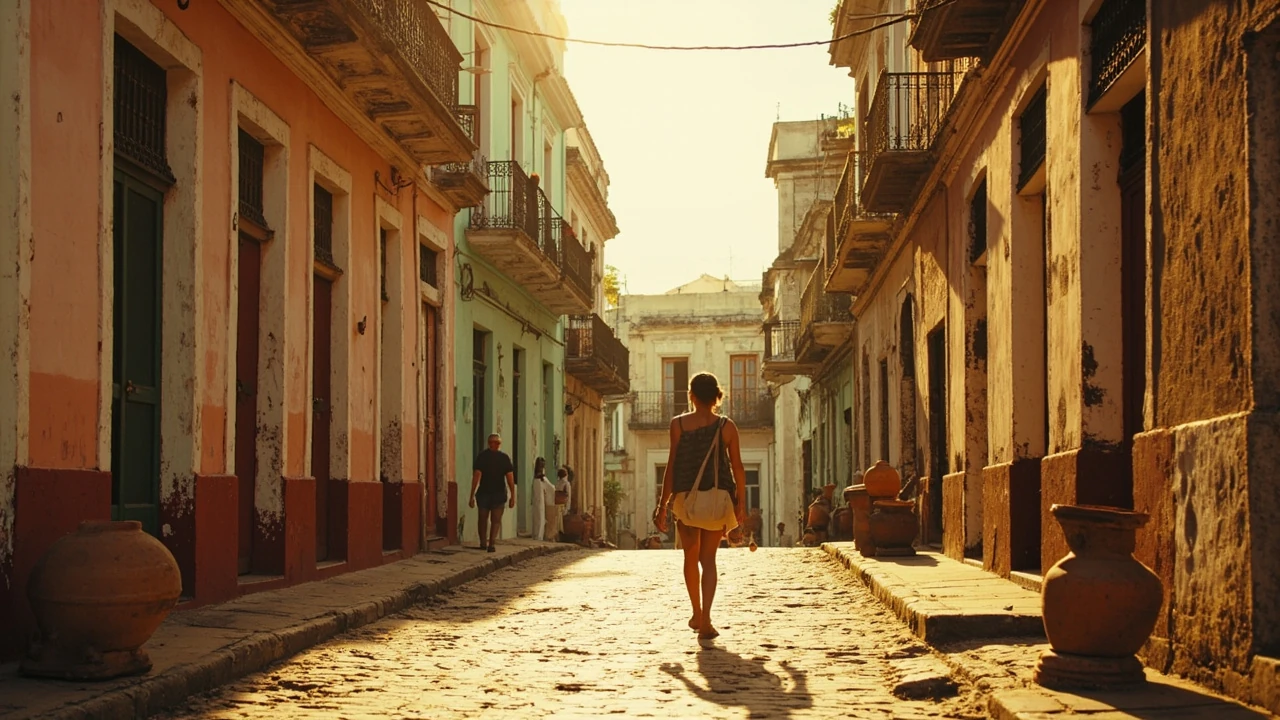
Camaguey rewards visitors who are willing to travel without a perfectly straight route. Its historic center is filled with winding lanes, blind alleys, small squares, weathered churches, clay water jars, and buildings that reveal themselves only after a corner or a short detour. The resulting walk can feel disorienting at first, but that is part of the city’s character. A map helps, though learning to recognize landmarks such as plazas, church towers, and larger avenues is more useful than trying to memorize every turn.
Located in central Cuba, Camaguey is the capital of Camaguey Province and the country’s third-largest city. The municipality covers approximately 1,106 square kilometers, although the historic area that interests most visitors occupies a far more compact space. Walking is usually the best way to understand its street pattern because many lanes are narrow, indirect, and little changed by modern traffic.
This guide covers the city’s history, architecture, tinajones, churches, transport links, and a realistic one-day itinerary. It also explains how to visit respectfully in a place where historic buildings remain part of everyday neighborhood life rather than operating as an isolated museum complex.
How Camaguey’s Winding Street Pattern Developed
Camaguey began as Santa María del Puerto del Príncipe, a Spanish settlement established on Cuba’s northern coast in 1514. The settlement moved inland in 1528 to the area associated with a Taíno village called Camagüey. Its new location developed around winding streets, uneven blocks, short passages, and a collection of plazas rather than a uniform grid.
A traditional account connects the unusual layout with attempts to make the city harder to navigate during attacks. Another account found in local history emphasizes gradual growth around churches, homes, workshops, and the routes people used every day. The detailed origin is less important to a visitor than the result: the center has few straight sightlines, and a destination that appears nearby may require a detour around several blocks.
A For additional context, historical overview of the city provides useful context for this development. The early settlement, inland move, defensive traditions, and later architectural growth all help explain why the streets are organized differently from those of Havana or Varadero.
The pattern works because residents have long adapted to it. Drivers know which streets connect with the larger roads, shopkeepers know the quickest routes between nearby squares, and pedestrians understand shortcuts that make no sense on a printed map. For an outsider, the safest approach is to identify a few fixed reference points instead of trying to understand the complete network.
Useful orientation points include a major church, a recognizable open square, a larger avenue, and the location of the accommodation. Once those points are marked on a phone, a visitor can break the city into manageable sections rather than attempting to cross the entire historic center in one straight movement.
Three details explain most of the difficulty:
- Irregular blocks: Buildings and streets do not follow one consistent grid, so landmarks often disappear behind corners and reappear from an unexpected direction.
- Changing widths: Some roads can accommodate cars, while others contract into pedestrian passages between closely spaced walls.
- Small public spaces: Squares interrupt the dense street pattern and offer practical points for checking the map or asking for directions.
Travellers should also allow more time than the map suggests. A locked gate, one-way street, plaza, bridge, or church entrance may interrupt the direct route. In a compact historic center, those interruptions often lead to worthwhile streets that would be missed on a fast transfer between predetermined coordinates.
What the Tinajones Reveal About Camaguey
The tinajón is a large clay vessel and one of Camaguey’s most recognizable symbols. These jars appear beside house entrances, under awnings, near churches, and in open areas throughout the city. Some are monumental, while others are smaller containers connected to everyday buildings. Their reddish clay, broad openings, and weathered surfaces make them easy to recognize even without a sign.
Large ceramic storage vessels were introduced by Spanish settlers and used for products such as oil, wine, and grain. In Camaguey, the city’s water-storage needs gave the form a distinct local use. Jars placed beneath gutters or other rainwater collection points could receive water. Their tapered shape and partial burial helped keep the contents cool, and households eventually produced them in different sizes and decorative styles.
This practical history explains why tinajones appear so frequently in the historic center. They are not simply unusual street ornaments. Their placement beside doors and courtyards reflects a period when water collection and storage were closely tied to domestic architecture. The number, style, and condition of a household’s jars also became part of the city’s local culture.
Visitors can learn more by observing their settings rather than searching only for the largest example. A jar beside a low wall shows its scale differently from one standing alone in a square. A lid, connected gutter, visible water, or repaired crack can suggest continued use, while a clean vessel in a public area may be part of a heritage display.
| What to notice | What it can reveal | Visitor approach |
|---|---|---|
| Shape and mouth | Tapered bodies and broad openings helped make the vessels practical for collection and storage. | Observe from the path and avoid leaning over or reaching inside. |
| Position | A jar beneath a gutter suggests water collection, while placement near a doorway shows its connection to domestic life. | Photograph the wider setting rather than isolating the object from its surroundings. |
| Condition | Chips, faded decoration, repaired cracks, and vegetation reveal age and continued exposure. | Do not touch or climb the vessels, including those used as local symbols. |
| Scale | Large examples may be several times taller than a person, while smaller vessels suit household use. | Compare examples in different streets to understand the range of forms. |
A local tradition links drinking water from a tinajón with remaining in Camaguey. The story captures the jars’ place in local identity, but it should not be treated as an invitation to drink from them. They may be decorative, historic, or connected to private property.
Churches and Architecture Worth Planning Around
Camaguey contains more than 30 Catholic churches, and their variety is one reason to look beyond a single famous square. The buildings reflect different periods, functions, and architectural influences, including baroque, neoclassical, and neogothic design. Rather than attempting to enter every church, visitors can select several stops that tell different parts of the city’s story.
The Cathedral of Camaguey is one of the essential stops. Work on the building began in 1530 as a chapel, and the present structure was completed in 1864. The Church of Nuestra Señora del Carmen has two towers and a strong baroque character, with completion recorded in 1825. The Church of Nuestra Señora de la Soledad, built during the eighteenth century, is noted for its yellow exterior, decorative interior frescoes, and baptismal font associated with Ignacio Agramonte.
The Church and Convent-Hospital of San Juan de Dios also reflects the city’s social history. Documents refer to the institution in the late seventeenth century. Construction of the current church began in 1736 and ended in 1755, while a sculptural representation of the Holy Trinity stands on its main altar. The complex shows how a religious foundation could also serve medical and community needs.
| Landmark | Historical detail | Planning note |
|---|---|---|
| Cathedral of Camaguey | Construction began as a chapel in 1530; the present building was completed in 1864. | Allow time for the exterior even if interior access is limited. |
| Nuestra Señora del Carmen | A two-towered baroque church completed in 1825. | Combine with nearby historic streets to reduce backtracking. |
| Nuestra Señora de la Soledad | An eighteenth-century church with a yellow exterior and decorated frescoes. | Confirm access and any photography restrictions before entering. |
| San Juan de Dios | The present church was built from 1736 to 1755 and is associated with a convent-hospital complex. | Treat it as both a religious site and a historic institution. |
| Santa Ana | Its history is documented from an early seventeenth-century hermitage associated with the neighborhood. | Useful for understanding the gradual development of local parishes. |
| Nuestra Señora de la Caridad | Connected with the growth of the La Caridad neighborhood and its expanding residential districts. | Include it in a wider walk rather than as an isolated stop. |
| Sagrado Corazón de Jesús | A neogothic church built in the early twentieth century on the site of a former convent of San Francisco. | Look for the contrast between this later style and older nearby churches. |
| Gran Hotel Camagüey | Opened in 1938, it represents a later chapter in the center’s architectural development. | Pair it with the older churches to see changes in scale and decoration. |
Architecture can also be appreciated from the street. Observe how a church entrance faces its lane, how balconies project over narrow passages, and where old masonry meets repaired plaster. Ironwork, wooden doors, rooflines, weathering, and small domestic courtyards often provide more texture than a hurried stop inside the best-known monuments.
Church access may change with services, ceremonies, restoration, staffing, or photography policies. Visitors should ask locally rather than depending on old opening hours. A façade can still be studied from a public street when an interior is closed, but entrances and surrounding worshippers should not be blocked.
How to Organize One Day in the Historic Center
A first day should balance orientation with unstructured walking. The historic center contains enough architectural variety to fill a busy day, but attempting to cover every important site leads to constant backtracking. Two or three well-chosen interiors, several squares, and time for unplanned streets produce a more satisfying visit.
Start in a publicly accessible central area and mark the accommodation, a major church, one square, and the direction of the larger avenues. Ask for the nearest road out of the old center. This return route is useful when the phone’s location marker shifts between close walls or when a street becomes busy.
| Period | Suggested activity | Practical reason |
|---|---|---|
| Early morning | Establish orientation and walk one compact cluster of streets before the day becomes busy. | The lanes are easier to read with fewer people moving through them. |
| Late morning | Visit one major church and one later-period architectural landmark. | The contrast makes the city’s building history easier to understand. |
| Midday | Take a longer lunch break near a square or shaded street. | A pause prevents the day from becoming a continuous sequence of transfers. |
| Afternoon | Follow tinajones, courtyards, and residential lanes on a second walking circuit. | These details are less memorable from a moving vehicle. |
| Late afternoon | Photograph façades and return by a route different from the morning route. | Warm light and a new route reveal different parts of the center. |
A workable walking route alternates between orientation and observation. Start with a defined historic section, cross toward another square, and leave enough flexibility for a closed entrance or an interesting side street. Return by a different lane if time and mobility allow. That small change of direction often produces more of the city’s character than adding several extra destinations to a list.
Travellers with limited mobility should request advice based on the exact route. Cobbles, steps, uneven paving, narrow passages, and raised thresholds can create significant barriers. A driver may reach the edge of the historic center, but distances between landmarks can still be substantial. A shorter circuit based on confirmed access is often more useful than a long itinerary that cannot be completed comfortably.
Photography is easiest when planned around surfaces rather than coordinates. Strong morning or late-afternoon light emphasizes rough plaster, carved stone, iron balconies, and the rounded profiles of clay jars. Open squares also provide opportunities to show how several buildings relate to one another. Ask before making residents, clergy, shop workers, or worshippers the main subject of a photograph. To clarify the background to Camagüey, the Camag ey offers a concise reference.
Where to Stay and How to Use the Area
Accommodation options are limited compared with Havana or Varadero, so choice matters. Travellers looking for atmosphere often prefer a property within or close to the historic center, where the streets, squares, and early evening walks are part of the experience. The trade-off is that older buildings may have uneven floors, stairs, or limited lift access, and rooms facing narrow lanes can be noisy when nearby businesses close.
When comparing properties, ask about more than the room rate. Confirm the actual walking distance from the main streets, whether the entrance is reached by steps, the availability of hot water, air conditioning, and whether a vehicle can reach the door. The final approach may involve uneven paving even when the building appears close to the center on a map.
For a short visit, staying near a recognizable church or square reduces orientation time. A visitor can learn the route between the accommodation and a main road before setting out for other neighborhoods. It also makes an early morning walk or an evening return simpler, particularly when transport times are limited.
Ask the property directly about current transport options. Large vehicles may be unable to enter some approaches, while a small car, taxi, or local transfer can reach a nearby collection point more easily. Confirm the pickup location in writing or in a message and ask how the driver will identify the traveler. These small details are especially useful after dark or when several similar entrances serve the same building.
Longer stays can be based outside the most compact lanes, with day visits organized around walking and occasional transport. Before booking a longer period, review cancellation terms, payment methods, internet access, air-conditioning, and housekeeping arrangements. A property photograph alone does not confirm the quality of the route to the center or the ease of arriving with luggage.
Getting to Camaguey by Train, Road, and Air
Camaguey is connected to the wider country by road and rail. Its railway station stands on the principal Havana–Santiago line and also serves connections to secondary routes. The station is on Avenida Van Horne near Avenida Finlay, close to the center of the city. Carretera Central passes through the urban area, and a beltway provides an alternative around the more built-up sections.
The railway is a practical part of the city’s geography, but a route on a map does not guarantee a convenient schedule for a particular journey. Long-distance travelers should allow time for the transfer into town and confirm current timetables directly with the operator. A delayed arrival can affect accommodation check-in, a tour meeting, or a planned dinner.
| Transport method | Verified connection | Planning advice |
|---|---|---|
| Rail | The main Havana–Santiago line passes through Camaguey, with links to secondary lines. | Confirm the current departure, arrival, and transfer details before buying other tickets. |
| Road | Carretera Central crosses the city, and a beltway serves the wider urban area. | Allow extra time for road conditions and for the final approach to the historic center. |
| Air | Domestic air connections are available through regional arrangements. | Confirm whether the flight links with onward rail or road travel and avoid tight same-day transfers. |
| Local transfer | Smaller vehicles are more practical for streets near the historic core. | Agree on the collection point, especially if a large vehicle cannot reach the accommodation entrance. |
Domestic flight arrangements, train schedules, and road conditions can change. Each connection should be checked for the travel date rather than inferred from a general timetable. Travelers should also learn how delays affect the next stage of the journey and keep the contact details for accommodation and transport providers available offline.
Entry documentation, permitted travel purposes, and carrier eligibility must be confirmed through current official guidance before departure. Requirements can vary with citizenship and circumstances, particularly for travellers from the United States. Check the applicable rules, the validity of the passport, and the provider’s ability to carry the traveller before payment is made.
Payment methods also vary by provider and transaction. Confirm the accepted currency, card, cash, or transfer options for accommodation and transport rather than assuming that a booking made elsewhere will work locally. Keep a record of cancellation terms and emergency contacts, and use a traceable channel when communicating with a property or driver.
Where to Eat and What to Try Locally
Camaguey’s restaurant scene is smaller and less predictable than in Cuba’s largest tourist centres. Visitors should expect to rely on accommodation recommendations, local cafés, and restaurants found around the streets rather than relying on a large catalogue of venues. A practical pattern is to ask the property where guests eat, which neighbourhood has the best current options, and whether tables need to be reserved.
Local food is generally strongest when eaten close to the day’s activity. A restaurant beside a busy avenue may suit a longer lunch, while a café near the historic centre can provide a useful break between walking circuits. Travellers with dietary requirements should communicate them before arrival because ingredient availability and kitchen capacity may be limited.
Meals also depend on the time of day. Breakfast choices may be more limited than lunch or dinner, and some cafés do not remain open throughout the day. Ask for the current serving schedule rather than expecting a restaurant to operate at the hour shown in an old guide. Water, soft drinks, and other basics should also be available before setting out on a long walk.
Since the historic centre includes residential lanes, visitors should not treat every doorway or courtyard as a restaurant entrance. Look for normal signage or written menus, confirm prices before ordering, and keep cash or payment methods ready according to the establishment’s stated policy. Simple streetside eating places can be excellent, but clear communication is more useful than assuming a missing English menu means a fixed international price.
Respectful Travel in a Living Historic City
Camaguey’s historic center remains a working city. People live in its buildings, worship in its churches, operate small businesses along its lanes, and hold neighbourhood events in its squares. Heritage protection does not remove daily life from the streets, and responsible visitors need to distinguish between a monument and a functioning community space.
Ask before photographing residents, shop workers, clergy, children, or people taking part in a ceremony. Avoid intrusive close-ups through windows or across private courtyards. An open gate is not automatically an invitation, particularly in residential areas. If a ceremony or procession is taking place, give it space and follow the instructions of staff or worshippers.
Do not climb on tinajones, sit on church steps in a way that blocks access, or touch carvings, doors, and weathered masonry. The visible wear helps tell the story of the buildings and should not be treated as an invitation to handle them. Keep purchases compact in small workshops, and ask before photographing merchandise or displays.
Support local businesses where it is practical, but do not turn the centre into a shopping hunt. A restaurant, café, guide, or small workshop can make a direct contribution to the neighbourhood. The same commercial relationship benefits from reasonable prices and the same respect shown anywhere else: ask questions, pay the stated amount, and accept that some historic objects cannot be purchased or handled.
Expect the street network to slow the day. A gate may be closed, a service may begin, or a transfer may arrive late. These are normal features of an inhabited historic centre, not inconveniences to be overcome by ignoring local guidance. A slower visit generally produces a more accurate understanding of Camaguey than a fast route through a checklist of landmarks.
A Practical Two-Day Extension for Camaguey
Two days make a fuller visit possible without rushing every church. The first day should establish the historic centre, with a morning orientation walk, one major church in the middle of the day, and an afternoon focused on tinajones, courtyards, and side streets. The second can cover a different architectural cluster and include a longer break for lunch before returning to streets missed on the first circuit.
Keep one period flexible. If a church opens unexpectedly, if a resident recommends a nearby workshop, or if the light is unusually good on a particular façade, that hour may be worth more than another distant stop. The same flexibility also helps when transport delays disrupt the planned order.
A two-day plan should still include a return journey and time away from the city if onward travel is scheduled. The station is connected to the national rail network, while road and air options provide alternatives. Checking the onward ticket before committing to a full second day prevents an attractive local plan from creating an impractical departure.
For travellers combining Camaguey with another Cuban destination, consider the amount of time involved in reaching the city rather than choosing destinations from a list alone. Camaguey rewards time spent on foot and offers a distinct architectural setting. A shorter stay in a place developed for immediate access may suit some itineraries better, but an overnight stay allows the historic centre to become familiar rather than remain a checklist of distant façades.
Frequently asked questions
Is Camaguey difficult to navigate?
Camaguey’s historic center is less intuitive than a city laid out on a regular grid. Winding lanes, blind alleys, and irregular intersections can lengthen a route. Mark a major church, a square, a larger avenue, and the accommodation on a phone, then learn the quickest way back to the main road before beginning a longer walk.
Why is Camaguey called a maze city?
The name refers to the irregular network of narrow streets, uneven blocks, blind alleys, and small squares in the historic center. Its development has been associated with defensive planning and with gradual growth around local churches and daily routes. The result is a city best explored on foot and appreciated through a few dependable landmarks rather than memorized as a complete grid.
What are the tinajones in Camaguey?
Tinajones are large clay jars that became closely associated with water collection and storage in Camaguey. Spanish settlers introduced large ceramic vessels, and local versions were placed beneath rainwater collection points and partly embedded in the ground. They now appear throughout the city as practical remnants, decorative objects, and symbols of local identity.
How many churches does Camaguey have?
The historic city is known for more than 30 Catholic churches. Their dates, architectural styles, and community roles vary. A short visit is better spent on several representative buildings than on an unsuccessful attempt to enter every one. Current access should be confirmed because services, ceremonies, restoration, and staff availability can affect visits.
Can I visit Camaguey on a day trip?
A day visit is possible when regional schedules align, but it provides little protection against delays and little time for the historic center. An overnight stay is usually more rewarding. If the schedule is fixed, select two or three major buildings, agree on the meeting point and return transport, and keep the walking route close to the arrival area.
Is Camaguey suitable for travellers with limited mobility?
Some parts can be visited with careful planning, but uneven paving, raised thresholds, steps, and narrow passages can complicate a long route. Ask the accommodation or local operator about vehicle access, drop-off points, surface conditions, and the approach to each major landmark. A confirmed short circuit is preferable to an ambitious itinerary based only on map distance.
What should I wear when visiting churches in Camaguey?
Clean, modest clothing is a safe choice for active Catholic sites. Carry a light layer if several interiors are included in the plan, and remove hats where appropriate. Individual churches may impose additional requirements, particularly during services or ceremonies, so local instructions should take priority.
How should I photograph the tinajones and historic streets?
Show how the jars and buildings relate to the street rather than treating them as isolated objects. Look for texture, scale, and natural light, but ask before photographing residents or workers. Do not block entrances, climb onto vessels, move objects, or ignore restrictions inside religious and private spaces.
What transport should I use to reach the historic center?
A small vehicle or local transfer is generally more practical than a large bus in the oldest streets. The main railway station lies near Avenida Van Horne and Avenida Finlay, while road access includes Carretera Central and the urban beltway. Confirm the pickup point in advance because the final approach may involve a short walk or restricted vehicle access.
Do U.S. citizens need specific permission to visit Cuba?
Travel by United States citizens is governed by regulations that depend on the purpose and category of the trip. Requirements and authorized providers can change, so travellers should check current official guidance and confirm their eligibility with the transport provider before booking. An old article or general booking summary should not be used as the final decision.
What is the most practical way to plan a Camaguey itinerary?
Start with the number of full days available and confirm the regional connection. Build the plan around a small number of churches, squares, and architectural stops, then leave space for walking and detours. Verify entry documents, transport, accommodation access, payment methods, and church entry shortly before departure, and keep a simple contact list available offline.
Leave a Reply