
Heaven’s Gate China: what the name refers to
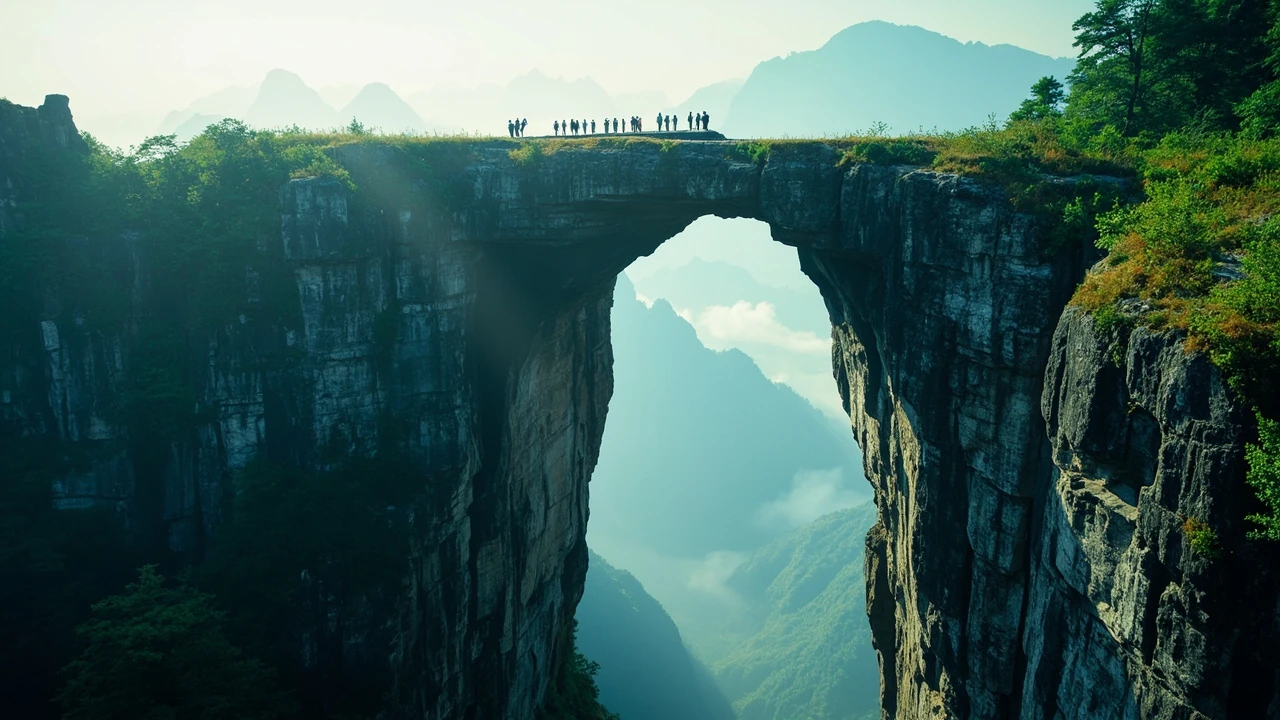
A visitor searching for Heaven’s Gate China is usually looking for Tianmen Cave, the immense natural opening high in the Tianmen Mountain area of Hunan Province. The dramatic cliff, deep mountain setting, and long approach can make the site feel remote even though it is one of the best-known visitor attractions around Zhangjiajie and is included in broader itineraries that also cover the region’s dramatic sandstone formations.
This guide focuses on that specific destination. It explains how to plan the visit, what the mountain environment demands, how to approach the journey from the viewpoint of a US traveler, and where expectations often need adjusting. It does not publish current prices, schedules, or transport times because those details can change. Travelers should confirm them against official information shortly before departure.
Heaven’s Gate China location and scenic highlights
Tianmen Cave is a natural limestone cave or opening near the upper portion of Tianmen Mountain in Hunan, China. Its scale is the point: the dark opening appears as a precise cut in a vertical rock face, while distant travelers and trails reveal just how large the surrounding landscape is. The attraction is closely associated with Zhangjiajie, a region known for towering sandstone pillars, forested valleys, glass walkways, and mountain viewpoints.
The cave is not an isolated cavern that visitors walk into in the conventional sense. The main experience takes place outside, where the mountain, cliff faces, paved passages, elevated walkways, and viewing areas frame the opening. This distinction matters for mobility planning. A visitor may see the words “walking trail” and assume the route is short and level, while the overall visit requires comfortable footwear, patience, and an assessment of personal mobility.
| Feature | What visitors experience | Planning implication |
|---|---|---|
| Tianmen Cave | A vast natural opening cut into a sheer mountain face | The surrounding viewpoint is the main attraction |
| Zhangjiajie setting | Forested mountains, sheer cliffs, deep valleys, and narrow passages | Expect elevation changes and substantial walking |
| Upper-mountain landscape | Exposed paths, switchbacks, stairways, and scenic platforms | Weather and fatigue affect the visit more than the distance alone |
| City connection | The mountain attraction sits within a broader Zhangjiajie visitor circuit | Combine the cave with other regional sights when time permits |
For most visitors, the memorable images come from the approach as well as the final reveal. The drive or ride toward the mountain, forested slopes, winding access roads, cliffside construction, and successive glimpses of the opening all contribute. Those who leave the viewing area as soon as the cave appears may miss the larger setting that explains its visual impact.
The region also rewards travelers who understand landscape as a sequence rather than a single landmark. Tianmen Cave provides the mountain and geological theme; nearby Zhangjiajie attractions add pillars, ravines, caves, and engineered walks above the terrain. A longer trip gives the photographs more variety, while a short stop remains worthwhile for travelers whose main goal is the cave itself.
How to plan a Heaven’s Gate China visit
A good plan begins with the number of hours available, not the number of attractions listed. Mountain roads, security procedures, transfers, walking, and waiting can all affect the pace. Build the day around a weather window, leave margin before onward travel, and avoid scheduling the cave immediately before a flight, train departure, or tightly timed dinner.
Start by confirming the latest entry arrangements through official channels. International travelers may also need to consider visa and entry rules, mobile connectivity, payment methods, and the availability of English-language guidance. Requirements in China can differ by nationality and can change, so a current official check is more dependable than an itinerary written months earlier.
- Choose the dates using a flexible view of weather. Fog and rain can reduce visibility from the upper viewpoints, while summer heat, winter ice, and crowded periods affect comfort.
- Confirm current transportation and ticket arrangements for the Zhangjiajie area before buying a separate rail ticket or long-distance transfer.
- Plan to arrive with enough time to complete the required journey to the mountain and find the correct entry point.
- Allow several hours for the cave and mountain circuit rather than treating it as a brief viewpoint stop.
- Reserve a flexible evening before departure. This provides a buffer for weather, traffic, delays, or a longer-than-expected mountain visit.
The table below is a planning framework, not a promise of current operating hours.
| Planning question | Recommended decision |
|---|---|
| How long should the visit take? | Allow most of a day for the mountain experience and local transfers, with extra time if you are combining it with other Zhangjiajie attractions |
| Is it suitable for a short stopover? | Only if your onward schedule has a generous buffer and you have confirmed the current access and ticketing process |
| What is the best month? | Choose based on visibility, temperature, crowds, and personal tolerance for heat or cold; no single month is ideal for everyone |
| Can children manage it? | Many children can, but the family should account for stairs, distance, and the child’s ability to manage elevation and weather |
| What if it rains? | Keep the visit because the landscape remains worthwhile, but expect mist, wet surfaces, and reduced long-distance views |
| Should I combine it with other sites? | Yes, if you have a full day or more and want a broader view of Zhangjiajie’s varied terrain |
Seasonal planning also depends on the larger trip. For travelers building a broader China itinerary, it can help to compare the pace of a mountain-focused stop with a city itinerary such as the best time to visit Hong Kong. The contrast is useful: one destination rewards longer blocks of time and careful transfers, while another can fit more easily around short urban stays.
Getting to Tianmen Cave and moving around the mountain
Visitors normally reach the upper mountain area through a combination of road transport and an elevated access leg. The journey includes infrastructure built into steep terrain, which is part of the attraction but can also be demanding for anyone sensitive to heights. Cable cars and elevated walkways reduce some climbing while placing passengers near exposed cliff faces.
Do not treat the final transfer as an ordinary urban bus ride. The route can include tight curves, changes in elevation, and views that are impressive to some visitors and uncomfortable to others. Anyone with vertigo, balance difficulties, respiratory limitations, or a strong fear of heights should research the current route and speak with a qualified medical professional before traveling. Staying calm and following all posted instructions matters more than forcing a photo at the edge of a platform.
| Part of the journey | What to expect | Useful preparation |
|---|---|---|
| City to mountain base | A road transfer through the Zhangjiajie area | Confirm the meeting point and allow time for local traffic and procedures |
| Base to upper area | An elevated transport section, commonly associated with a long cable-car ride | Consider height tolerance, queues, and whether motion affects you |
| Upper-area walking | Paths, steps, platforms, and changing mountain views | Wear shoes with good grip and use a walking pace that does not worsen pain or fatigue |
| Cave viewing area | A framed view of the natural opening in the cliff | Give the viewpoint time and use a moderate focal length for the classic composition |
| Return transfer | Transport back through the same mountainous corridor | Observe the posted return schedule and keep the onward plan flexible |
Travel light enough that you are not carrying unnecessary weight, but pack enough for a long outdoor circuit. A small daypack is usually more practical than a large suitcase. Keep identification, payment materials, water, a compact rain layer, and basic sun protection accessible without stopping the entire group.
Visitors should also distinguish the natural cave from the engineered paths around it. Railings, walkways, tunnels, platforms, and viewing rooms make access possible, but they do not make the environment risk-free. Slippery paving, steep grades, and crowded photo areas can cause problems even for travelers in good health.
What to wear and bring to Heaven’s Gate China
The name needs a little clarification. “Heaven’s Gate” has been used for a religious group, entertainment titles, music, and several other subjects around the world. A For additional context, disambiguation page for the name summarizes those different uses. In a Chinese travel context, however, the intended landmark is Tianmen Cave rather than those unrelated references.
The most useful item is a pair of broken-in walking shoes with dependable traction. Sneakers can work on maintained paths, but footwear with more substantial support may feel better during a long day of stairs and descents. Avoid new shoes for the visit; unfamiliar footwear combined with a demanding route is an avoidable source of blisters and foot pain.
Dress for mountain weather rather than the forecast shown for the city. Temperature, wind, humidity, and exposure can change as elevation rises. A light rain shell is more useful than an umbrella because umbrellas are awkward on exposed platforms and crowded walkways. In warmer seasons, sun protection and an electrolyte drink may matter. In cooler weather, a layer that can be removed and stored in a bag is convenient.
- Broken-in walking shoes with good grip
- Lightweight rain layer and a compact umbrella for protected areas
- Sun protection for exposed paths
- Refillable water bottle and a small electrolyte supplement if appropriate
- Small daypack with both hands free
- Phone battery power and a waterproof pouch
- Personal medication and a basic first-aid kit
- Travel documents and payment method kept in a secure, accessible place
- Insect repellent if you are sensitive to bites
- Cash in a small emergency reserve if card or mobile payment arrangements are uncertain
Do not plan to buy every practical item at the last moment. Pick up snacks and water before the mountain transfer if local conditions make that easier. Keep food sealed, take rubbish with you, and follow local rules in protected mountain areas.
Photography equipment deserves special planning. A phone is sufficient for most visitors, and a compact camera with a short zoom offers more framing control without adding much bulk. A tripod may be unnecessary and can be inconvenient in crowded areas. Clean the lens and screen before arrival, carry spare batteries or a charged power bank, and protect the device from moisture.
Is Heaven’s Gate China suitable for families and older visitors?
Family suitability depends less on a child’s age than on the total walking time, number of steps, weather, and the child’s reaction to heights. Some children may be excited by the cable car and dramatic cliffs; others may become tired or frightened. Before booking, explain that the route includes mountain travel and exposed platforms rather than a short walk to a nearby cave entrance.
| Visitor type | Main advantages | Main considerations |
|---|---|---|
| Families with young children | Strong visual impact and an educational introduction to limestone landscapes | Carry water, build in breaks, and expect stairs and a long return trip |
| Teenagers | Engaging scenery and strong photo opportunities | Balance phone use with safety around edges and crowded platforms |
| Older adults | A memorable cultural and scenic experience | Assess walking endurance, heat tolerance, balance, and access to rest areas |
| Travelers with limited mobility | Transport and viewing areas may reduce some physical demands | Verify current accessibility details and the extent of stairs, grades, and transfers |
| Travelers with vertigo | A spectacular sense of height and scale | Use elevated transport only if comfortable with exposed heights |
For older travelers, schedule the visit when energy levels are highest and avoid turning it into the final activity after a long day. A day of sightseeing reduces endurance. Ask about accessibility when booking, but also request current information directly because facilities can change. Wheelchair access to one part of the route does not guarantee step-free access to the entire experience.
Children should have a clear meeting point and identification contact information. The natural surroundings can make it easy to separate from a group while everyone is focused on a view or photograph. A simple plan should cover what to do if a child becomes tired, where the group will regroup, and who carries the water and first-aid supplies.
How to photograph Heaven’s Gate China
The classic image places the dark opening within the pale rock face, often with people, trees, or architectural lines providing scale. A moderate focal length preserves the surrounding cliff and makes the opening look massive. An ultra-wide lens can exaggerate perspective, which is dramatic but may make the frame feel less natural. A phone’s standard or short zoom setting generally works well.
Light and weather have a major effect. Bright, diffused conditions can preserve detail in the cliff. Strong sunlight may create deep shadows inside the opening, but it can also make the surrounding rock look harsh. Fog softens the distant ridges and can create a layered mountain atmosphere, although it may obscure the cave itself. Rainy viewpoints are worth photographing when visibility remains good because wet vegetation and stone become more reflective.
- Include a recognizable foreground object to establish scale
- Wait for people to reach useful positions rather than crowding the frame
- Use horizontal framing for the broad cliff and vertical framing for the full height
- Protect the phone from rain and avoid setting it on wet railings
- Take one still image, then record a short clip only if the surroundings are stable and uncrowded
- Step back from busy photo stations before asking strangers to move
The best time for photography is not simply sunrise or sunset. It is the combination of clear enough visibility, attractive side light, and manageable visitor flow. Midday may offer strong overhead light, while morning and late afternoon can create deeper shadows. Check the orientation of the viewpoints before choosing a time, and allow time to walk between positions rather than waiting in one place for a single moment.
Common mistakes and realistic expectations
The most common planning error is treating Tianmen Cave as a quick viewpoint beside a city. The attraction sits within a mountainous system that requires substantial movement. A short visit can still be enjoyable, but compressing it into an hour creates stress and increases the chance of missing transfers or underestimating the return journey.
Another mistake is relying on a single photograph to define the place. The cave is one element within a broader experience of cliffs, forests, paths, mountain infrastructure, and changing views. Travelers who expect only a brief stop at a natural arch often feel disappointed; those who allow time for the full circuit tend to understand why the site is so popular.
- Skipping current official checks. Access procedures, transport arrangements, opening conditions, and ticket requirements can change.
- Underestimating the stairs. The distance in kilometers is only one measure; elevation change and surface conditions determine how the route feels.
- Leaving the camera in the bag for the entire trip. A few strong frames are more useful than dozens of similar images taken while moving.
- Scheduling too many distant stops. Mountain transfers consume time, so nearby attractions are often easier to combine than distant ones.
- Ignoring weather visibility. The cave may be less dramatic in mist, while the surrounding mountain atmosphere can still be worthwhile.
- Carrying too much luggage. A daypack keeps hands free and avoids the strain of managing bags on stairs.
- Assuming a short weather delay will solve a poor-visibility day. Forecast tools help, but mountain conditions can change quickly; keep a backup plan.
For a broader sense of how different landmark destinations can reward different interests, Dominican Republic landmarks beyond Punta Cana offers a useful comparison between tropical sightseeing and the exposed mountain landscape around Zhangjiajie.
Frequently asked questions
What is Heaven’s Gate China?
In Chinese travel contexts, Heaven’s Gate usually refers to Tianmen Cave, the immense natural opening in Tianmen Mountain in Hunan Province. The wider Zhangjiajie landscape includes dramatic cliffs, deep valleys, sandstone pillars, caves, and elevated mountain paths.
Where is Tianmen Cave located?
Tianmen Cave is in the Tianmen Mountain area near Zhangjiajie in Hunan Province, central China. Visitors usually reach it through a mountain transfer followed by elevated transport and a walking route to the viewing areas.
How long should I allow for Tianmen Cave?
Most travelers should allow several hours for the mountain transport, paths, viewpoints, photographs, and the return journey. A full day is more comfortable when combining the cave with other attractions. Transfers from outside the immediate Zhangjiajie area require additional time.
Can children visit Heaven’s Gate China?
Yes, many children enjoy the dramatic scenery and transport. The visit involves substantial walking, stairs, exposed settings, and possible weather changes. Bring water, use supportive footwear, plan breaks, and match the day to the child’s energy and comfort with heights.
Is Tianmen Cave accessible for visitors with limited mobility?
Some parts of the visitor route may be accessible by transport or level platforms, but the complete experience includes stairs, slopes, and exposed areas. Obtain current details from official sources or the operator, and clarify whether every stage of the planned route meets your mobility needs.
What should I wear for a Heaven’s Gate China trip?
Wear broken-in shoes with good grip and dress for changing mountain conditions. A light rain layer, sun protection, water, and a small daypack are practical. Avoid new shoes and bring clothing that can be removed as the temperature changes during the day.
Can I see the cave in rainy weather?
You can still visit, but rain and fog may reduce the long-distance view. Wet paths can also be slippery. Check current conditions, carry protection, and keep a flexible schedule. In some weather, the wet forest, mist, and mountain atmosphere create a different but still worthwhile scene.
How do I avoid height-related discomfort?
Research the current elevated transport and viewing arrangements before booking, and avoid them if exposed heights cause severe anxiety. Stay in the middle of platforms, follow staff instructions, and avoid photographing near edges. People with vertigo or balance conditions should seek appropriate medical advice before travel.
Should I combine Tianmen Cave with other Zhangjiajie attractions?
Yes, if you have a full day or more. The cave fits well with a broader exploration of the region’s cliffs, pillars, valleys, caves, and scenic walkways. Avoid overpacking the schedule, because mountain transfers and walking naturally consume more time than a simple map suggests.
Do I need to buy tickets and transport in advance?
Current procedures vary, and advance booking may help during busy periods, but rules can change. Use official channels and verify the latest ticketing, access, transfer, and admission arrangements before travel. Do not rely on an old itinerary or unverified reseller for a time-sensitive mountain visit.
Leave a Reply