
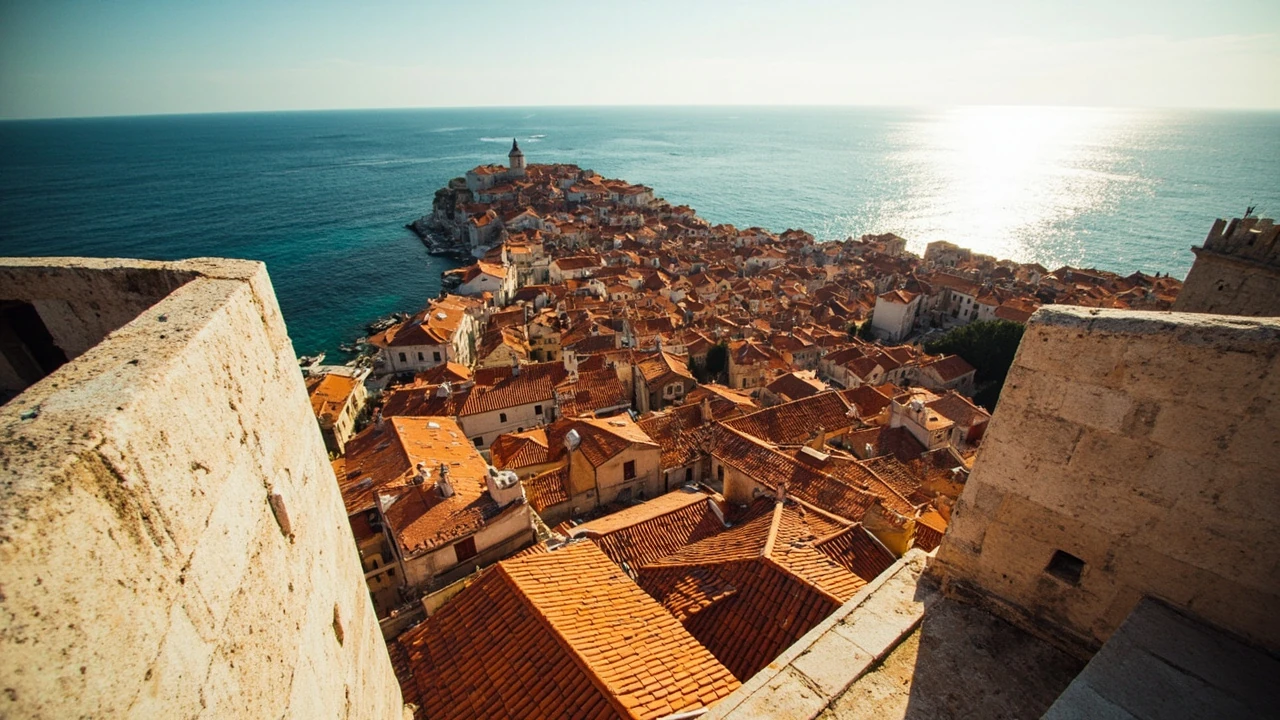
Dubrovnik Croatia travel planning starts with the right pace
Dubrovnik rewards travelers who build their visit around a few deliberate choices: stay near the right part of the city, walk the Old Town before the day becomes crowded, and reserve enough time for the city walls without turning every hour into a checklist. The historic center is compact and walkable, but it is also popular, and the best experiences often depend on where you go and when you arrive.
This guide covers dubrovnik croatia as a practical city-break destination. It covers the sights worth prioritizing, how to organize a short visit, where to base yourself, what to expect from coastal walks and island excursions, and which common mistakes can waste time or money. The goal is not to collect every possible activity. It is to help you build a trip that feels spacious enough to enjoy Dubrovnik rather than simply pass through it.
Dubrovnik’s Old Town is enclosed by substantial stone walls, with the Stradun running through its center and gates connecting the historic core to the newer districts. Around it are the Adriatic coast, hillside viewpoints, suburban neighborhoods, and islands. That combination makes the city easy to underestimate on a map. A short distance in kilometers can involve steep steps, crowds, a bus ride, or a ferry schedule that shapes the rest of your day.
What makes Dubrovnik worth visiting
Dubrovnik’s appeal comes from the meeting of a preserved urban landscape, a dramatic coastal setting, and centuries of religious, civic, and maritime history. The pale limestone buildings, orange roofs, defensive walls, and blue water are what first catch the eye, but the streets also reward slower attention. Side lanes reveal tiny squares, church entrances, stone steps, shaded courtyards, and views that shift toward the Adriatic every few blocks.
The city’s UNESCO-listed historic core is the essential starting point for any first visit. The For additional context, historic city of Dubrovnik developed as a fortified settlement and later became an important maritime republic. Its surviving streets, walls, gates, and major buildings let you connect the famous panorama with the practical reality of walking through a functioning historic district.
A useful way to organize the main attractions is by experience rather than by checking off a long list:
- See the city from above: Walk a substantial section of the city walls for the clearest orientation and the best views over the roofline.
- Read the central street: Follow the Stradun from Pile Gate toward Ploče Gate, pausing at squares and churches along the way.
- Look beyond the postcard: Walk the perimeter streets for maritime views and less crowded angles on the fortifications.
- Understand the city’s working life: Spend time around markets, harbor edges, residential lanes, and contemporary neighborhoods.
- Leave the city briefly: Use a short coastal or island excursion to balance the dense Old Town with open water and vegetation.
Most travelers can see the major landmarks in one or two full days. Three days allow a calmer visit, especially if you add a coastal walk, an island outing, or a day trip to another part of the Dalmatian coast.
How long to spend in Dubrovnik
For a first visit, two full days are enough for the principal sights, but they can feel rushed when the city is busy. Three days are more comfortable because they let you separate the Old Town from the coast and create some flexibility around weather, transport, or a missed appointment.
| Trip length | Comfortable pace | What to prioritize |
|---|---|---|
| One day | Essential highlights only | City walls, Stradun, Pile Gate, Cathedral area, Loggia Square, and an evening walk along the waterfront |
| Two days | Central sights with breathing room | One full Old Town day, one walls and viewpoints day, plus time for a meal, harbor walk, and nearby neighborhood |
| Three days | Best balance for most first-time visitors | Two city days and one coastal, island, or longer excursion |
| Four days or more | Slower and more varied | Add regional travel, relaxed meals, a beach day, or a day trip to another Dalmatian destination |
The best length also depends on your tolerance for crowds and steep walking. Dubrovnik is compact in terms of distance, but its lanes include stairs and polished stone surfaces. Wear shoes with good grip, especially after rain. If mobility is limited, plan which wall sections, viewpoints, and transport options you want in advance rather than trying to walk every route spontaneously.
Save an open block of time for wandering. The Old Town’s major sights are concentrated enough to reach on foot, and leaving space between them often produces better travel days than adding another distant attraction.
When to visit and how to avoid the busiest hours
Dubrovnik’s best season depends on whether you prioritize warm swimming weather, small crowds, or a simple city break. Summer brings the strongest demand for the walls, Old Town streets, boat excursions, and waterfront tables. Spring and fall often offer a more balanced combination of sightseeing weather and fewer visitors. Winter is quieter, but some seasonal services and routes may operate less frequently.
Crowds are not limited to peak summer. Cruise ships can bring large groups into the city, and organized excursions often start early. A separate crowd pattern appears inside the walls, where narrow sections can slow down even when the overall route does not feel packed. Starting early is the most reliable way to create a calmer experience, provided you are comfortable making an early start.
Keep these timing choices in mind:
- Begin the Old Town at Pile Gate when the streets are quieter rather than waiting until midday.
- Leave a buffer between the walls and the Cathedral area, since both require attention in their own way.
- Take a midday break for lunch when you want a quieter meal and a break from direct sun.
- Visit waterfront viewpoints later in the day when the light softens and the stone remains comfortable to walk on.
- Allow extra transport time during busy months rather than scheduling a ferry or bus transfer immediately before a fixed reservation.
If you are flexible, compare two trip types before booking. A spring or fall city break often suits travelers who want to walk, look closely at the architecture, and eat without competing for every table. A summer trip suits travelers who want the Adriatic as the main event and accept busier streets. For ideas about comparing destinations by season, the site’s guide to the best time to visit Hong Kong offers a useful decision framework, even though the geography and climate are entirely different.
Walking the walls, Old Town, and waterfront
The city walls are the best place to understand Dubrovnik’s shape. From the elevated route, you can see the Old Town as a complete fortified area, with the Stradun cutting through it and the sea defining its outer edge. The walls also preserve layers of defensive architecture, gates, towers, and steep approaches that are hard to understand from street level.
You do not have to complete the entire circuit in one visit. Many travelers use the walls as their first major activity because the views orient them before they explore the streets. Allow enough time to stop at towers and look across the fortifications rather than treating the route as a race. The exposed sections can feel different in strong sun or wind, and stairs make the distance more demanding than a flat map suggests.
After the walls, use the Stradun as the spine of your Old Town visit. It runs for roughly 300 meters through the historic center and links Pile Gate with Ploče Gate. Along the way, look for Loggia Square, the Cathedral of the Assumption of the Virgin Mary, the Church of St. Blaise, and Orlando’s Column. These stops provide architectural and civic context without requiring a separate journey across the city.
The Cathedral is especially useful for understanding how the city presents its religious history. A sixth-century predecessor was later replaced after earthquake damage, while the present Baroque church contains paintings and a treasury with historic objects and religious relics. The church is an active place of worship as well as a visitor site, so observe posted access rules and avoid treating visitors in the space as a disruption.
| Experience | Best time | Main advantage | What to watch |
|---|---|---|---|
| City walls | Early morning | Broad views and a better sense of the fortifications | Exposed sun, wind, stairs, and steady visitor movement |
| Stradun and major squares | Late morning after the walls | Easy access to the city’s main landmarks | Groups and cruise visitors can make the central street busy |
| Side lanes | Late afternoon | Quieter architecture, local lanes, and changing light | Watch for steps, uneven paving, and slippery stone |
| Waterfront walk | Before dinner or after sunset | Harbor views and a change of scenery | Boat activity, harbor access rules, and seasonal weather |
End the day near the harbor or along the waterfront promenade. The contrast with the enclosed streets is immediate: the fortifications become a silhouette, the roofs flatten into a line, and the Adriatic becomes the main visual element. This is also a good time to review photographs and identify places that deserve a second visit.
Where to stay and how to choose a base
Accommodation location affects almost every practical decision. The best neighborhood depends on whether you value immediate access to the Old Town, a quieter evening, easier transport connections, or proximity to the sea. For additional context, Dubrovnik is small enough that even a short move can change the character of a stay, but the historic center itself is not ideal for travelers who value a quiet room or easy vehicle access.
Choose your accommodation before booking nonrefundable flights if possible. At minimum, check the actual walking distance from the property, the presence of stairs, and whether the route remains comfortable in summer heat or after a late evening elsewhere. A map straight line can be misleading when a hotel is uphill, across a busy road, or behind a set of stairs.
- Inside or near Pile Gate: Best for travelers who want immediate access to the Old Town and plan to explore on foot.
- West of the Old Town: Convenient for the main historic sights and often practical for travelers with a short visit ahead.
- East toward Ploče: Attractive for harbor access, quieter walks, and direct movement toward some boat services.
- South toward Lapad and beyond: Useful for a broader range of accommodation and a more residential feel, but often requires a bus, taxi, or longer walk into the center.
- Port areas: Practical for certain ferry connections or early travel days, though you may spend more time commuting to the sights.
Check what “close to the Old Town” means in the listing. Some properties are just outside the walls; others are on steep routes above them. Read the full address and recent access notes, then inspect the surroundings on a map. A hotel beside the harbor may be convenient without being inside the most pedestrianized streets.
If you stay outside the center, a short daily walk into town is enjoyable, but returning after dinner may involve dark, steep lanes. A taxi can be useful at the end of a long day, yet it should not become your default way of moving if you prefer the texture of the city on foot. Decide which trips merit transport and which benefit from walking.
Food, harbor life, and eating like a careful visitor
Croatian coastal cooking is tied to the Adriatic, so seafood, olive oil, vegetables, inland meats, pasta, and good bread all have a natural place in the meal plan. Dubrovnik’s restaurant scene ranges from simple local meals to polished dining rooms in historic buildings. The setting can be exceptional, but the most memorable part of a meal often depends on freshness, service, and your own timing.
Do not let the harbor location alone determine where you eat. Restaurants closer to the main visitor routes may have broader menus and higher prices, while a side street or residential edge can provide a quieter meal. If you have specific dietary needs, explain them clearly before ordering, especially at busy restaurants where communication may be hurried.
For seafood, ask what is available that day and how it was caught or prepared. Menus change according to supply, and a daily catch may not include the species shown in a photograph. For meat dishes, ask about the portion and preparation. Dubrovnik is in Dalmatia, where inland traditions meet coastal ingredients, so the food is more varied than a menu consisting only of fish and shellfish would suggest.
Meals can also be timed to improve the experience:
- Eat a substantial lunch after your morning walk rather than treating it as a rushed stop between attractions.
- Reserve a table if your preferred restaurant is small and you expect to visit during a busy period.
- Try early or late dining options if you want a quieter room or easier availability.
- Order a few shared dishes to sample several preparations without committing to an oversized meal.
- Finish with a slow walk through the harbor streets instead of adding another major attraction immediately afterward.
For broader inspiration on choosing coastlines and beach experiences, see the site’s comparison of Sri Lanka beaches by coast. Dubrovnik has a different geography and travel rhythm, but the principle is useful: identify the kind of shoreline you want before selecting an excursion.
Day trips, islands, and the wider coast
A visit to Dubrovnik does not need to remain inside the walls. Lokrum Island, the Elaphiti Islands, the Pelješac Peninsula, and nearby coastal towns each offer a different pace. The right choice depends on your interests, the available transport, your tolerance for boats, and how much time you want to spend in transit.
Lokrum is the simplest island option for many travelers because it sits close to Dubrovnik. The island combines coastal scenery, walking paths, saltwater lakes, botanical gardens, and beaches. It works well when you want open space without committing the whole day to a distant destination. Bring water and suitable footwear because paths and steps can make the terrain more demanding than expected.
The Elaphiti Islands offer a different experience. Ferry schedules, permitted routes, and island visits can vary, so confirm the details for your travel date and book independently rather than assuming every island is accessible in the same way. A dependable travel advice and activity overview can help you compare options; this independent guide to things to do in Dubrovnik covers the city walls, Cathedral, Old Town sights, Lokrum, and other visitor experiences.
| Excursion type | Best for | Main advantage | Planning concern |
|---|---|---|---|
| Lokrum Island | Travelers wanting a manageable change of scenery | Close access to nature, walking paths, and swimming areas | Boat timing, footwear, and exposure to sun and wind |
| Elaphiti Islands | Boat travelers seeking a longer coastal outing | A change of pace and a stronger sense of the Adriatic | Ferry availability and longer time in transit |
| Pelješac Peninsula | Food and wine travelers | Access to a distinct landscape and local food traditions | Transport planning and distance from the city |
| Nearby coastal towns | Travelers who prefer a road-based excursion | More flexibility and a different urban or rural setting | Traffic, schedules, and reduced time in Dubrovnik |
Check the return schedule before choosing an excursion. A boat or bus that looks convenient in the morning can be awkward if it returns shortly before another fixed commitment. On the other hand, building an overly complicated itinerary can waste the best part of the day. Pick one substantial outing and leave the rest of the day unhurried.
A practical day-by-day itinerary for your first visit
This plan assumes three days in the city, a central lodging base, and no major cruise or group excursion. Adjust the order to match your arrival time, weather, and preferred pace.
Day one: Arrive, settle into the accommodation, and take an unhurried walk toward the Old Town. If your arrival is early enough, enter through Pile Gate and continue along the Stradun. Visit Loggia Square, the Cathedral complex, and the Church of St. Blaise, but avoid trying to complete the entire city on the first afternoon. Have dinner near the harbor or within the Old Town and walk the waterfront after dark.
Day two: Begin the city walls early. Take your time with the viewpoints, then return to street level for lunch. In the afternoon, explore the lanes away from the busiest central route, including the perimeter near the western and eastern edges of the Old Town. Reserve the final hour for the harbor and waterfront promenade.
Day three: Choose the excursion that matches your interests. Lokrum suits a short, active break; the Elaphiti Islands suit travelers who prioritize time on the water; and a coastal drive or peninsula day suits those who prefer land-based sightseeing and food. Keep the final evening in Dubrovnik for a repeat visit to a favorite street, a longer meal, and souvenir shopping without rushing to transportation.
| Time of day | Best use | Reason |
|---|---|---|
| Early morning | City walls and exposed viewpoints | Fewer people, cooler conditions, and clearer orientation |
| Late morning | Stradun, Cathedral, and principal squares | Attractions are active and convenient to reach on foot |
| Midday | Lunch and a brief rest | Avoids rushing between sights during the hottest and busiest period |
| Late afternoon | Side streets, harbor, and quieter viewpoints | Better light and a more relaxed atmosphere |
| Evening | Dinner and waterfront walk | Shows the city after the main sightseeing pressure fades |
If you only have two days, combine the walls with the early Old Town walk and place the harbor visit at the end of the second afternoon. If you have one day, do not attempt every attraction. The walls, Stradun, Cathedral area, and waterfront provide a coherent introduction without requiring a rushed circuit.
Common mistakes to avoid in Dubrovnik
Most disappointing Dubrovnik visits come from avoidable planning errors rather than bad weather. The city is straightforward once you understand its layout, but small choices can create unnecessary stress.
- Trying to see everything: The Old Town is compact, yet its sights, lanes, and viewpoints require more time than the distance suggests. Choose a small number of priorities.
- Visiting the walls at midday: Narrow sections and exposed stairs become less enjoyable when the route is crowded and temperatures rise.
- Assuming all beaches are inside the Old Town: If swimming is important, research where you want to spend the beach day before choosing a base.
- Booking an excursion without checking the return: Verify the full timetable, meeting point, inclusions, and what happens if conditions change.
- Wearing unsuitable shoes: Stone paving, steps, and rain can make ordinary sandals or smooth soles a poor choice.
- Depending on a straight-line map: Uphill routes and gated entrances can make a nearby property feel farther away than it first appears.
- Leaving no recovery time: A relaxed itinerary protects the trip when a ferry, bus, meal, or attraction runs behind schedule.
Another common mistake is planning around a single postcard image. Dubrovnik is more than the view from the walls. The Cathedral treasury, side lanes, harbor, island paths, contemporary neighborhoods, and changing coastal viewpoints each reveal a different part of the destination. Give the city enough time to move beyond its most recognizable image.
Frequently asked questions
How many days should I spend in Dubrovnik?
Two full days work for the main sights, while three days provide a better balance between the Old Town, city walls, food, the waterfront, and a nearby excursion. One day is possible for a focused highlights visit but leaves little room for slow wandering or weather delays.
Is Dubrovnik Croatia suitable for a family trip?
Dubrovnik can suit families because the principal sights are close together and the Old Town is walkable. Plan for stairs, narrow sections, and the amount of energy used on the walls. Shorter walks, regular meal breaks, and time at the harbor can make the visit easier for children and older travelers.
What is the best time of day to visit the city walls?
Early morning is generally the most comfortable and least crowded period. It provides cooler conditions, a clearer sense of the route, and better access to narrow sections. If you cannot visit early, carry water, protect yourself from the sun, and allow extra time for stops rather than rushing toward the far end.
Do I need to book the city walls in advance?
Availability and ticketing arrangements can change, so check the official options close to your visit. Even if advance booking is available, arriving early remains important because it can improve the experience even when a timed ticket does not guarantee a crowd-free route.
Can I swim near the Old Town?
Swimming options are more associated with beaches outside the immediate historic center than with the Old Town itself. If swimming is a priority, decide which beach suits you and plan transportation accordingly. Some accessible coastal areas also have pebble or rocky entries rather than shallow sand.
Is Dubrovnik better by bus, car, or boat?
The historic core is best explored on foot. Bus or car travel helps for reaching the harbor, distant neighborhoods, or regional destinations, while a boat is useful for Lokrum and island trips. The best choice depends on where you are staying and whether the journey itself is part of the experience.
What should I pack for Dubrovnik?
Bring comfortable shoes with good grip, sun protection, a refillable water bottle, and light layers for exposed waterfronts. In warmer months, a hat and swimwear are useful. In cooler seasons, a wind-resistant layer can make walks along the walls and harbor much more comfortable.
Is Dubrovnik crowded in summer?
Yes. Summer brings sustained visitor demand, particularly around the walls, central streets, waterfront excursions, and popular dining areas. Traveling in spring or fall can feel calmer. If you travel in summer, begin major activities early, eat outside the busiest period, and reserve an open afternoon for streets and viewpoints rather than adding more distant attractions.
Can I visit Dubrovnik as a day trip?
It is possible for a focused highlights visit, but a day trip from another Croatian destination means substantial travel time and leaves little margin for delays. Staying at least two nights gives you a better chance to experience the city at different times of day and to recover if transport is disrupted.
What is the most common first-time visitor mistake?
The most common mistake is trying to cover every landmark in a short visit. Start early with the walls, use the Stradun to orient yourself, leave time for a proper meal, and return to the waterfront at a calmer hour. A focused plan usually feels more rewarding than an ambitious checklist.




Leave a Reply