
Famous landmarks in Ireland: what to see and how to plan the trip
Choosing the right famous landmarks in Ireland can determine whether a first visit feels rushed or genuinely rewarding. Dublin alone can fill several days with cathedrals, castles, museums, gardens, and Georgian squares, while the Atlantic coast offers some of the country’s most memorable scenery. Trying to combine Dublin, the Cliffs of Moher, Killarney, and the Giant’s Causeway in a short itinerary often produces a schedule built around parking lots and transit schedules rather than the places themselves.
A better approach starts by separating the country into distinct sightseeing areas, then choosing one major experience in each area. The most recognizable sites include the Rock of Cashel, Cliffs of Moher, Giant’s Causeway, Dublin Castle, Trinity College, Kylemore Abbey, Newgrange, and the ancient stone forts of the Burren. Each offers something different: royal history, coastal geology, literary architecture, Neolithic art, monastic ruins, or an easy introduction to Irish culture in the capital.
Ireland also rewards travelers who look beyond a checklist of headline attractions. A walk around a Georgian square, a morning in a medieval city, or a coastal village can be just as memorable as a grand estate. The practical goal is not to collect the largest number of famous landmarks in Ireland, but to build a route with enough contrast and enough time to experience each place.
How to choose the best landmarks for your trip
Start with the length of your visit and the places you are unlikely to regret missing. A short trip centered on Dublin is different from a week that circles the island. Geography matters as much as the list of sights because traveling between distant regions can consume a substantial part of any itinerary.
Use the following categories to match major sites to your interests and schedule:
- History and royal heritage: Dublin Castle, the Rock of Cashel, Kilkenny Castle, and the ruins of Clonmacnoise suit travelers who want architecture, political history, and stories from Ireland’s past.
- Natural scenery: the Cliffs of Moher, Giant’s Causeway, the Burren, Connemara, Killarney National Park, and the Wild Atlantic Way prioritize coastlines, geology, trails, and weather.
- Literature and historic homes: Trinity College, Muckross House, Kylemore Abbey, and literary sites connected with James Joyce and the Brontë family offer a more culture-focused route.
- Ancient Ireland: Newgrange, the Hill of Tara, and Dún Aonghasa reveal megalithic structures, ceremonial landscapes, and settlements that predate modern Ireland.
- Practical city sightseeing: St. Stephen’s Green, the National Museum of Ireland, the Chesterfield Avenue, and the Castle area are easier to incorporate into a city break than remote estates or cliffs.
Check the official website of every attraction before finalizing the route. Access arrangements, walking surfaces, seasonal opening patterns, and ticketing rules can change. Rather than relying on an old itinerary, confirm the current information for the dates you plan to visit and identify whether a landmark requires a timed entry or a guided tour.
| Landmark | Main draw | Best area to combine it with | Planning consideration |
|---|---|---|---|
| Cliffs of Moher | Atlantic cliffs and coastal views | County Clare and the Burren | Allow time away from the main visitor area for a quieter walk. |
| Rock of Cashel | Medieval ruins on a rocky outcrop | Kilkenny and Tipperary | Uneven surfaces and exposed conditions can make the visit demanding. |
| Giant’s Causeway | Basalt columns and coastal geology | Northern Ireland’s Causeway Coast | It is in Northern Ireland, so allow for cross-border travel and different local conditions. |
| Trinity College Dublin | Historic campus and Book of Kells | Central Dublin | Book time for the campus or exhibition rather than treating it as a quick stop. |
| Newgrange | Neolithic passage tomb | Meath and the Boyne Valley | Access is controlled, so confirm the visitor format for your date. |
A useful rule is to schedule no more than two demanding landmarks in one day. A cliff walk, a rocky summit, and a full museum visit before dinner may sound manageable on a map, but weather, parking, and walking distances can turn the schedule into a test of endurance.
Dublin landmarks: essential stops without losing a full day
Dublin has enough major attractions to justify several days, but its best-known places can be concentrated into a manageable central itinerary. Trinity College is a good starting point because the historic campus is close to Grafton Street, and a timed visit can include access to the Book of Kells. The Long Room library is another reason to slow down rather than treating the entire visit as a quick photo stop.
From there, St. Stephen’s Green provides an easy change of pace. Its lawns, paths, monuments, and surrounding Victorian streets make it one of the easiest places to understand the texture of central Dublin. Nearby, the National Museum of Ireland offers insight into the country’s archaeology and natural history, while St. Patrick’s Cathedral and nearby Georgian landmarks are frequently combined in walking tours.
Dublin Castle deserves more time than a quick exterior photograph. The castle complex covers several historic periods, and the surrounding area includes Chapel Royal, gardens, courtyards, and exhibition spaces. Because the site is large and the visitor route can vary, checking the current tour options before arrival is sensible.
The National Museum of Ireland’s four branches are spread across the city. Deciding which one matches your interests before setting out will prevent an overambitious route. Archaeology and pre-Christian Ireland are the central subjects at the Archaeology branch in Kildare Street, while the country collection at Collins Barracks addresses art and decorative objects from different periods.
For travelers comparing landmark experiences across destinations, the same slow-visit principle appears in other destinations. [Dominican Republic Famous Landmarks Go Far Beyond Punta Cana](https://plottwisttrips.org/dominican-republic-famous-landmarks/) offers a useful contrast between a resort-centered visit and a broader cultural route. In Dublin, the equivalent choice is whether to concentrate on major monuments or weave smaller museums, gardens, and neighborhoods between them.
A compact Dublin plan might look like this:
- First morning: Trinity College with a reserved entry time, followed by a walk along the River Liffey.
- Late morning: St. Stephen’s Green and nearby streets for a shorter, less structured stop.
- Lunch and museum afternoon: Choose one museum branch based on your interests rather than attempting several.
- Late afternoon: Dublin Castle, Chapel Royal, and the surrounding complex.
- Evening: Explore nearby streets, an evening performance, or a traditional music venue rather than adding another distant landmark.
Dublin is easiest for visitors without a car. Walking reveals street details that a bus tour tends to skip, and public transportation connects the main visitor areas. Driving can be convenient for families with small children, but central parking and traffic may offset that advantage. Choose the transport method that lets you spend more time at the attraction and less time looking for parking.
West-coast landmarks: Cashel, Kilkenny, and the Cliffs of Moher
The Rock of Cashel is one of the most recognizable historic sites in Ireland because it combines a round tower, a cathedral, and a ruined castle on a dramatic limestone outcrop. Its visual appeal is easy to appreciate, but the sloping paths, uneven steps, and exposed hilltop mean that footwear matters. Mornings can also feel calmer than the busiest afternoon period.
Nearby Kilkenny provides a different atmosphere. Kilkenny Castle stands above the River Nore, while the surrounding city has medieval lanes, a market area, and compact streets that reward walking. A day trip allows visitors to experience both a major castle complex and one of Ireland’s best-preserved historic town centers. The Rock of Cashel is commonly combined with Kilkenny because both lie within a manageable regional loop.
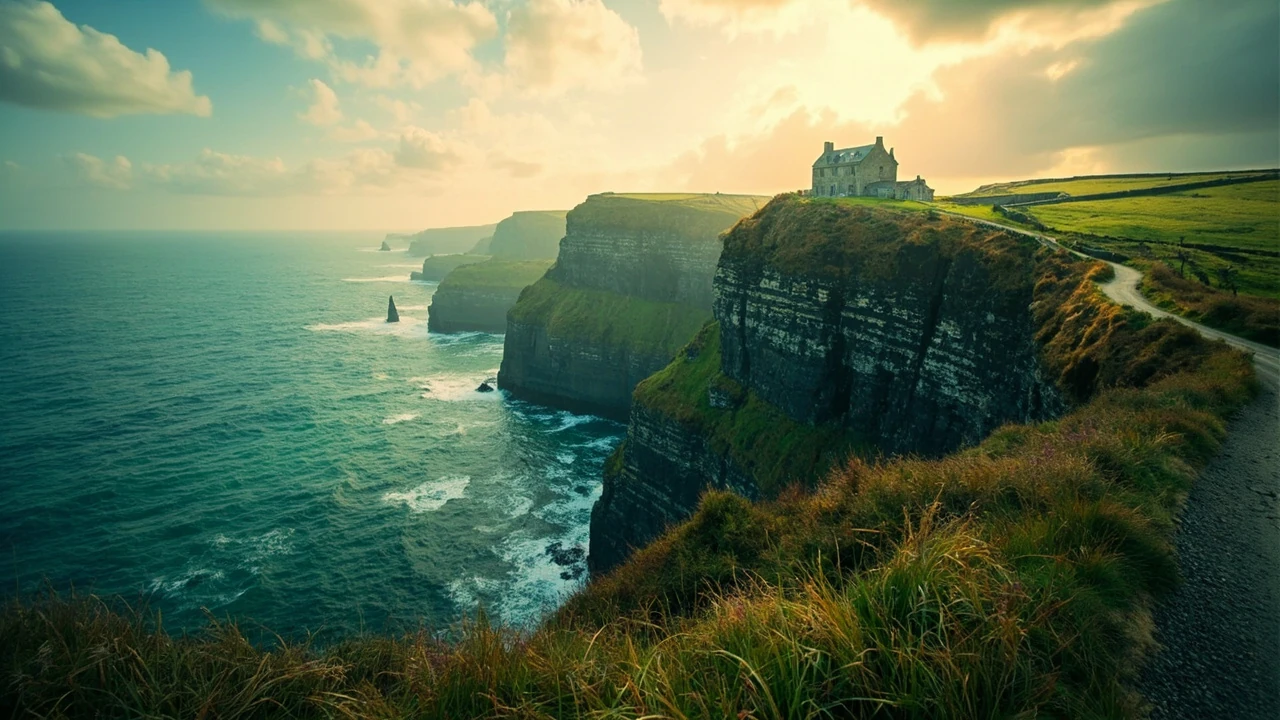
Farther west, the Cliffs of Moher offer the scale and drama that the Rock of Cashel lacks. The cliffs rise steeply above the Atlantic, and clear days can reveal long coastal views. The official visitor center provides orientation, while marked paths lead away from the busiest viewpoint. Weather can change quickly, so the cliff experience depends heavily on visibility and wind conditions.
The Burren is often added to a Cliffs of Moher itinerary, but it should be more than a brief stop on the way to Galway. Its limestone pavement, dry-stone walls, wildflowers, and unusual plants reward travelers who slow down. The official report on conservation work at the Giant’s Causeway explains why responsible visitor behavior matters at protected geological sites: objects left in the basalt can damage the columns, and conservation teams may need to remove them carefully.
That conservation lesson applies across Ireland’s natural landmarks. Visitors should follow marked paths, stay behind barriers, avoid climbing unstable rock, and leave coins, notes, or small objects behind. “Leaving something behind” may feel harmless in a busy public place, but repeated actions can alter a fragile site and create work for conservation teams.
West-coast highlights can be compared by the experience they offer:
| Experience | What you see | Best use of time | Main limitation |
|---|---|---|---|
| Rock of Cashel | Round tower, cathedral, castle ruins, elevated views | Two to three hours with time for the site walk | Slopes, steps, and weather exposure |
| Kilkenny Castle and city | Castle rooms, riverside setting, medieval streets | A half-day or full-day combination | Separate admission details may apply at different sites. |
| Cliffs of Moher | Layered cliffs, headlands, ocean views | Several hours, including a walk beyond the main platform | Wind, rain, and limited shelter can interrupt a visit. |
| The Burren | Limestone pavement, ruins, farms, unusual ecology | A slow half-day or full day | It is less dramatic to casual visitors than the cliffs. |
A strong regional day combines only two of these experiences. Trying to cover Cashel, Kilkenny, the Cliffs of Moher, and the Burren in one day may produce photographs from a bus window but little understanding of any place.
Natural and ancient landmarks beyond the standard route
Some of Ireland’s most compelling places are not grand estates or castles. The Giant’s Causeway, in Northern Ireland, is the best-known example: tens of thousands of basalt columns meet the sea, and the surrounding coastline supports a landscape of cliffs, coves, and walking routes. The site is visually unusual enough to justify a full day, but travelers should allow time beyond the main viewpoint and check access, weather, and transport details for the current season.
Newgrange offers a very different window into the past. Its monumental passage tomb predates the pyramids at Giza by more than two millennia, and its carved stone entrance is one of the most important surviving pieces of prehistoric Irish art. The surrounding Boyne Valley also contains Knowth and Dowth. Access to the area is carefully managed, and some experiences depend on reservations or timed arrangements, so verify details before making the trip.
The Hill of Tara offers broad views across County Meath and an easy-to-follow circuit through an archaeological landscape. The Hill of Uisneach, while less immediately dramatic, is significant in Irish myth and traditional geography. Together, these sites provide context for the country’s ceremonial traditions without requiring the visitor to understand every archaeological term.
Dún Aonghasa, located on the edge of Inis Mór in the Aran Islands, combines a formidable prehistoric stone fort with a dramatic Atlantic setting. Ferry travel is part of the experience and can be affected by weather. The arrival point is on Inis Mór’s eastern side, while the fort stands on the opposite, western edge, so visiting it requires a substantial walk, bicycle ride, or local transport option.
In Connemara, Kylemore Abbey is known for its lakeside setting, neo-Gothic architecture, and extensive gardens. The surrounding area also includes Kylemore Abbey’s historic estate, nearby villages, and mountain landscapes. Because the grounds are extensive, a visit can occupy most of a day. Families may want to balance the estate with a shorter nature outing rather than add distant attractions to the same schedule.
Ireland’s coastal scenery also changes by region, which affects how you should compare beaches and coastal stops. [Sri Lanka Beaches Change Depending on Which Coast You Pick](https://plottwisttrips.org/sri-lanka-beaches/) illustrates the importance of choosing the coast that matches your priorities. Ireland offers a similar decision: the Wild Atlantic Way suits dramatic cliffs and active travel, while many eastern and southern beaches are easier for a relaxed beach-focused break.
- Choose the Causeway Coast if geology, coastal walks, and a strong sense of landscape are central to the trip.
- Choose Connemara if mountain scenery, lakes, gardens, and small settlements matter more than major castle complexes.
- Choose the Aran Islands if you want a strong sense of place and are comfortable adapting to ferry schedules.
- Choose the Boyne Valley if archaeology and prehistoric design are more important than mountains or beaches.
These are complementary regions rather than direct substitutes, but they help prevent the common planning mistake of assuming every Irish landmark offers the same combination of scenery, history, and activity.
Building a route that minimizes travel and maximizes time
Ireland is long and narrow, which makes distance deceptive. Two destinations that look close on a map can sit on opposite sides of a mountain range, while nearby towns can be separated by a slow coastal road. Draw your route around clusters of attractions and build in realistic travel buffers before choosing a long excursion.
For a first visit, a circular route often works better than a straight line from Dublin to the west and back. It allows travelers to vary the scenery and avoid repeating the same roads. A broad outline might include Dublin, Kilkenny, the Rock of Cashel, the Cliffs of Moher, Galway or Connemara, Killarney, and Cork, with the exact order adjusted around the arrival and departure points.
Use this framework when comparing a one-week route:
- Choose one base in Dublin for two or three nights. This provides easy access to museums, architecture, and central neighborhoods.
- Create a westward loop rather than making repeated Dublin day trips. Moving luggage once is usually more efficient than traveling from the same base several times.
- Cluster sites by geography. Pair Cashel with Kilkenny, the Cliffs of Moher with the Burren, and Killarney with nearby Muckross House.
- Reserve one flexible day. A weather day, delayed train, or spontaneous local excursion can prevent the entire trip from becoming rigid.
- Avoid placing two ticketed attractions at the end of a long transfer day. If a delayed journey affects arrival, visitors may lose the value of what they paid to see.
Transport choice depends on the region. Trains can be comfortable for city-to-city travel, while buses reach many small towns but may run less frequently. A rental car provides flexibility in rural districts, yet it introduces parking, narrow roads, and international driving considerations. Organized tours work well for visitors who want a confirmed schedule and minimal planning, but they cannot react to weather or personal interests as flexibly.
| Route style | Best for | Main advantage | Main trade-off |
|---|---|---|---|
| Public transportation | Dublin, Galway, Cork, Killarney, and selected coastal routes | No rental car, parking, or international driving concerns | Fixed timetables and less flexibility near rural sites. |
| Rental car | Scenic rural routes and travelers with specific stops | Door-to-door flexibility and easier luggage handling | Cost, parking, narrow roads, and insurance considerations. |
| Guided excursion | First-time visitors with limited time | Transportation and interpretation are handled together | Less freedom and potentially limited time at each stop. |
| Combination | Independent travelers mixing cities and rural areas | Train or bus for major legs and selective car hire | Requires more attention to schedules and pickup points. |
Pack for the route rather than the marketing image of Ireland. A waterproof shell, reliable footwear, and a layer for cool conditions are more useful than an umbrella alone. Coastal winds can make a mild forecast feel colder, while exposed archaeological sites offer little shade. Walking shoes also make it easier to reach town centers from station parking or explore a site beyond the main visitor path.
Seasonal priorities and practical site preparation
Ireland’s tourism seasons are not interchangeable. Summer provides the longest daylight and the broadest range of services, but it also brings larger crowds and higher demand for accommodation. Spring offers mild daytime conditions for many routes, while autumn can provide quieter landscapes and changing colors. Winter has its own appeal for walkers and city visitors, though weather, daylight, and reduced services can limit a sightseeing schedule.
Ask four questions before booking any major landmark:
- Is the visit indoors, outdoor, or both? A dramatic coastal site can become unpleasant in poor weather, while a museum offers a better fallback than a cliff exposed to wind.
- Does the official schedule require a reservation? Timed admission can make a busy site more manageable, but a missed booked slot may not be flexible.
- How much walking is involved? Distances inside a large estate can exceed what a short visit on a map suggests.
- What happens if transport is delayed? Building a buffer around booked activities is especially important when connections are tight.
Keep travel documents, accommodation details, and attraction confirmations accessible on a phone, but download critical information before leaving reliable connectivity. Weather changes can affect exposed routes and transport, while some rural areas have patchy mobile service. A simple itinerary with fewer locations is generally more resilient than an ambitious one.
Food and rest also belong in landmark planning. Historic centers may not have a large food court nearby, and a full day outdoors deserves a proper break. Avoid scheduling a formal dinner immediately after a demanding walk if the route includes uneven ground. Carry water and a small snack, but follow the local rules of the site regarding what may be brought inside.
Accessibility needs deserve early attention. Major historic sites often include historic architecture, steps, cobbles, slopes, and uneven grass. The presence of accessible routes at one part of a site does not guarantee continuous step-free access throughout. Contact the attraction or consult its current accessibility information when a visitor relies on a wheelchair, has limited stamina, or needs a quieter visit.
Visit responsibly without reducing the experience
Protecting Ireland’s landmarks is not separate from enjoying them. Weathered stone, ancient monuments, cliffs, and historic estates lose their character when surfaces are damaged or natural areas become overloaded. Responsible behavior also improves the experience for everyone by reducing litter, erosion, and crowding around sensitive features.
At ancient monuments, remain on designated paths and avoid sitting or climbing on carved stones. At coastal sites, keep away from cliff edges and do not attempt to cross wet grass or rock to obtain a closer viewpoint. At estates and castles, follow photography rules and avoid touching collections or historic surfaces.
The Giant’s Causeway provides a particularly clear example of how small visitor actions can become a conservation issue. Coins and similar objects inserted into cracks can rust, expand, stain the rock, and place pressure on the columns. The National Trust’s conservation response described in the linked BBC report involved painstaking removal of thousands of coins over many hours. This makes a simple rule clear: take photographs instead of leaving objects in protected features.
Travelers can make a low-impact plan with a few practical habits:
- Remain on marked trails even when a shortcut appears shorter.
- Carry a reusable bottle and pack out everything brought into rural areas.
- Respect private homes, working land, and local communities encountered along the route.
- Book local guides for sites where interpretation depends on community knowledge.
- Visit less congested places or quieter periods when popular sights are especially busy.
Leave something out of the visit rather than taking something away from it. That can mean avoiding unofficial climbing structures, not collecting stones, not entering fenced areas, and not encouraging wildlife with food. It also means allowing local businesses and communities to benefit from tourism rather than treating every stop as a photo backdrop.
Frequently asked questions
What are the most famous landmarks in Ireland for a first visit?
For a short first trip, prioritize the Rock of Cashel, Trinity College and Dublin Castle, and either the Cliffs of Moher or Giant’s Causeway. Add Newgrange or the Burren if the schedule allows. Trying to include every major site usually means spending too much time in transit.
Is the Giant’s Causeway in the Republic of Ireland?
No. The Giant’s Causeway is in County Antrim, Northern Ireland, which is part of the United Kingdom. It is one of Ireland’s best-known natural landmarks, but travelers crossing from the Republic of Ireland should account for the border, transport connections, and the possibility that a short distance on the map will take most of a day.
How many days are needed to see Ireland’s main landmarks?
Allow at least five to seven days for a varied first trip that includes Dublin and several western highlights. Three or four days works best for Dublin with one or two excursions. A week or more gives you room for the Cliffs of Moher, the Rock of Cashel, Killarney, and either Connemara or the Causeway Coast without turning every day into a transfer.
Can I visit the Cliffs of Moher in bad weather?
Yes, but the experience may be limited by poor visibility, rain, and wind. The cliffs remain a worthwhile destination when conditions are safe because the visitor center provides context and the walking paths offer more than a single viewpoint. Check current conditions, bring waterproof layers, and allow enough time to move beyond the most exposed areas if the weather improves.
Which is better for one day: Dublin Castle or the Rock of Cashel?
Choose Dublin Castle for a fuller urban sightseeing day with museums, architecture, and nearby central landmarks. Choose the Rock of Cashel for history, panoramic views, and a more dramatic rural setting. They are not close substitutes: Cashel requires travel out of Dublin, while Dublin Castle can occupy a morning or afternoon without leaving the city.
Do I need a rental car to visit Ireland’s famous landmarks?
Not necessarily. Trains and buses serve many major destinations, and guided excursions can simplify rural travel. A rental car is most useful for flexible road trips, scenic routes with several stops, and areas with less frequent public transportation. Compare the cost and convenience of your exact route rather than assuming a car is always faster.
Which landmarks are best for travelers with limited mobility?
Dublin’s central museums, visitor centers, and accessible urban routes generally provide more predictable conditions than exposed cliffs, rocky forts, or historic hilltops. For castle estates and archaeological sites, verify step-free routes, seating, toilet access, and transfer arrangements in the current official information. Historic properties may offer a partial accessible route rather than full access to every area.
What should I pack for visiting Ireland’s coastal and historic sites?
Bring waterproof outer layers, comfortable footwear with good grip, a light warm layer, and a compact rain cover. Coastal wind can make temperatures feel colder than forecasts suggest. Even on a mild day, walking across exposed sites or uneven historic grounds can involve more time and effort than a brief sightseeing stop suggests.
Are the best Irish landmarks worth a full day each?
Some are, particularly large estates, the Causeway Coast, Connemara, and the Aran Islands. Others, such as a city castle or a historic house, fit comfortably into a half-day when combined with nearby sights. Judge each place by its size, walking requirements, guided-tour format, and your interest rather than assigning the same duration to every attraction.


Leave a Reply