
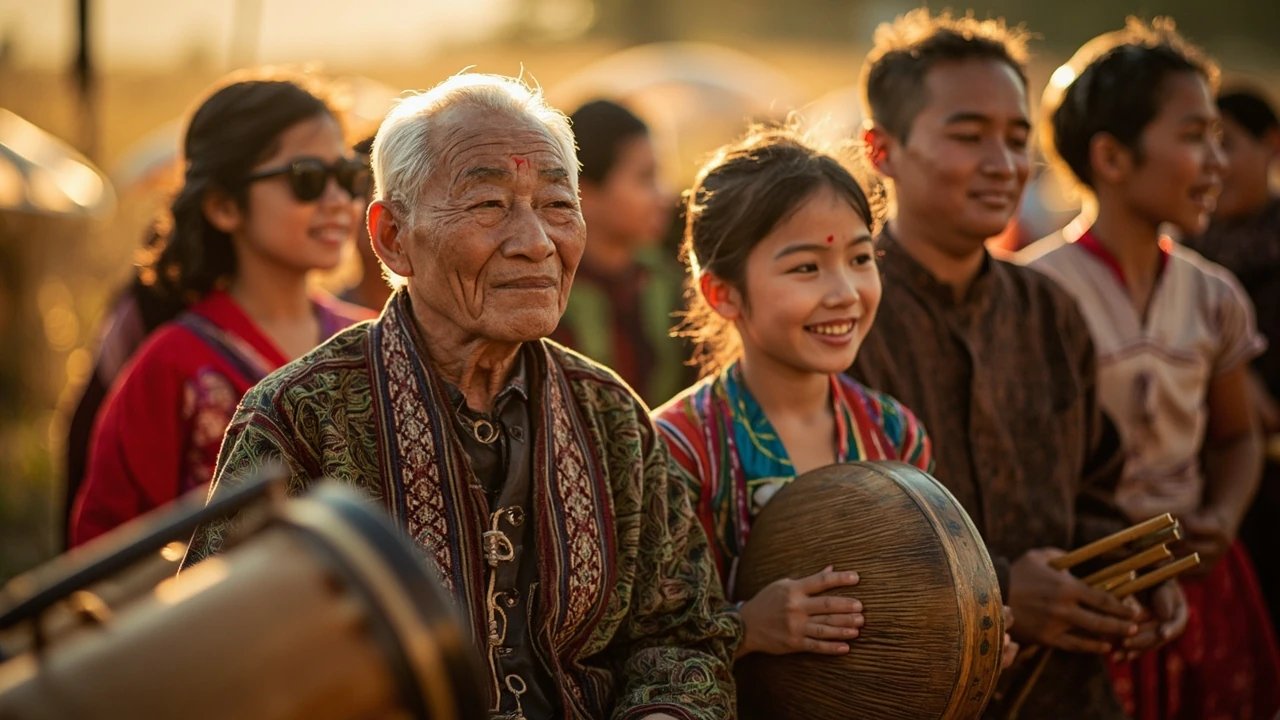
Lao people: who they are and what distinguishes their culture
The strongest introduction to Lao people begins with geography rather than a single costume, dish, or festival. They are the principal ethnic community of Laos, a country shaped by the Mekong River, forested uplands, lowland plains, and the migrations that connected inland Southeast Asia with neighboring Thailand, Cambodia, Vietnam, and China. Lao communities also live beyond Laos, especially in northeastern Thailand, where many families have maintained connections across the border for generations.
There is no single experience that can accurately represent everyone. A farmer in a northern valley, a market vendor in Vientiane, a teacher in Savannakhet, and a descendant of a migrant family may speak different varieties of Lao, practice Buddhism with different emphases, and follow distinct versions of family and community life. Diversity within a country should not be treated as a complication; it is central to understanding the culture.
Language, religion, food, dress, music, and social relationships offer useful entry points, but none should be treated as a checklist of fixed traits. Practices vary between urban and rural communities, older and younger generations, Buddhist and non-Buddhist households, and families with different levels of contact with tourism. A visitor will usually understand more by paying attention to context and by following local cues than by relying on stereotypes.
Regional identities and the many communities within Laos
Lao identity is shaped by shared history, but it is not uniform. The Tai-speaking populations associated with the Lao heartland developed across the lower Mekong basin and the alluvial plains of central Laos. Their traditions are connected to wet-rice farming, village settlement patterns, Buddhist monasteries, and courtly and popular forms of music. Yet saying that all Lao people share one historical lineage would hide the migrations, political changes, intermarriage, and regional influences that shaped the country.
The northern areas around Luang Prabang, Champasak, and the upper Mekong have traditions that reflect interaction among Lao communities, Tai groups, and other ethnic peoples. In the south, the Bolaven Plateau and the wider Champasak region have their own agricultural landscapes, historical sites, and cultural practices. In central and northeastern areas, language varieties and customs can vary noticeably. Travelers who cross a province boundary or hear a different accent may be encountering a local identity rather than a “correct” or “incorrect” form of Lao culture.
Family origin can also matter. Some people describe themselves by a village, district, province, family name, or clan association. Others use broader ethnic or national identities. These layers can coexist. Someone may identify strongly as a citizen of Laos, a resident of a particular town, and a member of a kin group whose history stretches across a district boundary.
Religiosity does not follow a simple divide between Buddhist and non-Buddhist populations. The Buddha and Buddhist practices remain deeply woven into community life, while beliefs involving ancestors, spirits, natural places, and moral protection may coexist with them. The result is not necessarily a contradiction in the worldview of an individual or family. It is better understood as a flexible cultural environment in which different kinds of meaning can overlap.
| Aspect | What travelers may encounter | A more careful approach |
|---|---|---|
| Regional identity | Different Lao varieties, food traditions, music, festivals, and settlement patterns | Ask what the custom means locally rather than treating one region as representative of the country |
| Language | Standard Lao in many formal settings and regional variations in speech | Listen for context, especially when ordering, bargaining, or discussing family |
| Religion | Monastery visits, merit-making, offerings, and household Buddhist observances | Observe photography and access rules and avoid treating ritual as a performance |
| Dress | Traditional garments at festivals and formal occasions, with modern clothing common elsewhere | Never pressure anyone to dress for a photograph |
| Family life | Extended families, shared meals, and strong ties among relatives | Expect a slower and more relational approach to hospitality and planning |
Language, greetings, and the value of a few useful phrases
Lao is a tonal language in which the pitch assigned to a syllable can help distinguish words that may otherwise sound similar. For visitors, tone learning is useful but not a prerequisite. A small set of courteous phrases, attentive listening, and willingness to repeat yourself are often more valuable than memorizing a long vocabulary list.
“Sok dee” is commonly used for hello, while “sok dee der” is a polite form often appropriate in more formal situations. “Khop chai” expresses thanks, and “sok dee lai lai” means goodbye in some contexts. Pronunciation varies by region, and a phrase can carry different levels of familiarity depending on age, relationship, and setting. Visitors should avoid assuming that one greeting fits every situation.
Names also need care. The order of a name and the way a person is addressed may differ from English conventions. A private name may be shortened or replaced by a familiar name within a family or community. Using a title incorrectly can be embarrassing, but most people will respond patiently when a traveler shows respect and asks a host how they should be addressed.
Simple Lao phrases can make ordinary interactions smoother:
- Khop chai — thank you.
- Khop chai lai lai — thank you very much.
- Phai khop chai — excuse me or sorry, depending on context.
- Chai chai — goodbye.
- Phet di — eat something.
- Nam — water.
Outside cities and tourist areas, English proficiency may be limited. A translation app can help with longer exchanges, but it should not replace observation or basic courtesy. The phrase mai pen, meaning “not yet” or “don’t worry,” appears in many useful conversations, although its precise implication changes with tone and context.
Language becomes especially important around monasteries, markets, transportation, and homes. Simple words for permission, thanks, and understanding reduce the chance of an accidental interruption. It is also useful to remember that language ability does not determine whether a visitor is culturally respectful. Calm behavior, honest descriptions of people, and respect for private or religious spaces matter just as much.
Family, community, and the role of Buddhism
Family relationships often provide the structure of everyday life. Multi-generational households are common in many communities, and kinship can shape where people live, who shares meals, how children are cared for, and how important occasions are organized. Respect for elders is commonly expressed through language, deference, and the responsibility of younger family members. Guests are often welcomed generously, and a refusal may initially be offered as a matter of courtesy before further insistence.
Visitors sometimes interpret repeated offers of food or drink as the only way to show hospitality. Accepting a small portion, expressing genuine thanks, and waiting to see whether more is offered can be more graceful than refusing everything or forcing yourself to finish an excessive serving. Gifts should be modest and appropriate. Fruit, tea, snacks, or something useful for the household are usually safer than an object that creates obligation or disrupts the household’s routine.
Buddhist monasteries serve important roles in many communities. They may function as places of worship, education, community gathering, and cultural preservation. Visitors are generally expected to dress modestly, behave quietly, and follow rules concerning shoes, photography, touching statues, and entering restricted areas. The details vary by site, so signs and the guidance of monks, attendants, or local residents should take priority.
Merit-making is a common part of religious and family life. People may give food, money, labor, or other assistance to monks or contribute to community and religious activities. These actions can support elders, students, people in difficult circumstances, or institutions within the community. Outside participation should follow local guidance, especially because the meaning of an act depends on context.
| Situation | Good travel practice | Why it matters |
|---|---|---|
| Entering a monastery or home | Follow instructions about footwear, clothing, photography, and where to sit or stand | These spaces may be active religious or residential sites, not tourist attractions alone |
| Receiving hospitality | Accept something small, thank the host, and remain open without overeating | Participation and gratitude matter more than completing every serving |
| Photographing people | Ask first and explain what you want to capture | Consent is more respectful than assuming a person is part of the scenery |
| Attending a ceremony | Observe quietly, avoid blocking movement, and follow clothing guidance | Religious events may include sequences that are meaningful to participants |
| Giving a gift | Choose something modest and easy to share | Costly gifts can create obligation or discomfort |
Food, markets, and everyday eating habits
Lao cuisine is commonly associated with herbs, vegetables, rice, noodles, grilled meat, and soups that balance sour, salty, sweet, and hot flavors. Sticky rice is a recurring feature of daily life and important celebrations, while dishes such as laab, grilled pork, and soups made with herbs or vegetables reflect the ingredients available in different regions. Fermented fish, soybean products, leafy greens, chilies, and fresh herbs may also feature in household cooking.
Meals in a household are usually shared. Serving practices can differ by family and occasion, but the central idea of eating together is important. If invited to a home, it is considerate to bring a small contribution unless the host specifically says not to. Wait until the host indicates where to sit and when to begin. Using the serving utensils provided, trying a little of everything, and expressing appreciation for the food are all more useful than worrying about perfect table manners.
Street food and market stalls make it easy to eat widely, but travelers should consider what feels comfortable for them. Busy markets may have open cooking areas and limited seating. Handling money while food is prepared, touching ready-to-eat food directly, and choosing cooked dishes are practical ways to reduce avoidable risk. Bottled or treated water can be useful when travelers are unsure about local water conditions, while travelers with specific medical needs should seek individualized advice.
For a quick orientation to the country and the various meanings associated with it, the overview of Laos provides a useful starting point. The more useful cultural questions, however, concern how people communicate, organize family life, mark the year, share meals, and receive visitors.
Vegetarian food is common in Laos, including at Buddhist festivals, but “vegetarian” dishes can still contain fish sauce or other animal-derived ingredients. Restaurant staff may not use the word in the same way as travelers accustomed to Western classifications. Guests with allergies or strict dietary needs should explain the ingredients they cannot eat rather than assuming a dish is safe because it looks plant-based.
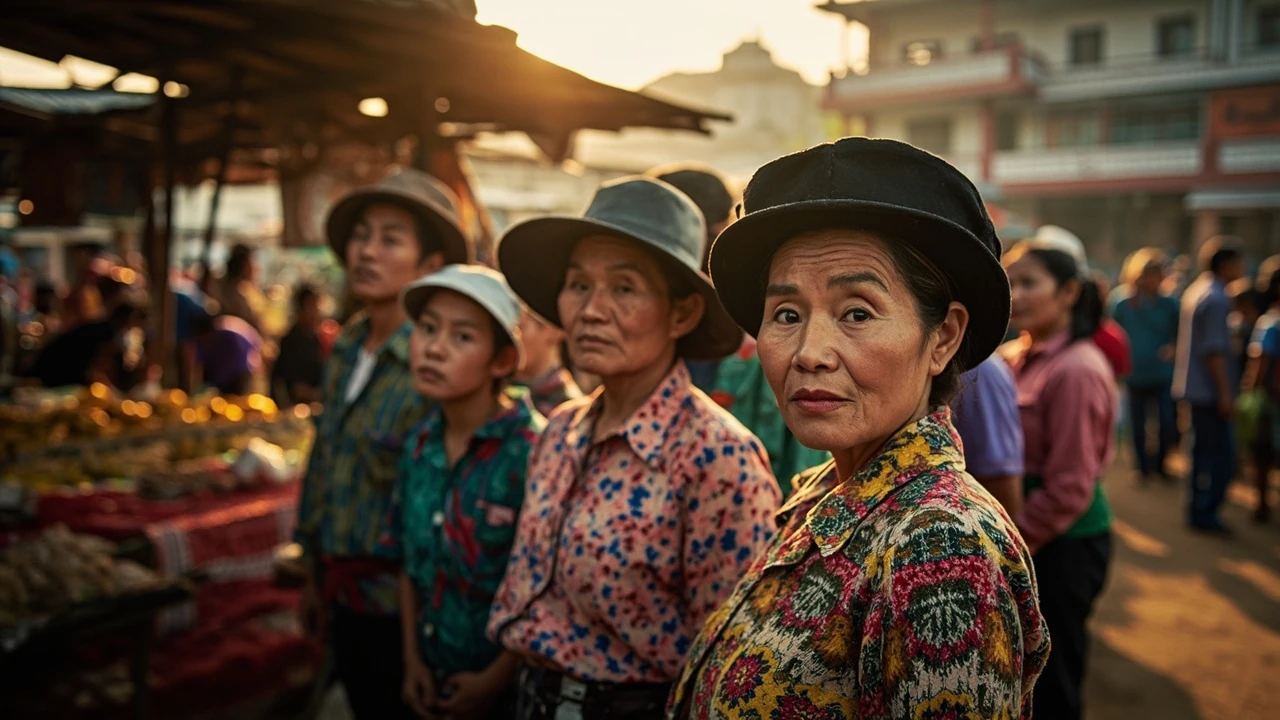
A market visit offers more than a meal. It reveals where ingredients come from, which foods are seasonal, and how social life moves through public space. Watch how vendors work, ask before photographing stalls, and keep bags close when moving through crowded aisles. A small bag of snacks is also practical because meals may not follow the exact schedule a visitor expects.
- Choose busy stalls with visible cooking and turnover.
- Ask about ingredients and sauces when you have dietary restrictions.
- Carry small cash for market purchases and keep it separate from food handling.
- Try seasonal produce and local specialties without assuming one dish represents the whole country.
- Follow local guidance about uncooked food and water, especially if your stomach is sensitive.
Traditional clothing, arts, crafts, and music
Traditional silk weaving, textile motifs, and sinh-style garments are visible expressions of Lao cultural history, but they should not be reduced to a single timeless look. Modern residents combine traditional clothing with contemporary fashions, and specific styles differ by region, occasion, age, and personal preference. Festivals, formal visits, weddings, and ceremonies provide the settings in which particular garments are most likely to appear.
Markets can offer a useful overview of weaving, embroidery, baskets, ceramics, and other crafts, though tourist products do not represent the full range of local production. Natural-fiber weaving and silk production have deep roots, while artisans also adapt techniques for new uses. When buying directly, asking about materials, local production, and the maker can add context without treating an object as an instant souvenir.
Lao music includes courtly and classical traditions, folk styles, and contemporary popular music. Instruments such as the khaen, a bamboo mouth organ, are often associated with regional folk performance, while string instruments and percussion may be heard in other settings. Music connected to phin traditions and other forms of lam lao also carries regional history. Festival ensembles and community performances offer a more informative encounter than a generic list of instrument names.
Dance, processions, and ceremonial arts often make sense only when viewed in context. A performance may mark a seasonal transition, honor a religious figure, welcome a community event, or preserve a local story. A visitor who understands the occasion is more likely to appreciate the details of movement, costume, and music.
Craft shopping also benefits from a few basic questions:
- Is the item made locally, and by whom?
- What material or technique was used?
- Is the design traditional, contemporary, or adapted for visitors?
- Are prices consistent across sellers for comparable products?
- Would a photograph of the maker be appropriate?
Contemporary Lao artists work in painting, photography, film, installation, ceramics, fashion, and other fields. Their work can reveal how national and local identities are being reimagined. A visit to a gallery or design-led shop may offer a more current view than a traditional market alone.
Festivals and ceremonies through the annual cycle
Festivals bring together food, music, religious observances, family gatherings, crafts, and public processions, but their meanings vary. Some are connected to the Buddhist calendar, others to seasonal agriculture, local histories, or contemporary national identity. The best way to plan is to identify the specific event and location, then learn what is appropriate for visitors.
Boun Ok Phansa is associated with the end of the rains and the close of the Buddhist Lenten period in Lao custom. It often includes temple events, offerings, processions, music, and gatherings associated with merit-making. Boun Ho Khao Padap Din marks another important merit-making occasion during the autumn. Boun Pi Mai, the Lao New Year, is associated with water, purification, family, and community celebration, although present-day observances can also include performances, markets, and modern festivities.
The Boun Suang Heua fireworks festival in Luang Prabang and Boun Bang Fai in the southern region are associated with seasonal transition and community spectacle. Visitors may encounter local variants of these observances that differ from festival descriptions written for a specific town or province. Dates and program details can shift from year to year, so travelers should verify current arrangements locally rather than rely on an old itinerary.
Some ceremonies also include hei, or paper lanterns, and the release of decorated paper balloons. These may be released from monasteries or public spaces at particular points in the calendar. The scale and character of the event vary, and some areas impose practical restrictions for safety or conservation.
At any festival, visitors should arrive early enough to understand where to stand and what is happening. Dress modestly, carry identification if officials request it, avoid blocking processional routes, and ask before photographing close-up images of rituals or participants. Children’s play around large candles, fireworks, open flames, crowds, and roads requires particular supervision.
| Festival or observance | Traditional association | Visitor planning note |
|---|---|---|
| Boun Ok Phansa | End of the rains and the Buddhist Lenten period | Temple areas can be busy; dress and photography rules apply |
| Boun Ho Khao Padap Din | Merit-making events in the Buddhist calendar | Observe the event’s local sequence rather than treating it as a generic performance |
| Boun Pi Mai | Lao New Year and seasonal transition | Water play varies widely; ask before participating and protect valuables |
| Boun Suang Heua | Lantern festival associated with Luang Prabang | Check local arrangements and crowd guidance before the main event |
| Boun Bang Fai | Seasonal and community festival in southern Laos | Fireworks and rockets carry safety concerns; follow official directions |
Traveling respectfully and making practical plans
A respectful visit begins with curiosity and restraint. Learn the name of the province, city, or village you are entering. Use official maps and local advice for transport, but keep the pace flexible because travel schedules in Laos may change with weather, road conditions, ferry operations, and local events. Allow extra time for border crossings and rural journeys rather than assuming every journey will fit a tightly timed itinerary.
Seasonal weather affects different parts of the country. The Mekong and lowland areas can be hot and humid, while cooler conditions may occur in northern highlands. Rainfall patterns also vary. Visitors planning outdoor activities should check current local conditions and avoid assuming that one season works equally well everywhere.
Accommodation ranges from guesthouses and family-run hotels to larger international properties. Check recent reviews for practical details such as air conditioning, hot water, noise, transport access, and power reliability, but also read lower-rated comments for recurring problems. In rural areas, a modest place to sleep may be simple; advance planning matters more in places with limited inventory.
Transport requires attention. Road conditions vary, night driving is generally not something to plan around, and motorcycle taxis can be convenient but carry obvious safety risks. Travelers who do not ride may find a car or shared van more comfortable. Since schedules and vehicle availability can be informal, confirm the pickup location, destination, price, and expected timing before leaving.
Health preparation belongs in the trip plan as well. Bring any regular medication in original packaging, check current vaccination and health guidance, and research insurance coverage for the activities planned. The advice should be individualized, especially for travelers with medical conditions, food allergies, pregnancy, or mobility needs. Laos also has altitude, heat, road safety, and rural healthcare considerations that vary by itinerary.
Money, documents, and communication need straightforward arrangements. Keep copies of a passport and important reservations in more than one place. Use accommodation and official transport services cautiously when choosing where to leave valuables. Connectivity varies, so download maps and translations before remote journeys. Small notes can help, particularly in markets and outside larger towns.
The best travel resources for this kind of country are not interchangeable. When choosing among regional itineraries, the best time to visit Hong Kong is useful for comparing another destination’s seasonal planning, while the way Sri Lanka’s beaches change by coast illustrates how much geography can affect a trip. Those destinations have different histories and visitor structures, but both demonstrate the value of matching routes to local conditions rather than copying a generic Southeast Asian itinerary.
A final check before departure can prevent common discourtesy:
- Learn the names of the main places on the itinerary and how to pronounce them.
- Prepare a few polite phrases without assuming that a quick phrase book covers every interaction.
- Pack clothing suitable for heat, rain, temples, and conservative settings.
- Keep some cash and a backup payment method for small businesses and remote areas.
- Ask before photographing ceremonies, worshippers, artisans, children, or market vendors.
- Leave room in the schedule for delays and spontaneous community encounters.
Frequently asked questions
What are Lao people known for?
Lao people are known for a culture shaped by the Mekong region, Buddhism, community life, distinctive textile and musical traditions, and a cuisine that often emphasizes rice, herbs, vegetables, grilled foods, and shared meals. These are broad foundations rather than rules. Region, family, age, education, occupation, and faith can produce substantial variation within the culture.
What language do Lao people speak?
Most speak Lao, a tonal language related to other Tai languages. Standard Lao is used in education, government, and media, while regional varieties and accents are common. Many people also speak one or more other languages, including Thai, Vietnamese, Chinese, or English, depending on location, schooling, work, and family history.
Are all Lao people Buddhist?
No. Buddhism has a major cultural and social presence in Laos, and many communities organize festivals, education, and charitable activity around Buddhist institutions. Some people follow other faiths or have no formal religious affiliation. Ancestor traditions and beliefs involving spirits or natural places may also coexist with Buddhist practice in individual families.
What should visitors wear in Laos?
Lightweight clothing is practical in warm areas, while temples and religious sites require covered shoulders and knees. Clean, modest clothing also works well for ceremonies and community events. Shoes may need to be removed at homes, temples, and certain accommodation. Bring a layer for air-conditioned transport or cooler weather in northern areas.
How should I behave at a Lao festival?
Arrive early enough to learn what is happening, follow posted and staff instructions, and keep out of processional routes. Ask before taking close photographs, especially during religious observances. Do not interrupt a ceremony for a better angle, and avoid treating participants as performers. Children should be kept away from fireworks, flames, dense crowds, and roads.
Is it appropriate to photograph Lao people?
Ask permission, particularly when someone is the main subject of the photograph. A smile and a gesture toward the camera can help, but a verbal request is clearer. Avoid photographing worshippers, monks, ceremonies, military or police personnel, and people in vulnerable situations without sensitivity. A published photograph can travel far beyond the moment in which it was taken.
What foods should a first-time visitor try?
Travelers can start with sticky rice, laab, grilled pork or chicken, herb-rich soups, noodle dishes, and seasonal vegetables. Dishes vary considerably, and some restaurant dishes are adapted for international visitors. Ask about ingredients if you have allergies or follow a strict diet. At a market, choose stalls with active cooking and consider how sensitive your stomach is before selecting raw or uncooked foods.
Can visitors join temple ceremonies or make merit?
Visitors can observe many public or community activities, but participation should be arranged with the temple or community rather than assumed. Dress requirements and event sequences vary. If asked to give money, food, or time, understand what the contribution supports and follow local instructions. Observing without interfering is acceptable when formal participation is not appropriate.
What gifts are appropriate for Lao hosts?
Modest gifts such as fruit, tea, snacks, or a useful household item are usually appropriate. Avoid expensive presents, alcohol unless you know the host prefers it, and anything that could cause embarrassment or obligation. The point is to contribute to a shared moment, not to outdo the host. Hosts may initially decline a gift, so present it warmly and accept a polite refusal without forcing the exchange.
What is the most important thing to understand about Lao culture?
It is relational. Family, community, religion, food, and place often overlap, and hospitality may involve repeated offers rather than immediate agreement. Patience and respectful observation help more than a rigid checklist. Ask questions, remain flexible, and recognize that Lao people include many individuals whose experiences cannot be reduced to a single set of customs.


Leave a Reply