
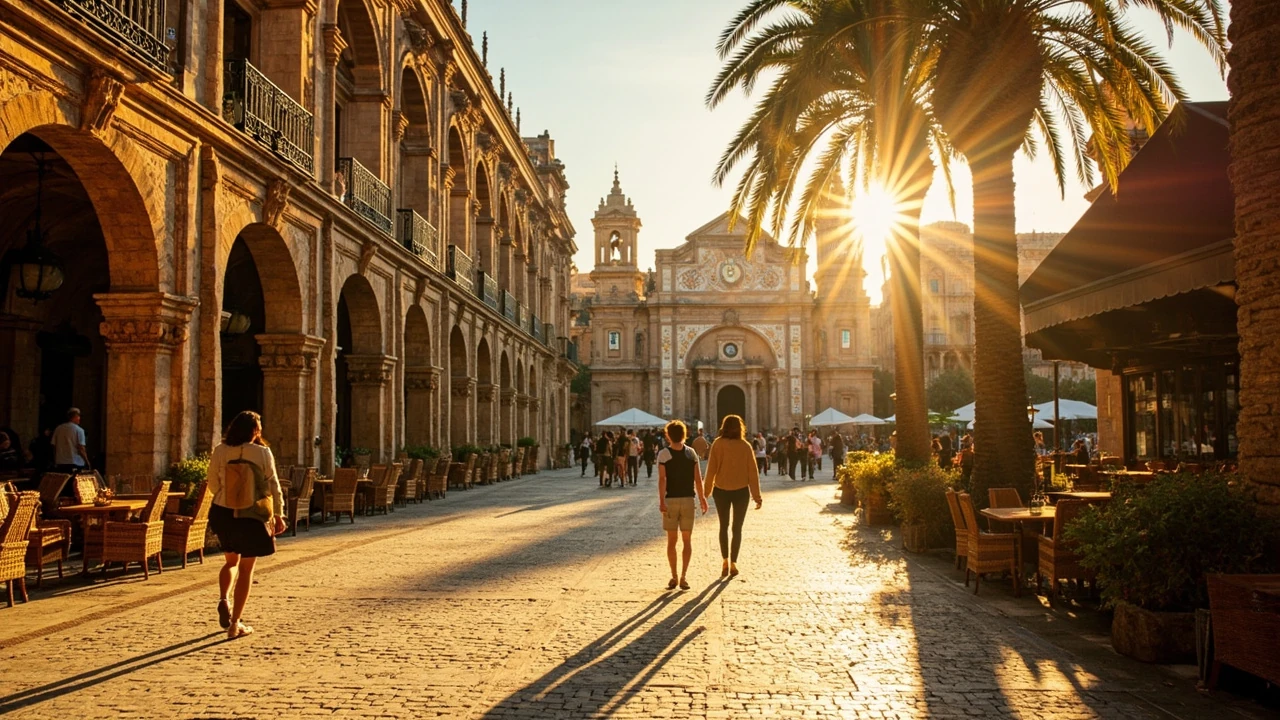
Spain attractions: where to go and how to build a balanced trip
A first visit to Spain can become an overpacked calendar of famous landmarks, hurried museum visits, and long days spent crossing between cities. A better approach is to choose a small number of places that genuinely match your interests, group them by region, and leave enough time to experience the streets, food, and daily rhythm around them. Madrid and Barcelona offer major art, architecture, and city landmarks, while Andalusia is a natural choice for palaces, historic centers, and a slower pace. Northern Spain brings dramatic coasts and distinctive cities, and the Balearic and Canary Islands provide alternatives for beach-focused travelers.
This guide covers the most useful Spain attractions without treating every famous site as a mandatory stop. It explains which sights work well together, what types of travelers will enjoy each destination, and how to avoid spending too much time moving from one ticketed landmark to another. It also offers practical starting points for short trips, first visits, and itineraries with more time.
Start by choosing a region, not a checklist
Spain is geographically varied, and its major destinations are not interchangeable. Barcelona and Madrid are large, distinct cities with strong museum and architecture scenes. Andalusia is a collection of cities, towns, and landscapes connected by Moorish, Roman, and Spanish Christian history. The north is greener and cooler, with Basque food, dramatic coastlines, and cities shaped by maritime trade. The islands have their own rhythms and should not be treated as quick add-ons to a mainland itinerary.
Choosing a region before choosing individual places also makes transportation easier. Many travelers combine a northern or central destination with Madrid, then add Barcelona and another stop in the south. That can work for a long holiday, but it gives little time for atmosphere and causes frequent hotel changes.
| Region | Best for | Strong places to consider | Planning note |
|---|---|---|---|
| Madrid and central Spain | Art, royal history, nightlife, and a strong first-trip city base | Madrid, Toledo | Madrid works well as a standalone stay of several days. |
| Catalonia and the northeast coast | Architecture, beaches, food, and city energy | Barcelona, Girona, Sitges | Allow more than a day for Barcelona’s major sights. |
| Andalusia | Islamic-era monuments, historic centers, and road trips | Granada, Seville, Córdoba, Málaga, Ronda | Distances are manageable, but allow time for slower towns. |
| The north | Scenery, seafood, mountain towns, and distinctive regional culture | Bilbao, San Sebastián, Santiago de Compostela | Choose one or two hubs rather than crossing the entire north. |
| Balearic Islands | Mediterranean beaches, historic towns, and slower coastal days | Mallorca, Menorca, Ibiza | Seasonal crowds and ferry connections deserve advance attention. |
| Canary Islands | Warm-weather scenery, volcanic landscapes, and outdoor activities | Tenerife, Gran Canaria, Lanzarote | Each island has a distinct terrain and a road-based rhythm. |
A simple rule for choosing attractions
For each destination, choose two major anchors and two smaller experiences. The anchors might be an art museum and a landmark palace, or a historic cathedral and a neighborhood food walk. The smaller experiences can be a market, waterfront, garden, viewpoint, local cooking class, or unhurried meal near your hotel. This produces a varied day without turning your schedule into a list of admissions tickets.
- Choose two anchor sights for a full day in a major city. Add one nearby neighborhood or evening activity, not four distant landmarks.
- Match one day trip to the base city. It should be easy to reach and interesting enough to justify the travel time.
- Leave one partly open day. Weather, fatigue, local events, and spontaneous discoveries often shape the best travel memories.
- Group nearby stops by theme. Art-heavy days, architectural days, and food-focused days are more rewarding than random geographic checklists.
Madrid and central Spain: art, history, and neighborhood energy
Madrid is a logical first stop for many visitors because it combines a concentrated collection of major sights with enough distinct neighborhoods to keep several days active. The city’s historic core runs through the Royal Palace, Plaza Mayor, Plaza de Oriente, and Puerta del Sol. Nearby museums and parks reward travelers who slow down instead of racing between monumental squares.
The Museo del Prado is the strongest starting point for European painting, with collections that support both a first visit and a longer return. The Reina Sofía focuses on modern and contemporary art, including major works associated with Picasso and other twentieth-century artists. The Thyssen-Bornemisza offers another approach to art history in a more compact museum setting. Because each institution presents a distinct collection, visiting all three in one day can feel educational but tiring.
For outdoor time, El Retiro is easy to pair with museums on the eastern side of central Madrid. The park contains formal gardens, broad paths, monuments, and a lake, but it also functions as an ordinary public space where residents walk, run, and relax. That combination makes it more useful than treating it only as a sightseeing stop.
The Royal Palace is the city’s clearest symbol of monarchy and state power. Its scale is impressive, yet the surrounding streets and viewpoints may be as memorable as the rooms themselves. Allow time for Plaza de Oriente and a walk toward the Temple of Debod, especially when light remains late in the evening.
Beyond the center, Chueca, Malasaña, Lavapiés, and the neighborhood around the Sunday market in La Latina each provide a different sense of Madrid. Chueca tends to attract visitors interested in independent shops, bars, and street life. Malasaña offers narrow lanes, small squares, and a strong connection with the city’s alternative history. Lavapiés sits near the Reina Sofía and the National Museum of Roman Art, making it a convenient base for a museum day. La Latina is closely associated with markets, tapas, and the Rastro flea market when it is operating.
The For additional context, BBC Travel’s guide to Madrid is useful for another look at the capital, including the Prado, El Retiro, local food, flamenco, and the city’s evening culture. Its emphasis on places residents visit helps reinforce a valuable principle: the strongest visit is not only a collection of major sights but also an understanding of how the city is actually used.
Toledo is the most straightforward excursion from Madrid for travelers interested in layered Spanish history. The old city contains Roman, Jewish, medieval, and Christian legacies within a compact landscape. The cathedral, synagogues, former Jewish quarters, and Alcázar area can be explored on foot, although streets and slopes require more effort than they do on a flat map. Toledo works as a day trip, but travelers who value a slower pace may prefer an overnight stay.
Barcelona and the northeast: architecture, neighborhoods, and Mediterranean days
Barcelona’s best-known attractions are concentrated around several distinct areas. The Sagrada Família dominates the skyline and is often the first stop for visitors. Its construction history, interior geometry, and changing relationship between faith and architecture justify more than a quick exterior photo. The tower experience also provides a different perspective, though access arrangements can change, so consult the official site before planning around a particular tower.
Park Güell is another major landmark where the landscape and architecture are inseparable. The elevated viewpoint over the city is a defining image of Barcelona, but the park extends beyond that famous terrace. Walking through the planted areas reveals the scale of the project and the transition from monumental stairways to natural curves. Because this can involve significant walking and elevation, it is not the same experience as a brief city stop.
The Gothic Quarter contains Barcelona Cathedral, the Palau de la Música Catalana, narrow medieval lanes, and small public squares. These places reward slow navigation rather than a rigid sequence. At street level, modern shops and restaurants occupy spaces whose earlier forms are easy to miss. Keep an eye on the small Roman remains revealed in some excavated areas, which provide a reminder that the visible medieval quarter sits on top of much older urban layers.
Montjuïc offers a different combination of gardens, viewpoints, museums, and recreation. The castle and its surrounding slopes provide a broad view toward the harbor, while the Olympic area changes the atmosphere around the waterfront. The Joan Miró Foundation and other cultural institutions can fill part of a relaxed day. This is a useful area to pair with the waterfront rather than attempting to cover every attraction in one visit.
The Picasso Museum and the El Born neighborhood place art in a former civic and commercial setting. Walking around El Born also provides access to the remains of medieval streets below street level. La Ribera, Barceloneta, and the shoreline toward Bogatell offer a different urban experience centered on the seafront and neighborhood life.
Use day trips selectively. Girona offers a compact historic center, a dramatic cathedral, and a riverside promenade. Sitges has a more relaxed seaside character and a distinctive old town. Both work well when travelers want a change of scenery without adding another major city. A trip to Montserrat can appeal to travelers interested in a monastery landscape and hiking, but it requires more transport planning than a simple city excursion.
| Barcelona area | Key attractions | Ideal duration | Best for |
|---|---|---|---|
| Eixample | Sagrada Família, Passeig de Gràcia, modernist façades | One full day | Architecture and Gaudí |
| Gràcia and Sarrià | Park Güell, neighborhood squares, independent restaurants | Half day to full day | Local street life and outdoor space |
| Gothic Quarter | Cathedral, Palau de la Música, Roman remains | Half day | History and street photography |
| Montjuïc | Castle views, museums, Olympic area | One day | Gardens, art, and panoramas |
| El Born and Barceloneta | Picasso Museum, medieval site, waterfront | Half day | History, food, and the sea |
Andalusia: palaces, old cities, and rewarding road trips
Andalusia is often introduced through the Alhambra in Granada and the Mezquita in Córdoba, but limiting a visit to those two landmarks misses the region’s range. Each major stop has a distinct identity: Granada combines Islamic-era palaces with mountain scenery, Córdoba is closely tied to its monumental mosque and layered history, and Seville has an intense urban character built around palaces, churches, markets, and the Guadalquivir River.
The Alhambra deserves a generous visit because its palaces, gardens, fortifications, and water features occupy a large site. Travelers often underestimate the amount of walking required and the importance of understanding the route before arrival. Advance planning is especially useful when a specific palace area or guided visit is part of the day.
Córdoba’s Mezquita-Cathedral is remarkable for the meeting of Islamic architecture and later Christian additions. Entering the forest of columns gives the building an almost continuous visual impact. Nearby streets reveal more of the old city through courtyards, small squares, whitewashed walls, and workshops. The Judería and the city’s gates provide a broader sense of the former capital, while the Alcázar of the Christian Monarchs adds another fortified complex to the visitor circuit.
Seville contains several major landmarks within a walkable center. The Real Alcázar is known for its palace rooms, gardens, and mixture of architectural influences. Seville Cathedral and its Giralda tower occupy a large religious complex. Plaza de España offers a monumental but popular break from dense lanes. The Jewish Quarter, Triana, and the riverside reveal different parts of the city, with Triana especially useful for a slower neighborhood experience.
Málaga provides a useful coastal counterpoint to Seville and Córdoba. The Picasso Museum is a major stop, while the historic center includes the cathedral area, Roman theater, and plazas connected to the city’s long relationship with trade. Nerja and Ronda are commonly included in southern itineraries. Nerja suits travelers looking for coves and a seaside town, while Ronda is more dramatic, with cliffs, historic bridges, and a compact center that rewards walking.
Andalusia works particularly well for travelers who can stay in two or more bases. A car can be useful for scenic routes, but it is not essential in Granada, Córdoba, or Seville. Public transport makes city-to-city travel practical, while a rental car becomes more attractive for towns and rural scenery. Before booking, check whether your accommodation has secure parking and whether drop-off logistics reduce the convenience of having a car.
- Two-base plan: Pair Granada with Seville, using Córdoba as an organized day trip.
- Three-base plan: Add Málaga or coastal Nerja when you want both city culture and time near the sea.
- Scenic-driver plan: Include Ronda and a small number of stops along a loop rather than adding a long list of distant towns.
- Rail-first plan: Use trains between the largest cities and reserve a separate excursion or rental car only for the days when it adds value.
Northern Spain: Bilbao, San Sebastián, and the road to Santiago
Northern Spain is a strong alternative for travelers who prefer scenery, seafood, and a slower rhythm to large-city sightseeing. The region also has a distinct cultural identity, particularly in the Basque Country, and provides a useful counterbalance to the heat and monument-heavy days common farther south.
Bilbao’s best-known cultural landmark is the Guggenheim Museum, whose curving industrial form has made it part of the city skyline. The museum is worthwhile for contemporary art, but Bilbao should not be reduced to a single building. The Casco Viejo contains steep streets, small bars, market activity, and the remains of Bilbao’s earlier working life. Along the river, newer architecture and promenades provide a different waterfront experience. A trip to the cliffs at Getaria and the food traditions of the Basque coast can make the visit more distinctive.
San Sebastián, known in Spanish as Donostia, combines a beach city with one of Spain’s most celebrated culinary scenes. The old town, Monte Igueldo, the waterfront, and the hills behind the city provide several ways to spend a day. Pintxos are small portions served in many bars, and the social custom of moving between establishments makes the meal an experience rather than simply a stop for dinner.
The pilgrimage route to Santiago de Compostela introduces another type of attraction: cultural sites, historic towns, landscapes, and walking sections rather than one dominant monument. The cathedral is the destination, but the route includes cities and villages with their own churches, food traditions, and river settings. For travelers without time to walk the route, visiting Santiago and adding a selected section as a scenic excursion offers a manageable introduction.
Oviedo is another northern stop with a compact historic center, pre-Romanesque heritage, and easy access to the mountainous landscapes of Asturias. Gijón and the smaller coastal towns around it are particularly appealing for food and seaside time. The Camino Francés, known in this region as the Camino de Santiago, can also be experienced through selected stages rather than as a complete walking project.
If your interests are contemporary architecture, food, green landscapes, and maritime cities, the north may be a better primary destination than a route built around Madrid, Barcelona, and Andalusia. Choose Bilbao as the base for art and the Basque Country, San Sebastián for the culinary and seaside experience, or Santiago for history and the pilgrimage landscape.
Spain’s islands: choose one coast, not every island
The Balearic and Canary Islands are often grouped together in travel planning, but they offer very different experiences. Mallorca, Menorca, and Ibiza belong to the Mediterranean and are shaped by coves, historic towns, salt marshes, and a strong connection with sailing and coastal life. Tenerife, Gran Canaria, and Lanzarote belong to the Atlantic and offer volcanic landscapes, high mountains, distinctive settlements, and a broader range of road-trip terrain.
Mallorca has the widest mix of experiences. Palma provides a substantial city break with a cathedral, market culture, and a waterfront. The Serra de Tramuntana offers mountain roads, viewpoints, villages, and hiking. Elsewhere, the coast is defined by calas, coves, beaches, and small resorts. Rather than visiting the island’s famous resort areas in a fast loop, choose one region such as the northwest, southwest, or central coast and use Palma as a base only if it suits your arrival and departure plans.
Menorca is often more relaxed and less focused on large-scale sightseeing. Its historic towns, archaeological sites, countryside, and accessible coves reward travelers willing to slow down. Ibiza combines beaches and coastal scenery with a historic town, a distinctive creative legacy, and a nightlife reputation that does not define the entire island. The right choice depends on whether nightlife, quiet coves, history, or road trips matter most.
Tenerife is the largest and most varied Canary Island. Its capital area, north-coast landscapes, volcanic highlands, and long-distance walking routes attract different kinds of visitors. The Teide area has a strong identity of its own, but travelers should allow time for elevation, weather changes, and transport rather than treating it as a quick viewpoint stop.
Gran Canaria offers a useful combination of mountains, villages, beaches, and a compact road network. Las Palmas de Gran Canaria provides a lively urban base on the eastern coast, while the western and southern areas feel more remote. Lanzarote is more visually distinctive and volcanic, with settlements designed in strong contrast to the surrounding landscape and national park areas that are a major reason to visit.
| Island choice | Best for | Typical base strategy | Main consideration |
|---|---|---|---|
| Mallorca | A varied mix of city, mountains, coast, and villages | Split stay between Palma and a quieter coastal or rural area | Road distances can be longer than they appear |
| Menorca | Quiet coves, history, and slower coastal days | Stay near a harbor town with a car for some outings | Choose the island for its pace, not major nightlife |
| Ibiza | Beaches, historic center, creative culture, and nightlife | Separate quieter and busier areas if the island is your focus | Seasonal demand varies greatly |
| Tenerife | Volcanic scenery, highland roads, and varied landscapes | Use north and south bases if staying several days | Elevation can make short trips feel longer |
| Gran Canaria | Mountains, villages, coast, and convenient road travel | Stay in Las Palmas or a central resort area | Distances around the island add up quickly |
| Lanzarote | Volcanic landscapes and design-focused travel | Base near the coast for easy daily exploration | Wind and sun can shape outdoor plans |
How to choose the right attractions for your trip
The strongest itinerary is shaped by the time available, the interests of everyone traveling, and the number of times you want to move hotels. Start with constraints rather than a wish list. How many full days do you have? Are you based in one city or moving by train or car? Do you prefer museums, architecture, landscapes, food, beach time, or historic places?
For art-focused travelers, Madrid and Barcelona offer the deepest concentration of major collections, but each city deserves dedicated days. History is more widely distributed: Toledo adds another layer near Madrid, Córdoba and Granada deliver distinct monumental experiences, and Santiago represents the country’s pilgrimage and religious heritage. Beach travelers may receive more from five days on one island than from a fast loop through Madrid, Barcelona, Valencia, and the Balearics.
Families and mixed-interest groups should alternate demanding activities with easier ones. A morning in a large museum can be followed by a park, waterfront, or meal rather than another major ticketed site. Teenagers may engage more with architecture, sports, interactive museums, food, and neighborhoods than with a sequence of churches. Travelers with limited mobility can benefit from mapping stairs, hills, transport transfers, and walking distances before choosing a viewpoint or archaeological site.
Season and time of day matter as well. Summer heat can make outdoor monument routes less comfortable, especially in inland and southern locations. Moving outdoor activities toward morning and reserving museums or long meals for the hotter hours can improve the day, but this should not become a rigid rule if the weather changes. Coastal and island weather differs from inland conditions, so use regional forecasts rather than assuming the same conditions across the country.
- Mark each place as a must-see, a strong maybe, or a flexible option. This prevents every idea from becoming mandatory.
- Pair major sights with nearby low-effort time. A park, café, waterfront walk, or neighborhood meal can balance a dense sightseeing morning.
- Check reservation guidance before buying connecting transport. A timed entry can determine which order makes sense on a busy day.
- Review the official site for each attraction’s current access arrangements. Policies and visitor routes can change, so rely on current information rather than old travel articles.
- Protect meal and rest periods. Trying to absorb one more stop often reduces the enjoyment of the places already on the itinerary.
Budgeting also requires realism. Major museums, palaces, cathedrals, and special tours can carry admission charges, while transport between cities adds another layer of expense. Instead of estimating from an outdated article, identify the paid attractions that matter most to you, check current prices directly, and reserve enough of the budget for food, local transport, and occasional taxis where they save valuable time.
Sample routes for short, medium, and long trips
A workable itinerary protects travel time. The examples below are frameworks rather than fixed schedules. Adjust them when a museum requires most of a day, when weather affects the coast, or when a local event changes normal operating patterns.
| Trip length | Suggested route | How to use the time |
|---|---|---|
| 3-4 days | Madrid | One day for major museums, one for central landmarks and neighborhoods, and one for Toledo or another flexible excursion. |
| 5-6 days | Madrid and Barcelona | Use the train for the transfer. Give each city multiple neighborhood and attraction days rather than splitting one day between them. |
| 7-9 days | Madrid, Barcelona, and Andalusia | Combine two major city stops with a southern region. Avoid adding the islands to the same itinerary unless the island time is a priority. |
| 10-14 days | Madrid, Barcelona, Seville, and Granada | Use rail connections, add Córdoba from Seville or Granada, and keep a flexible day in each major base. |
| Two or more weeks | One mainland route plus one island | Finish with Mallorca, Tenerife, or another island rather than trying to cover several in the final week. |
| Food-led trip | San Sebastián, Bilbao, and selected Madrid or Barcelona neighborhoods | Build days around meals and markets while reserving time for the cultural attractions in each city. |
| Scenic road trip | Andalusia, Mallorca, or the Canary Islands | Choose one route with two or three overnight bases instead of a circular tour of the entire country. |
A common mistake is trying to see Madrid, Barcelona, Seville, Granada, a Mediterranean coast, and an island within one week. The schedule may look ambitious on paper, but most stays will be spent packing, transferring, and checking in. Two well-chosen regions create a more coherent trip and leave room for the details that make travel memorable.
Travelers who enjoy comparing historical narratives across European destinations may also appreciate Italy’s history before and beyond the Roman Empire. The article looks at a neighboring country through a similar historical lens and can help clarify how geography, trade, and earlier societies shaped a national story.
Seasonal planning is another part of building a serious itinerary. For a broader approach to timing a long-haul city trip, the best time to visit Hong Kong explains how weather, crowds, and regional conditions can shape the pace of a major destination. Although the location is different, the decision framework applies to mainland trips, island travel, and routes that depend on pleasant conditions.
Frequently asked questions
What are the best-known Spain attractions for a first visit?
Madrid’s Prado Museum and Royal Palace, Barcelona’s Sagrada Família and Park Güell, Granada’s Alhambra, and Seville’s Real Alcázar are among the most recognizable choices. A first visit does not require seeing all of them. Pick the two places that best match your interests in each city and add local neighborhoods, meals, and one nearby excursion.
Which Spanish cities are best for art and museums?
Madrid has the strongest case for traditional European painting and major modern collections, with the Prado, Reina Sofía, and Thyssen-Bornemisza providing different perspectives. Barcelona is especially strong for modern and contemporary art, architecture, and design. Travelers interested in a narrower museum focus can choose one leading institution rather than attempting a full collection circuit.
Is Andalusia better for a road trip or by train?
Trains work well for the major cities, particularly when the plan includes Madrid, Seville, and Granada. A car becomes more useful for scenic routes, Ronda, smaller towns, and rural landscapes. Choose a rental car only after checking parking at your accommodation and understanding how the drop-off location affects your schedule. Many travelers use trains for the main route and rent a car for a shorter portion.
Should I visit the Balearic or Canary Islands?
Choose the Balearic Islands for Mediterranean coves, historic towns, and a more traditional coastal rhythm. The Canary Islands are a better fit for volcanic scenery, highland roads, and Atlantic landscapes. Both groups reward more than a brief stop, so dedicating several days to one destination is usually more satisfying than racing between several islands.
How many major attractions should I schedule each day?
Plan one major anchor in the morning and one in the afternoon, with breaks, meals, and neighborhood time between them. Two demanding sights are often enough in a large city. Add a third only if it is nearby and the pace remains realistic. A single well-explored place is usually better than several landmarks seen only from a doorway.
Are the major museums and palaces worth booking in advance?
For the Alhambra, Sagrada Família, major art museums, and other popular institutions, advance booking can be useful because entry may be organized into timed or controlled periods. Timelines and access rules can change, so verify current arrangements on the official website before travel. Even without a timed ticket, booking popular experiences early gives you more flexibility if a preferred slot is unavailable.
What is the best way to avoid heat during a summer trip?
Begin with the most demanding outdoor activity early in the day, then move indoor visits or meal periods into the warmer hours. In inland and southern destinations, this often makes monuments more comfortable to explore. Coastal forecasts, local advisories, and actual conditions should determine each day’s order. Building in a slower indoor option also helps if the weather is hotter than expected.
Can I visit several Spanish cities in one week?
You can visit two or three major cities, but a week rewards a focused route rather than a broad checklist. Madrid and Barcelona work well as a two-city trip, while travelers who add Andalusia should limit the number of stops. Use direct trains where possible and avoid scheduling a major attraction on the same day as a long transfer.
Should every attraction be booked before arriving in Spain?
Book the experiences that are central to your trip and have limited or timed access. Leave some neighborhood visits, meals, and flexible outings open. A preplanned schedule should provide structure without removing all spontaneity. Always confirm current opening days, access routes, and ticket conditions through official sources before each visit.

Leave a Reply