
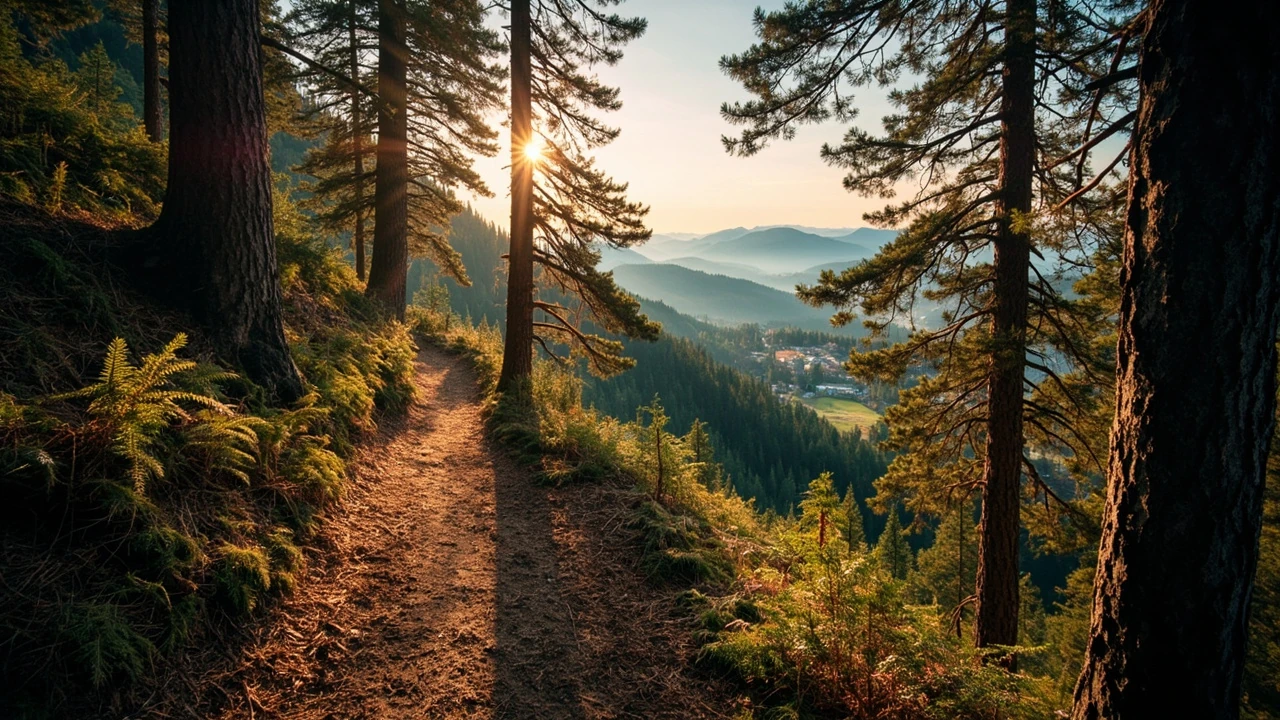
The Black Forest Germany: What this guide helps you decide
Choosing the wrong base can turn a visit to the black forest germany into a series of long drives through unfamiliar valleys. The region stretches across much of Baden-Württemberg, and its most popular sights are spread among dense woodland, open upland plateaus, spa towns, historic villages, and mountain settlements. A practical plan starts by deciding how much time you have, whether you want scenery, walking, food, or a relaxed stop, and which parts of the region you are willing to use as a base.
This guide focuses on that planning decision. It compares the northern, central, and southern sections of the region, suggests a realistic route, identifies transport options for travelers who do not want to drive, and explains which activities work best for different types of visitors. It also flags common mistakes, such as treating the entire area as one compact destination or assuming that every scenic road remains open in winter.
How the region divides into northern, central, and southern sections
For trip planning, dividing the region into three broad areas is more useful than trying to visit every labeled scenic route. The northern section is generally easier to reach from cities and lower-elevation transport corridors. The central section combines forest roads, open agricultural landscapes, historic towns, and several popular visitor gateways. The southern section has the highest mountain terrain and tends to reward travelers who want more dramatic scenery, longer outings, and fewer stops.
The division is not sharp, and local transport networks sometimes cross these boundaries. It is better understood as a way to balance landscape, access, and available activities. The mountain range extends for more than 100 miles, with a maximum width of about 30 miles, so treating every point on the map as equally close to every other point can create unnecessary driving.
| Section | Landscape and character | Best fit for | Planning consideration |
|---|---|---|---|
| Northern Black Forest | Wooded hills, gentler terrain, farms, and connections toward Karlsruhe, Pforzheim, and Baden-Baden | First-time visitors, families, and trips that include other cities in Baden-Württemberg | Often the easiest section to combine with a broader regional itinerary |
| Central Black Forest | A mixture of high forest, open plateaus, valley settlements, traditional craft towns, and accessible visitor centers | Travelers who want scenery, food, short walks, and a balanced day-to-night itinerary | Choose one base rather than changing hotels every night |
| Southern Black Forest | Higher ridges, glacial valleys, steeper slopes, and dramatic views toward the Rhine and Alpine region | Hikers, photographers, winter travelers, and visitors with more time | Allow more travel time and check seasonal road or trail conditions |
Why the western and eastern sides feel different
The eastern side has broader plateaus and rounded hills, often with long views across fields or continuous forest. The western side drops more sharply into the Rhine Valley and contains deeper valleys with greater changes in elevation. That difference affects the mood of a visit. The east can feel open, spacious, and agricultural. The west is more dramatic, with narrow roads, steep slopes, and viewpoints that reward a slower pace.
The highest summit is the Feldberg at 1,493 meters above sea level. Altitude should not be treated as the only measure of a worthwhile visit, however. A traveler can find excellent walking, forest roads, villages, and viewpoints in the northern and central sections without reaching the highest elevations.
Choosing the right base for your trip
The best base is not necessarily the place with the most famous attractions. It is the place that minimizes the number of unnecessary journeys while still giving you access to the kind of landscape and activities you value. A stay near Baden-Baden works well for travelers combining spa time with day trips into the northern and central countryside. Freiburg provides access to the southern region and the Rhine Valley, making it useful for a first or final day in the wider area. Pforzheim is another regional city, although its position is most useful within a northern itinerary.
Smaller settlements can feel more restful if your priority is walking, quiet evenings, or direct access to trails. The trade-off is that public transportation may be less frequent after the evening peak. Before booking, check the last connection to your accommodation, especially if you plan to visit restaurants, museums, or villages that are not on the main rail corridor.
| Base type | Advantages | Drawbacks | Who should choose it |
|---|---|---|---|
| Regional city | More transport choices, wider selection of restaurants, easier luggage handling, and useful without a car | Higher accommodation costs and less of an immediate mountain-village atmosphere | First-time visitors, short stays, travelers without a car, and anyone adding nearby cities |
| Valley or mountain town | Early access to trails, scenery, and outdoor activities; often a quieter evening | Fewer late-day transport options and more dependence on walking, driving, or taxis | Hikers, couples, and travelers staying several nights |
| Spa town | Convenient amenities, comfortable hotels, and an easy pace for rest | A resort rhythm may not suit travelers focused on active exploration | Families, older travelers, and visitors mixing walking with relaxation |
A simple rule for choosing one or two bases
For a trip of two or three nights, choose one base and make a small number of day trips. Four to six nights justify two bases, but only if the transfer day can also be part of the experience. More than two bases often adds packing and check-in time without giving you enough daylight to enjoy the stops in between.
- One base: Best for a first visit, limited vacation time, and a preference for convenience.
- Two bases: Best when you want both a major city connection and a quieter mountain stay.
- Three or more bases: Justified only for a longer road trip, a winter itinerary, or a specific event schedule.
A practical route through the black forest germany
A good first route links the region’s different landscapes without forcing a full circuit. Start with the northern gateway area around Baden-Baden, move through the high central countryside, and finish toward Freiburg and the southern mountain approaches. This creates a logical westward and southward progression while leaving room to skip activities that do not suit your group.
Day one: establish a base and explore nearby countryside
Use the first day to orient yourself rather than crossing the region. Choose a base based on the activities you most want to do, then select one nearby forest or valley route. From Baden-Baden, a visit can combine a walk through the surrounding hills with time in the town. From Freiburg, the nearby valleys and southern approaches provide an easy introduction without forcing a long transfer before you have seen the terrain.
This is also the best day to identify practical details that will shape the rest of the trip. Note the location of your accommodation relative to the nearest railway stop, check the weather forecast, and confirm whether any planned activity requires a timed entry or a reservation. Prices and operating arrangements can change, so verify current details directly with the attraction or local transport provider before setting off.
Day two: follow a scenic route into the central highlands
The second day can focus on the wooded high country and its traditional settlements. A scenic drive is useful here because it lets you stop at short viewpoints, roadside markers, and trailheads without repeatedly returning to one central base. If you do not drive, the Black Forest Railway provides access to communities along the rail corridor, with local buses or other onward connections filling some gaps.
Plan two or three stops rather than a long chain of landmarks. Suitable priorities might include a short forest walk in the morning, a traditional town or local food stop around midday, and a scenic drive or longer hike later in the day. The order matters. Longer walks fit best earlier in the day, while viewpoints are often clearer after haze lifts in the morning.
Day three: choose hiking, culture, or a relaxed valley day
Use the third day for the activity you did not fully explore earlier. Active travelers can select a marked trail suited to their fitness and weather conditions. Less active visitors can combine a gentle valley path, a local museum, and a café stop. A rainy day is not necessarily lost if you save indoor options for the hours when conditions are least suitable.
The black forest germany is not simply one town with a collection of nearby attractions. It is a broad, mountainous region where travel times can look surprisingly different on a map. For orientation, this regional geography overview explains how the terrain extends from the High Rhine in the south toward the Kraichgau in the north and why the western valleys feel steeper than the eastern plateaus.
For travelers staying longer, resist the urge to move each morning. The region rewards slow observation: forested slopes, farm buildings, roadside fruit, craft workshops, and small settlement details are part of the experience, not merely gaps between major attractions.
Day four: reach the southern highlands and finish near Freiburg
The southern section offers some of the strongest mountain scenery. A final move toward Freiburg or another southern gateway can shorten the journey home while providing access to the Feldberg area, the High Rhine, and smaller valleys beyond the most heavily visited routes. If winter weather affects the road, substitute a lower-elevation activity and leave the high routes for a clearer day.
This route works especially well for drivers, but train travelers can still use the main rail line and select a suitable onward connection. The goal is not to complete a perfect loop. It is to see contrasting sections of the region without turning each change of scenery into a full-day transfer.
What to do beyond driving and hiking
The black forest germany appeals to travelers with different interests, and an itinerary built only around viewpoints can miss much of its character. Consider one or two experiences that use the region as a place to live and work rather than simply a landscape to photograph.
- Forest and cultural walking: Choose routes that pass through different types of terrain and include time to stop in a village rather than following a trail only for distance.
- Local food: Look for regional dishes and products that reflect the climate and agricultural history of the area, while checking allergen and dietary information before ordering.
- Traditional crafts: Visits to workshops can provide a more informative cultural stop than a general souvenir shop when the production process is explained.
- Spa and thermal experiences: These fit well in Baden-Baden and other spa towns, but schedules and treatments should be arranged before arrival.
- Scenic photography: Morning light, mist, and autumn color often produce more varied images than bright midday conditions, although visibility is never guaranteed.
Matching activities to the amount of time you have
| Time available | Best use of the trip | Activities to prioritize |
|---|---|---|
| One day | Choose a single gateway and stay nearby | One scenic route, one town, and one short walk |
| Two or three days | Use one base for easy daily access | A scenic drive, a short hike, a food stop, and a local attraction |
| Four to six days | Use two bases and one scenic transfer day | Hiking, culture, a spa visit, and the southern highlands |
| Seven days or more | Build a slower route with weather flexibility | Multiple trails, seasonal activities, and unplanned village stops |
Getting around by train, bus, and car
The best transport method depends on where you want to go. Rail travel is efficient between larger cities and useful towns along the main corridor, but it does not cover every forest road or trailhead. A car provides the greatest flexibility, especially for scenic routes and small settlements. Buses can complete the journey between railway stations and nearby villages, yet they may run less often in the evening.
| Method | Best for | Advantages | Main limitation |
|---|---|---|---|
| Train | City-to-region travel and visitors without a car | Comfortable, predictable, and suitable for luggage | Limited access to remote valleys and mountain roads |
| Bus | Connecting smaller towns with rail stations | Useful where a direct train service is unavailable | Service frequency may be low outside the main schedule |
| Car | Scenic touring and flexible hiking access | Door-to-door travel and freedom to stop anywhere safe | Parking, fuel, mountain roads, and winter equipment requirements |
| Bike or e-bike | Exploring flatter valley and cycle routes | Enjoyable at a human scale and useful for short outings | Not suitable for every climb, route, or weather condition |
Driving advice for mountain routes
Scenery is the main reason to drive here, but the same terrain that creates memorable views can slow a journey. Curves, narrow roads, cyclists, and oncoming traffic deserve more caution than a straight highway would require. Download maps rather than relying only on mobile reception, and make sure your fuel or charging plan covers quieter valleys.
For winter travel, check the official road and weather information for your planned dates. Tire or vehicle equipment rules may apply to certain roads during winter conditions, and rental companies can have their own requirements. Avoid treating an all-weather tire or an SUV name as proof that a vehicle is suitable for every mountain pass.
Train travelers can reduce the stress of a mountain drive by using a rail journey for the largest transfer and renting a car only for one or two scenic days. That combination also allows a careful comparison of parking conditions before committing to a vehicle.
Food, villages, and the region’s working traditions
The area’s identity is closely tied to forestry, farming, mining, and small-scale production. These traditions shape the landscapes visitors see, but they should be understood as parts of a changing rural economy rather than as a preserved version of the past. A village that looks timeless may also contain modern workshops, seasonal businesses, and residents who commute to nearby cities.
Food is one of the clearest ways to explore that history. Regional menus vary by town and establishment, so familiar German dishes often appear alongside seasonal products from the surrounding countryside. Ask about regional specialties rather than assuming every item associated with the south of Germany is available everywhere. For travelers with allergies, celiac disease, or other dietary needs, communicate requirements clearly and check the ingredients used by the venue.
Craft shopping with a more useful focus
Wooden clocks, carved objects, textiles, and other goods are common across the region, but the most interesting shopping depends on how the item is made. Prefer a workshop where you can see the process, ask why a local material is used, and understand whether the object is made locally or merely sold there. Buying directly from a small producer can also provide a clearer connection between the landscape and the finished product.
For historical context, Italy’s History Did Not Begin With the Roman Empire is a useful reminder that familiar regional identities are layered over much longer periods than tourists often assume. The same principle applies here: the black forest germany is a modern travel region shaped by old trade routes, changing borders, forest management, industrialization, and village life.
Allow browsing time without turning the trip into a shopping expedition. A smaller purchase tied to a workshop visit or a meal often creates a stronger connection to the destination than filling a bag of items from several stops.
When to visit and how to make the trip work year-round
There is no single best season for every traveler. Spring offers fresh greenery and flowing water, summer supports the broadest range of outdoor activities, autumn brings foliage and quieter roads, and winter provides a different perspective through snow, mist, and seasonal food. Weather in the mountains can change quickly, so the most reliable plan is to keep at least one flexible day rather than scheduling every attraction around a single forecast.
Travelers who enjoy planning around weather can compare the seasonal decision-making involved in choosing a trip date with the broader approach described in So, What Is the Best Time to Visit Hong Kong? The destination is different, but the planning principle is useful: seasons shape crowds, activities, comfort, and cost, so the “best” time depends on your priorities.
- Spring: Comfortable for long walks, fresh scenery, and villages that may still have a quiet early-season atmosphere.
- Summer: Best for visitors who want the widest activity range, with the trade-off of busy scenic locations and warm daytime conditions.
- Autumn: Attractive for color and road trips; daylight is shorter, so outdoor plans should start earlier.
- Winter: Suits travelers seeking quiet scenery and winter recreation, but road equipment, trail conditions, and transport interruptions need checking.
A simple planning checklist
- Choose the northern, central, or southern sections that match your interests.
- Limit the itinerary to one base for a short trip or two bases for a longer one.
- Check current transport, attraction, and trail information before departure.
- Reserve activities with limited capacity and identify wet-weather alternatives.
- Confirm the last public transport connection to your accommodation.
- Pack for variable mountain conditions rather than the forecast shown on one morning.
- Allow one flexible day for weather, delays, or a place you want to revisit.
Frequently asked questions
What is the best way to explore the black forest germany?
The best method depends on your itinerary. Drivers have the most freedom for scenic roads, trailheads, and small settlements. Train travelers can reach major gateways and towns along the rail corridor efficiently, then use local buses or guided excursions for the wider countryside. Most short visits work best with one base and several day trips rather than a fast route across the entire region.
How many days should I spend in the Black Forest?
Allow two or three days for a compact visit centered on one area, four to six days for a slower journey with two bases, and at least a week if hiking, winter activities, or repeated scenic drives are important. The region is large enough that one day feels rushed, while a longer stay allows weather flexibility and visits beyond the most famous viewpoints.
Is Baden-Baden a good base for visiting the Black Forest?
Baden-Baden works well for travelers who want spa experiences, dining, and access to northern and central countryside. It is less suitable as a sole base for a trip focused entirely on the highest southern mountains, since those destinations require additional travel. The town is most efficient when combined with nearby cities or as one end of a two-base itinerary.
Is Freiburg a better base than Baden-Baden?
Freiburg is more convenient for the southern Black Forest, the Rhine Valley, and travel onward through the region. Baden-Baden offers a more traditional resort experience and connects well with northern and central locations. Choose according to the part of the region you want to explore, not simply the number of attractions visible from either city.
Do I need a car to visit the Black Forest?
No, but your itinerary will be more constrained. Trains and buses can connect larger towns and many visitor gateways, while organized excursions can cover distant viewpoints. A car becomes more useful for independent stops, early trail access, and villages with limited evening service. If you rent one for only part of the trip, arrange the train journey and rental handoff in advance.
What activities suit families with children?
Short forest walks, scenic train journeys, farm or craft visits, and gentle stops in resort towns are usually easier than ambitious summit hikes. Build in time for meals, toilets, and short attention spans. Older children may enjoy a maintained trail, but the route should match the group’s experience rather than the distance advertised for more experienced hikers.
Can I hike in the Black Forest without technical climbing experience?
Yes. Maintained trails and valley walks offer many options for non-climbers, but signs, surface conditions, elevation changes, and public transport access vary. Choose a route with a realistic return time, carry the water and weather protection appropriate for the forecast, and do not rely on a phone signal as your only navigation or emergency plan.
What should I do if it rains during my visit?
Move short walks to a later or clearer period and use poor conditions for an indoor museum, a long meal, a craft workshop, or a scenic train journey. Avoid waiting for perfect weather if it never arrives. Wet paths can be slippery, and some viewpoints may disappear in fog, so flexibility is more useful than trying to complete every item in a fixed order.
Is the Black Forest suitable for a winter road trip?
It can be, but winter preparation is essential. Check official road conditions, weather alerts, public transport changes, and local vehicle equipment rules for the exact dates. Some routes may close or become difficult during severe conditions, and rental vehicles may not be suitable for winter tires or chains. Keep the itinerary flexible and avoid relying on a remote accommodation’s last bus to get you back.
What is the most common planning mistake in the Black Forest?
The most common mistake is trying to see too much in too little time. The region covers a substantial area, so a packed list of distant viewpoints creates excessive driving and leaves little time to enjoy villages, trails, or meals. Choose one clear geographic focus, limit transfers, and reserve enough time to return comfortably to your accommodation each evening.



Leave a Reply